Get your free personalized podcast brief
We scan new podcasts and send you the top 5 insights daily.
Robinhood co-founder's Cowboy Space is vertically integrating into rocket manufacturing not just for launch capacity, but because its core architecture requires it. They plan to transform the rocket's upper stage directly into a data center, a design that necessitates full control over the launch vehicle itself.

Related Insights
The entire strategy of building data centers in space is only economically feasible because SpaceX's Starship is projected to increase launch capacity by 20 times and drastically lower costs. This specific technological leap turns a sci-fi concept into a viable business model.
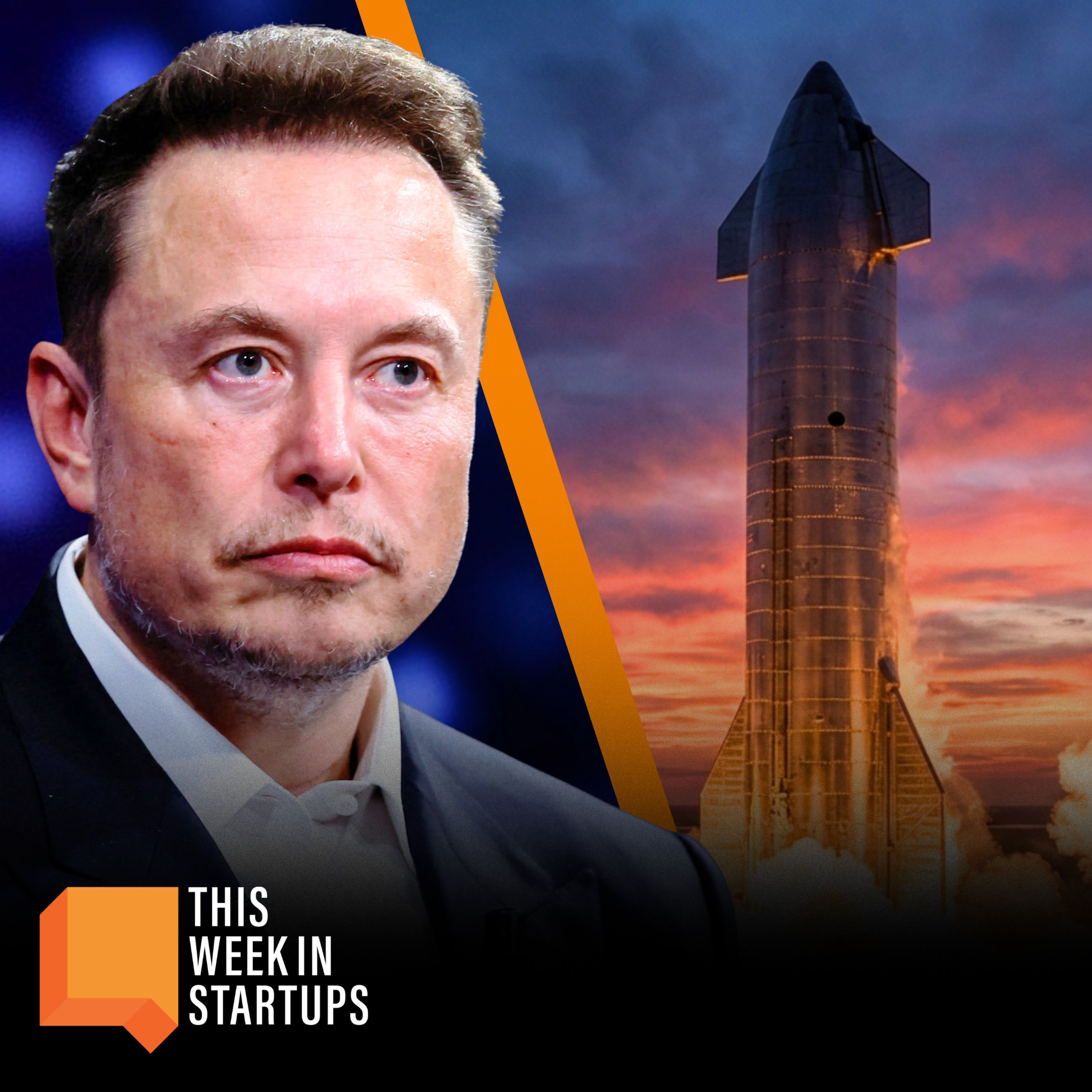
Contrary to speculation, SpaceX's IPO narrative around space-based data centers is not a marketing ploy to cover slowing growth. The company believes it's the cheapest long-term compute solution and requires public capital to fund the massive, capital-intensive vision.
Following predictions from Jeff Bezos and investments from Eric Schmidt, Elon Musk has entered the space-based data center race. He stated that SpaceX will leverage its existing Starlink V3 satellites, which already have high-speed laser links, to create an orbital cloud infrastructure, posing a significant challenge to startups in the sector.

OpenAI CEO Sam Altman's move to partner with a rocket company is a strategic play to solve the growing energy, water, and political problems of massive, earth-based data centers. Moving AI compute to space could bypass these terrestrial limitations, despite public skepticism.

The primary advantage of orbital data centers isn't cost, but speed to market. Building on Earth involves years of real estate, permitting, and power grid challenges. The space-based model can turn manufactured chips into operational compute within weeks by treating deployment as an industrial manufacturing and launch problem.
On Earth, each new data center is more expensive than the last due to land and energy constraints. In space, manufacturing satellites at scale and declining launch costs (via Starship) mean the marginal cost for each new data center goes down, creating fundamentally different scaling economics.

The merger leverages SpaceX's heavy launch capabilities to deploy space-based data centers for xAI, capitalizing on abundant solar power and the vacuum of space for cooling. This creates a massive competitive advantage by eliminating terrestrial energy and real estate costs.
SpaceX is reportedly targeting a $1.5 trillion IPO to raise $30 billion. This capital isn't just for rockets but to fund a new AI infrastructure business: data centers in space. This represents a significant strategic shift, leveraging its launch dominance to compete in the AI compute market by acquiring massive quantities of GPUs.

Contrary to his long-held anti-IPO stance, Elon Musk is reportedly racing to take SpaceX public. The primary driver is the immense capital required to build AI data centers in space, a strategic pivot from Mars colonization to competing in the orbital computing infrastructure race against rivals like Jeff Bezos.

Recent viability for orbital data centers doesn't stem from new server technology, but from SpaceX's Starship rocket. Its success in dramatically lowering the cost of launching mass into orbit is the critical, non-obvious enabler that makes the entire concept economically plausible for the first time.