Get your free personalized podcast brief
We scan new podcasts and send you the top 5 insights daily.
Robinson says transitions from extractive to inclusive institutions happen when countries sort them out themselves, citing Chile. He doubts the U.S. can solve Venezuela's problem, though he says Washington could avoid making it worse. He calls U.S. relations with Latin America not especially anomalous historically.

Related Insights
While the Trump administration promotes investment in a post-Maduro Venezuela, major oil companies like ExxonMobil are publicly skeptical. Their stance that the country is "uninvestable" due to the absence of rule of law shows that political guarantees are insufficient without fundamental institutional reforms.

The U.S. action in Venezuela should be viewed as 'regime alteration.' Unlike the failed Iraq strategy of dismantling a state, this was a targeted move to swap a leader aligned with China and Russia for one answerable to the U.S. It’s a pragmatic assertion of influence, not an idealistic attempt at democratization.

The U.S. strategy appears to be maintaining a weakened Chavista regime to ensure stability and access to oil, effectively turning Venezuela into a resource colony without genuine political change for its people.

The failure of Western nation-building highlights a key principle: establishing durable institutions must precede the promotion of democratic ideals. Without strong institutional frameworks for order, ideals like "freedom" can lead to chaos. America’s own success was built on inherited institutions, a luxury many developing nations lack, making the export of democracy exceptionally difficult.
Unlike an internally-led transition, the US government is 'basically running the show' in Venezuela's political shift. This direct oversight reduces the probability of a reversal, such as a military coup, as it would require the US to abandon its established political agenda in the country.

In post-Maduro Venezuela, American pressure is primarily focused on liberalizing the economy for foreign investment, especially in oil. While this has resulted in some political shifts, the overwhelming priority is economic access for American interests, demonstrating a pragmatic rather than purely ideological approach to nation-building.
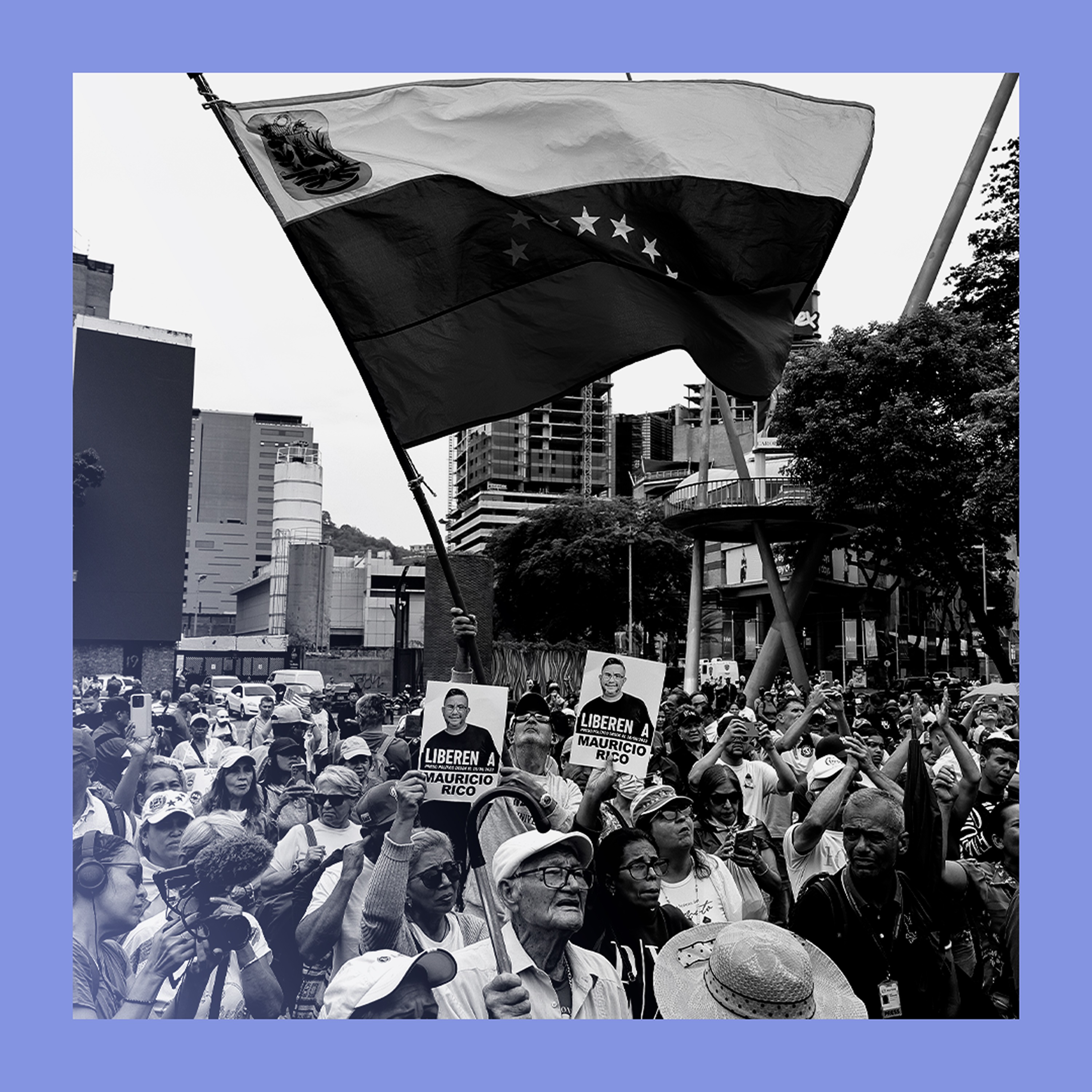
The US action in Venezuela is self-defeating even if the goal is oil. The resulting political instability and lack of legal guarantees mean no private oil major will make the tens of billions of dollars in investments needed to restore production to previous levels, capping output far below its potential.

By leaving the existing Chavista power structure largely intact after removing Maduro, the U.S. is applying a key lesson from Iraq: avoiding a power vacuum and the chaos of de-Ba'athification is paramount for stability.
Robinson says independent central banks and productivity-friendly taxes matter, but politics must support them; he calls economic policy downstream from politics. He agrees there is no way to simply write down good policies if the institutional and political preconditions are missing in the first place.
The widespread expectation for elections in Venezuela is not rooted in domestic institutional strength, but in faith in US political figures like Donald Trump and Marco Rubio to apply pressure. This reliance on external actors, combined with hope in a single leader, Maria Machado, creates a fragile foundation for a sustainable democratic transition.