Get your free personalized podcast brief
We scan new podcasts and send you the top 5 insights daily.
EliseAI runs fully automated loops handling about one million calls a day plus hundreds of thousands of emails and texts. Martone says building evaluations lets roughly ten people understand daily how those housing and healthcare conversations are going, even when no one reviews each interaction.

Related Insights
Cresta's CEO advocates for a single AI platform that both assists human agents and powers full automation. This creates a powerful feedback loop: when an AI agent fails, the system observes the human's successful resolution, capturing data to improve the next AI agent iteration.

While 'human in the loop' is a standard AI safety practice, it becomes an operational bottleneck at enterprise scale. When hundreds of AI agents generate thousands of actions requiring review, the human capacity to oversee them is the limiting factor, rendering the system impractical for high-volume, real-time operations.

The problem with AI agents isn't getting them to work; it's managing their success. Once deployed, they operate 24/7, generating a high volume of responses and meetings. Your biggest challenge will shift from outreach capacity to your human team's ability to keep up with the AI's constant activity and output.
In regulated industries, AI's value isn't perfect breach detection but efficiently filtering millions of calls to identify a small, ambiguous subset needing human review. This shifts the goal from flawless accuracy to dramatically improving the efficiency and focus of human compliance officers.

With infinitely scalable AI agents, cost and time per interaction are no longer primary constraints. Companies should abandon classic efficiency metrics like Average Handle Time and instead measure success by outcomes, such as percentage of tasks completed and improvements in Customer Satisfaction (CSAT).

One person now manages RevOps, enablement, data analysis, and CRM administration—functions that previously required 10-15 people—by orchestrating AI agents. This demonstrates a massive leap in productivity and operational leverage made possible by AI.

Unlike other business areas, contact centers have highly sophisticated, pre-existing metrics (like average handle time). This allows businesses to apply the same measurement tools to AI agents, enabling a direct and precise comparison of performance, cost, and overall effectiveness against human counterparts.

Ladder built custom AI tools to handle operational tasks at scale. "Maeve AI" manages 90% of support tickets, while "Ladder Pulse" synthesizes group chats for coaches. This strategy uses AI for leverage, allowing a small team to deliver a high-touch experience without a large headcount.

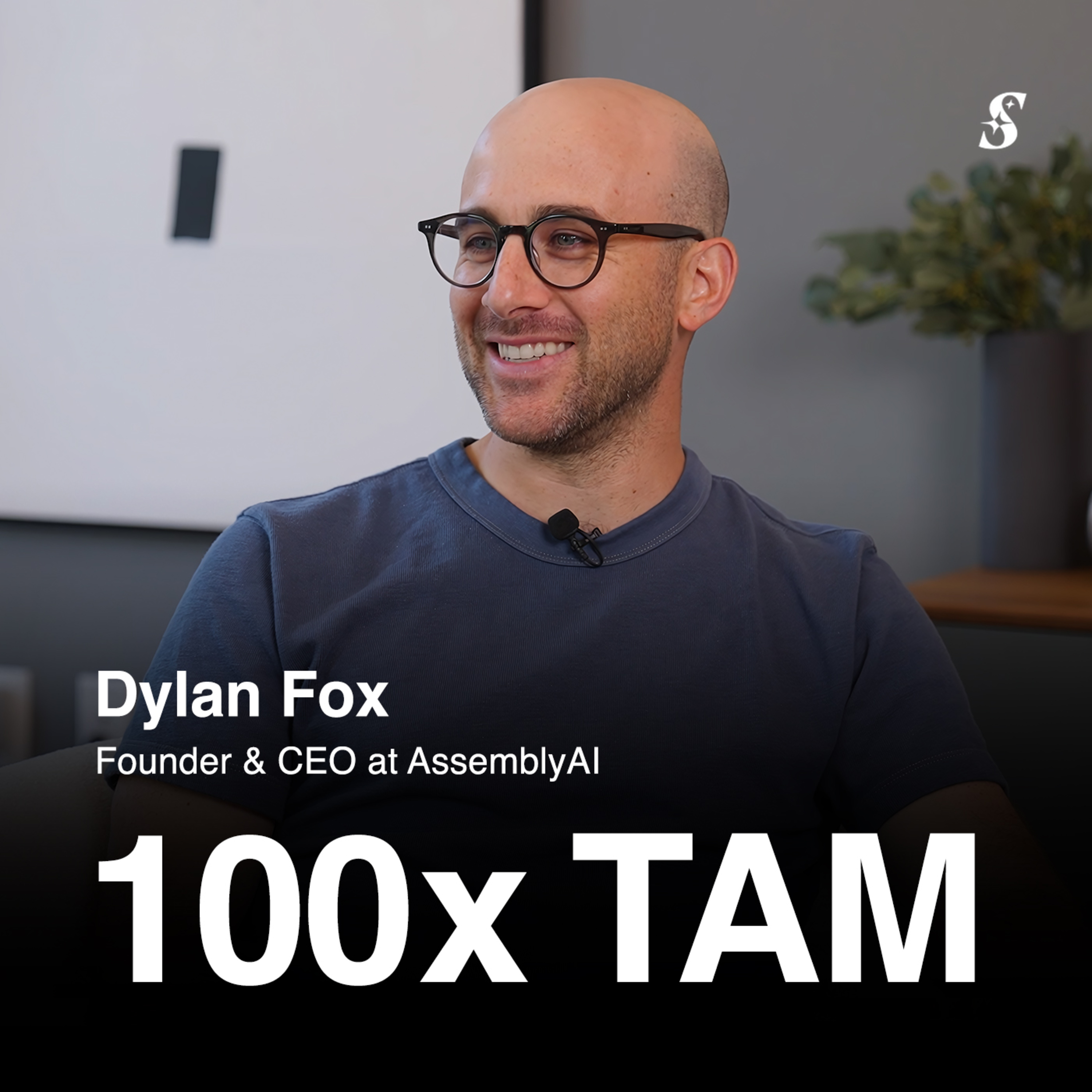
The scale of enterprise and application-level voice data is vastly underestimated. AssemblyAI handles over 120 million voice conversations and two million hours of audio weekly, dwarfing the volume of content uploaded to consumer platforms like YouTube. This highlights the massive, unseen world of voice AI infrastructure.
An AI chatbot is not a 'set it and forget it' tool. Personio assigned a specific employee to be accountable for their chatbot, 'Nia.' This person's job is to review the AI's daily outputs, provide feedback, and test in real-time to correct errors like giving legal advice or bashing competitors, ensuring the AI improves continuously.