Get your free personalized podcast brief
We scan new podcasts and send you the top 5 insights daily.
Knowledge graph-based retrieval is not a replacement for deep vector search but a complement that solves different failure modes. While a larger context window in vector search yielded better overall results, the graph walk succeeded in connecting documents linked by human logic but missed by semantic similarity, proving that the two methods are not mutually exclusive.

Related Insights
M0's retrieval system runs four parallel signals: vector and full-text search across both the title and description of knowledge records. This hybrid approach captures semantic similarity for paraphrased queries (vector search) and exact matches for specific terms like API names (full-text), resulting in highly relevant, compact results.

For enterprise AI, standard RAG struggles with granular permissions and relationship-based questions. Atlassian's "teamwork graph" maps entities like teams, tasks, and documents. This allows it to answer complex queries like "What did my team do last week?"—a task where simple vector search would fail by just returning top documents.

Vector embeddings can fail to connect related documents if they lack sufficient semantic similarity. A knowledge graph, by following explicit, human-created links, can fix these specific structural misses. It successfully retrieves relevant context that even a deep vector search (k=15) consistently fails to find, proving its unique value for structurally related data.
To move beyond keyword search in their media archive, Tim McLear's system generates two vector embeddings for each asset: one from the image thumbnail and another from its AI-generated text description. Fusing these enables a powerful semantic search that understands visual similarity and conceptual relationships, not just exact text matches.
The significance of a massive context window isn't just about processing more data. It enables AI to identify and synthesize relationships across thousands of pages of disparate information, revealing insights and maintaining consistency in a way that's impossible with a piecemeal approach.

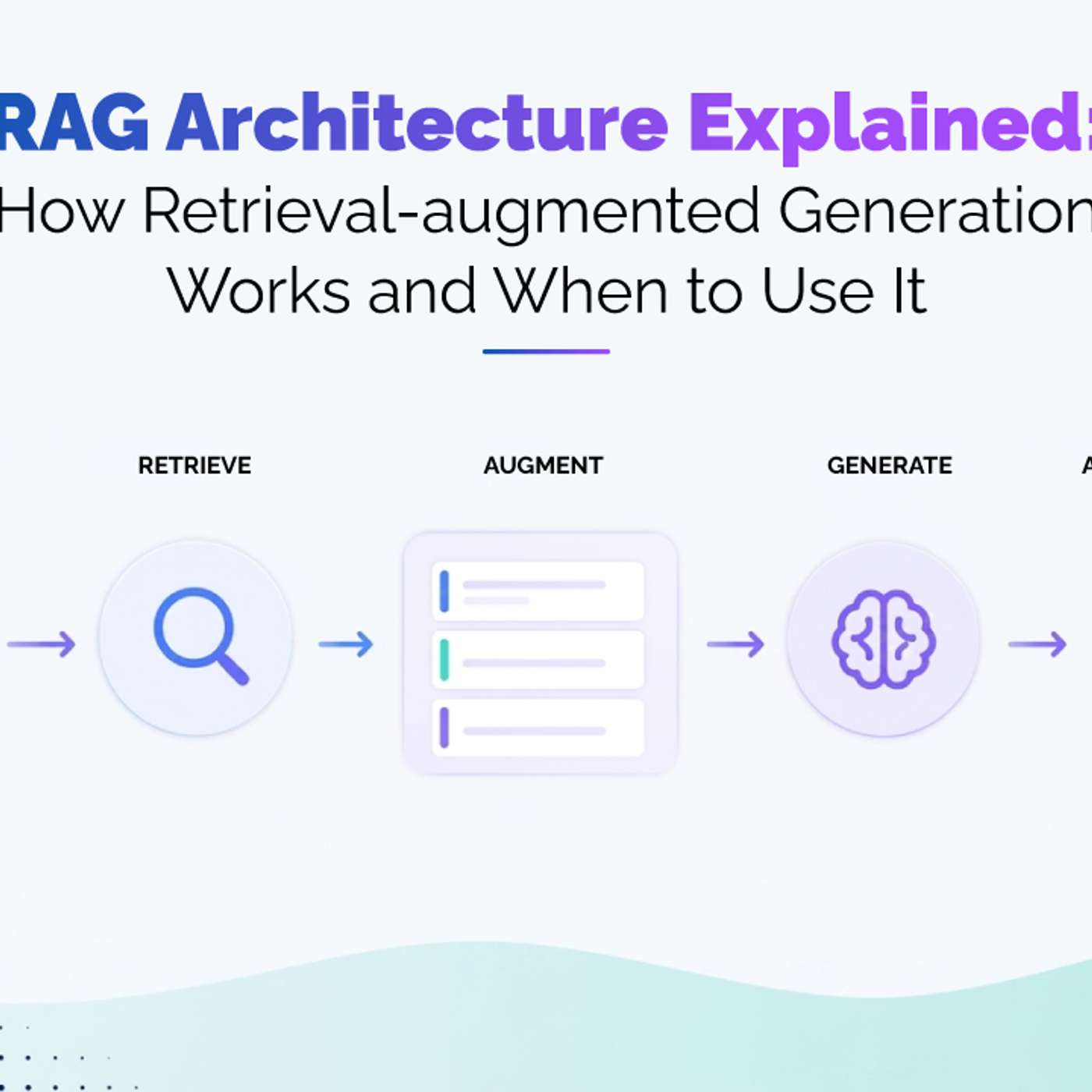
Retrieval Augmented Generation (RAG) uses vector search to find relevant documents based on a user's query. This factual context is then fed to a Large Language Model (LLM), forcing it to generate responses based on provided data, which significantly reduces the risk of "hallucinations."
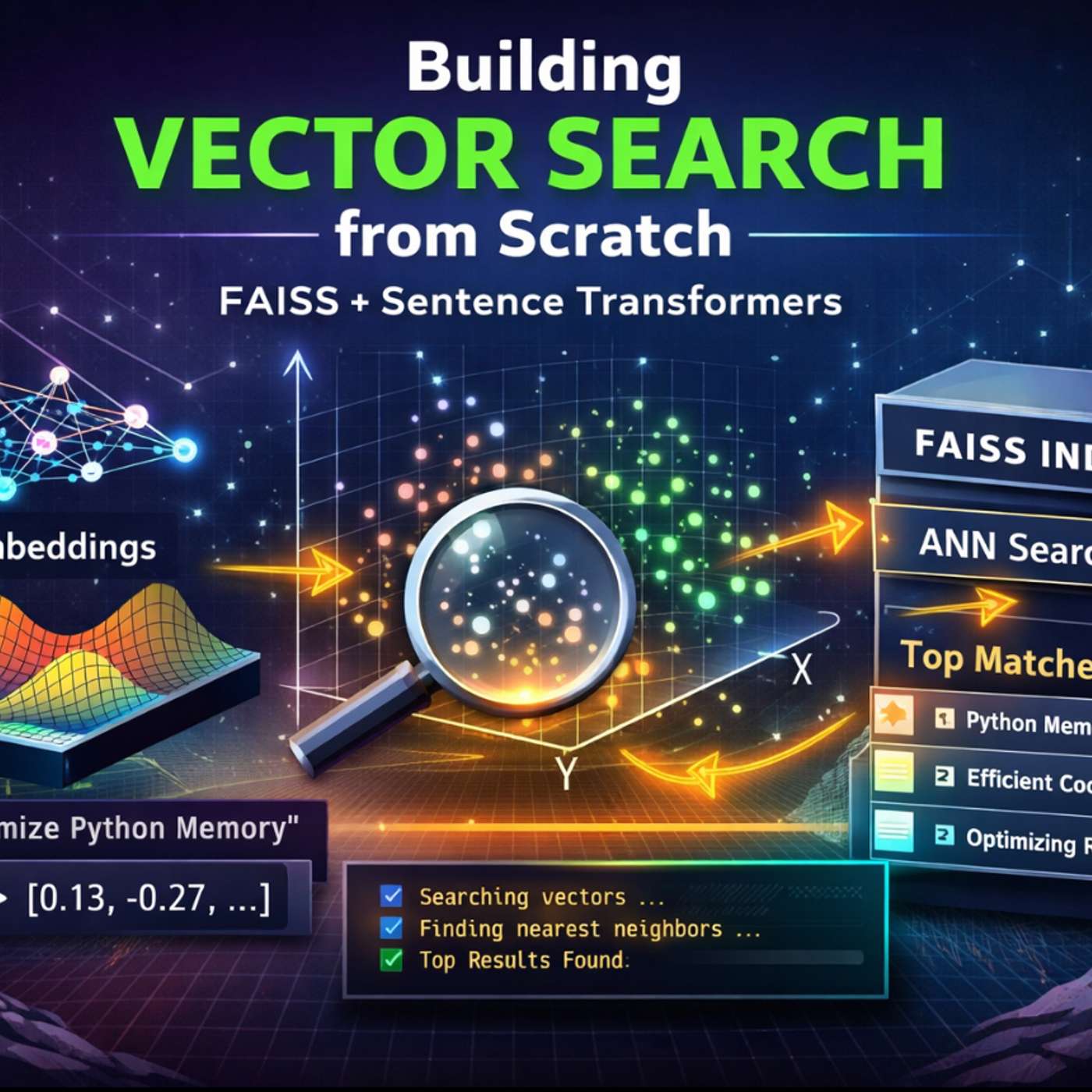
Vector similarity does not equal relevance. A lightweight re-ranker model, placed between retrieval and generation, rescores search results for usefulness. This significantly improves performance on ambiguous queries and is one of the highest-impact additions to a RAG pipeline.
Vector search excels at semantic meaning but fails on precise keywords like product SKUs. Effective enterprise search requires a hybrid system combining the strengths of lexical search (e.g., BM25) for keywords and vector search for concepts to serve all user needs accurately.

Before implementing complex solutions like agentic loops, a highly effective first step for improving RAG performance is simply increasing the number of retrieved chunks (k). This simple change fixed nearly half of the initial flagged query failures by preventing relevant notes with similar chunks from consuming the entire context budget.
Relying solely on semantic clustering (RAG) is inaccurate for complex domains like code. Blitzy combines a deep, relational knowledge graph with semantic understanding to accurately retrieve context, using the semantic match as a map to the source of truth rather than the truth itself.