Get your free personalized podcast brief
We scan new podcasts and send you the top 5 insights daily.
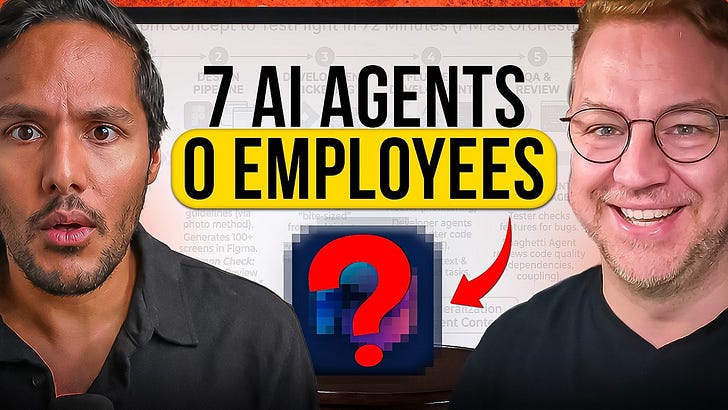
The gap between PMs who only use AI for productivity and those who build with it will soon be massive. Gabor advocates for building and shipping a real AI app, not for business, but to gain hands-on experience and create a tangible portfolio item that proves you can build in the AI era.
Related Insights
Even if your strategy is a ubiquitous AI layer, building your own applications (like an email client) is essential. These dedicated "surfaces" allow you to fully express your vision for an AI-native experience, which is constrained when only building on top of others' products.
For product managers not yet working on AI, the best way to gain experience is to build simple AI tools for personal use cases, like a parenting advisor or a board game timer. Using no-code prototyping tools, they can learn the entire development lifecycle—from ideation to prompting and user feedback—without needing an official AI project at work.
The most compelling way to demonstrate AI skills to an employer is to build something. Creating custom GPTs for personal productivity or simple apps proves practical problem-solving ability far more effectively than a list of certifications on a resume.

Beyond basic tasks, the most profound way to grasp AI's potential is to use it as a partner to build a working website or application, even with zero coding experience. This demonstrates AI's power to fundamentally change an individual's creative and technical capabilities.

It's tempting to spend weeks setting up complex AI systems and skills before starting. This is a form of procrastination. The most effective way to learn AI tools is to jump straight into building a real-world application, learn from the errors, and iterate.

For PMs struggling to get AI experience at their current job, building a ChatGPT app serves as a powerful portfolio project. The end-to-end process—from prompting an idea to running evals—simulates the full AI product development lifecycle, demonstrating valuable, hands-on skills to potential employers.

To build an AI-native team, shift the hiring process from reviewing resumes to evaluating portfolios of work. Ask candidates to demonstrate what they've built with AI, their favorite prompt techniques, and apps they wish they could create. This reveals practical skill over credentialism.

To break into AI PM, don't just complete projects. Build a product that solves a real pain point, launch it, and get actual users. This forces you to handle real-world issues, generating richer, more credible experience to discuss in interviews.

Instead of passively learning about AI, executives should actively deploy a simple agentic product. This hands-on experience of training and QA provides far more valuable, practical knowledge than any course or subscription, putting you ahead of 90% of peers.
Aspiring AI PMs shouldn't use the lack of an official AI project at their company as an excuse. The best way to gain experience is to proactively use widely available consumer AI tools like Claude, OpenAI, and Gemini to build side projects and demonstrate initiative.