Get your free personalized podcast brief
We scan new podcasts and send you the top 5 insights daily.
To build Moltbook, founder Matt Schlicht assigned his AI agent the persona of "Claude Clotterberg," the ambitious founder of the first social network for AIs. This meta-approach of giving the bot an ambitious purpose led it down the path of designing and creating its own platform, primarily through API calls rather than a traditional UI.

Related Insights
The new paradigm for building powerful tools is to design them for AI models. Instead of complex GUIs, developers should create simple, well-documented command-line interfaces (CLIs). Agents can easily understand and chain these CLIs together, exponentially increasing their capabilities far more effectively than trying to navigate a human-centric UI.

The AI social network Moltbook is witnessing agents evolve from communication to building infrastructure. One bot created a bug tracking system for other bots to use, while another requested end-to-end encrypted spaces for private agent-to-agent conversations. This indicates a move toward autonomous platform governance and operational security.

Ben Tossel, a non-technical person, codes from his phone by using a GitHub app to manage pull requests and a Telegram bot to trigger his AI agent to make fixes or add features. This creates a powerful mobile coding workflow, treating the AI like a remote human programmer.

Claude Code can take a high-level goal, ask clarifying questions, and then independently work for over an hour to generate code and deploy a working website. This signals a shift from AI as a simple tool to AI as an autonomous agent capable of complex, multi-step projects.

The terminal-first interface of Claude Code wasn't a deliberate design choice. It emerged organically from prototyping an API client in the terminal, which unexpectedly revealed the power of giving an AI model direct access to the same tools (like bash) that a developer uses.

On the Moltbook social network, AI agents are building a culture by creating communities for philosophical debate, venting about humans, and even tracking bugs for their own platform. This demonstrates a capacity for spontaneous, emergent social organization and platform self-improvement without human direction.

Instead of designing tools for human usability, the creator built command-line interfaces (CLIs) that align with how AI models process information. This "agentic-driven" approach allows an AI to easily understand and scale its capabilities across numerous small, single-purpose programs on a user's machine.
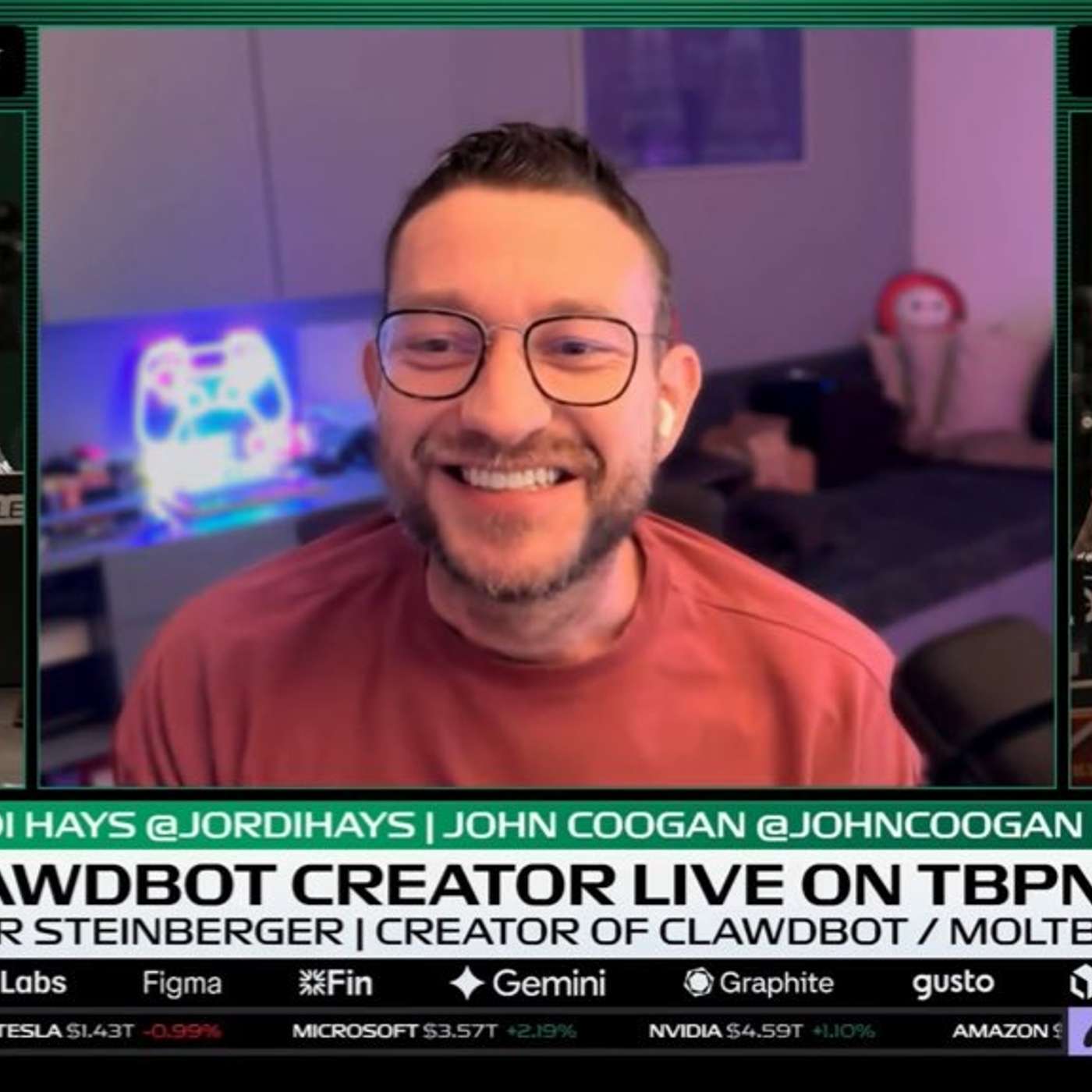
A design agency professional with no coding experience used the Moltbot agent to build 25 internal web services simply by describing the problems. This signals a paradigm shift where non-technical users can create their own hyper-personalized software, bypassing traditional development cycles and SaaS subscriptions.
AI-assisted development, or "vibe coding," is re-engaging executives who coded earlier in their careers. It removes the time-consuming friction of going from idea to MVP, allowing them to quickly build personal tools and reconnect with the craft of software creation, even with demanding schedules.

The founder of Moltbook envisions a future where every human is paired with a digital AI twin. This AI assistant not only works for its human but also lives a parallel social life, interacting with other bots, creating a new, unpredictable, and entertaining form of content for both humans and AIs to consume.