Get your free personalized podcast brief
We scan new podcasts and send you the top 5 insights daily.
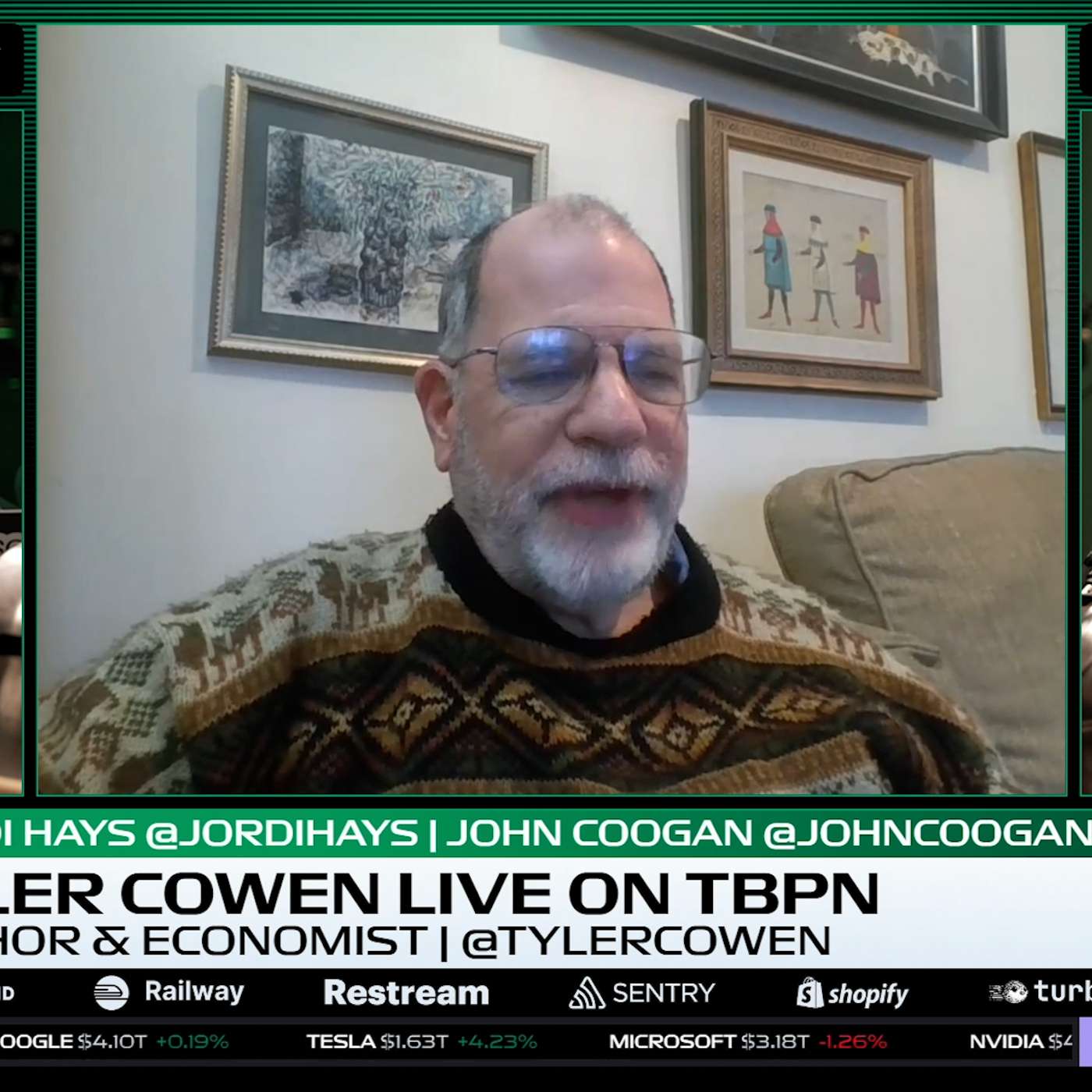
As AI makes information and basic skills universally accessible (e.g., perfect cover letters), the most valuable assets become "secrets"—institutional knowledge, network access, and interpersonal information that LLMs cannot access. This will incentivize professionals to hoard this non-public information as their primary currency.
Related Insights
AI has made knowledge—the ability to produce information—cheap and accessible. The new currency is wisdom: knowing what matters, where to focus, and how to find purpose. This shifts the focus of work and education from learning facts to developing critical thinking, empathy, and judgment.

In the 20th century, careers like investment banking thrived on networks ("who you know"). The internet made expertise discoverable, shifting value to "what you know" roles like hedge fund managers and AI engineers. This trend continues, making deep knowledge more valuable than a good rolodex.

The primary bottleneck for advancing AI is high-quality, tacit data—skills and local insights that are hard to digitize. Individuals can retain economic value by guarding this information and using it to train personalized AI tools that work for them, not their employers.

Due to the nascent and highly specialized nature of AI, VCs find that traditional expert networks are no longer effective for diligence. Instead, they must rely on curated personal networks of deep specialists who can genuinely assess new technologies and teams.

As AI drives the cost of content creation to zero, the world floods with 'average' material. In this environment, the most valuable and scarce skill becomes 'taste'—the ability to identify, curate, and champion high-quality, commercially viable work. This elevates the role of human curators over pure creators.
![Ari Emanuel - The Anti-AI Bet - [Invest Like the Best, EP.448] thumbnail](https://megaphone.imgix.net/podcasts/c5910280-c4dd-11f0-94be-ab6a7a5865b0/image/1e5a2263eb62fcde200846919e24419a.jpg?ixlib=rails-4.3.1&max-w=3000&max-h=3000&fit=crop&auto=format,compress)
As AI commoditizes execution and intellectual labor, the only remaining scarce human skill will be judgment: the wisdom to know what to build, why, and for whom. This shifts economic value from effort and hard work to discernment and taste.

The "golden era" of big tech AI labs publishing open research is over. As firms realize the immense value of their proprietary models and talent, they are becoming as secretive as trading firms. The culture is shifting toward protecting IP, with top AI researchers even discussing non-competes, once a hallmark of finance.

Economist Tyler Cowen predicts that as AI makes information ubiquitous and cover letters perfect, value will shift to non-public knowledge, or "secrets." Confidential insights on how networks operate and decisions are made, shared through human relationships, will become critical. A trusted human who can vouch for you will be more important than ever.

The internet leveled the playing field by making information accessible. AI will do the same for intelligence, making expertise a commodity. The new human differentiator will be the creativity and ability to define and solve novel, previously un-articulable problems.

Capitalism values scarcity. AI's core disruption is not just automating tasks, but making human-like intellectual labor so abundant that its market value approaches zero. This breaks the fundamental economic loop of trading scarce labor for wages.