Get your free personalized podcast brief
We scan new podcasts and send you the top 5 insights daily.
Use Linear to create engineering tasks that trigger OpenAI's Symphony framework. Agents execute tasks, submit PRs for human review, and autonomously rework based on comments, turning Linear into a central state machine for your codebase that can be managed from anywhere.

Related Insights
The developer's role is evolving from a linear workflow (code, submit PR, get review) to a parallel one. At Block, developers now manage multiple AI agents building numerous pull requests simultaneously, acting as an editor and context-switcher rather than the sole creator.

To achieve a state where AI agents handle nearly all coding, a solo founder must implement a surprisingly formal Software Development Lifecycle (SDLC), like one for a large team. This includes rigorous processes like mandatory Pull Requests (PRs), providing a structured system for agent-driven development.

The new benchmark for engineering maturity is "agentic development." This isn't just auto-complete; it's a full workflow where AI agents write code, open pull requests, and perform reviews overnight, guided by senior engineers who act as mentors to the "smart but inexperienced" AI.

The workflow of a "100x engineer" involves managing multiple AI coding agents simultaneously, with each agent working independently on tasks. The engineer's role shifts from writing code to orchestrating these agents, rotating attention between them like a conductor directing an orchestra.

Inspired by fully automated manufacturing, this approach mandates that no human ever writes or reviews code. AI agents handle the entire development lifecycle from spec to deployment, driven by the declining cost of tokens and increasingly capable models.

The Ralph AI coding loop automates software development by copying the agile Kanban process. It sequentially pulls small, defined tasks (user stories) from a list, implements the code, tests it against criteria, commits the result, and repeats. This mirrors how human engineering teams build features, but does so autonomously.

Software development platforms like Linear are evolving to empower non-technical team members. By integrating with AI agents like GitHub Copilot, designers can now directly instruct an agent to make small code fixes, preview the results, and resolve issues without needing to assign the task to an engineer, thus blurring the lines between roles.

The AI agent is designed to act like a human team member within existing systems. It performs bi-directional updates in tools like Jira or Linear—adding comments, changing statuses, and assigning tickets. This seamless integration ensures human teams maintain visibility and that established processes aren't disrupted.
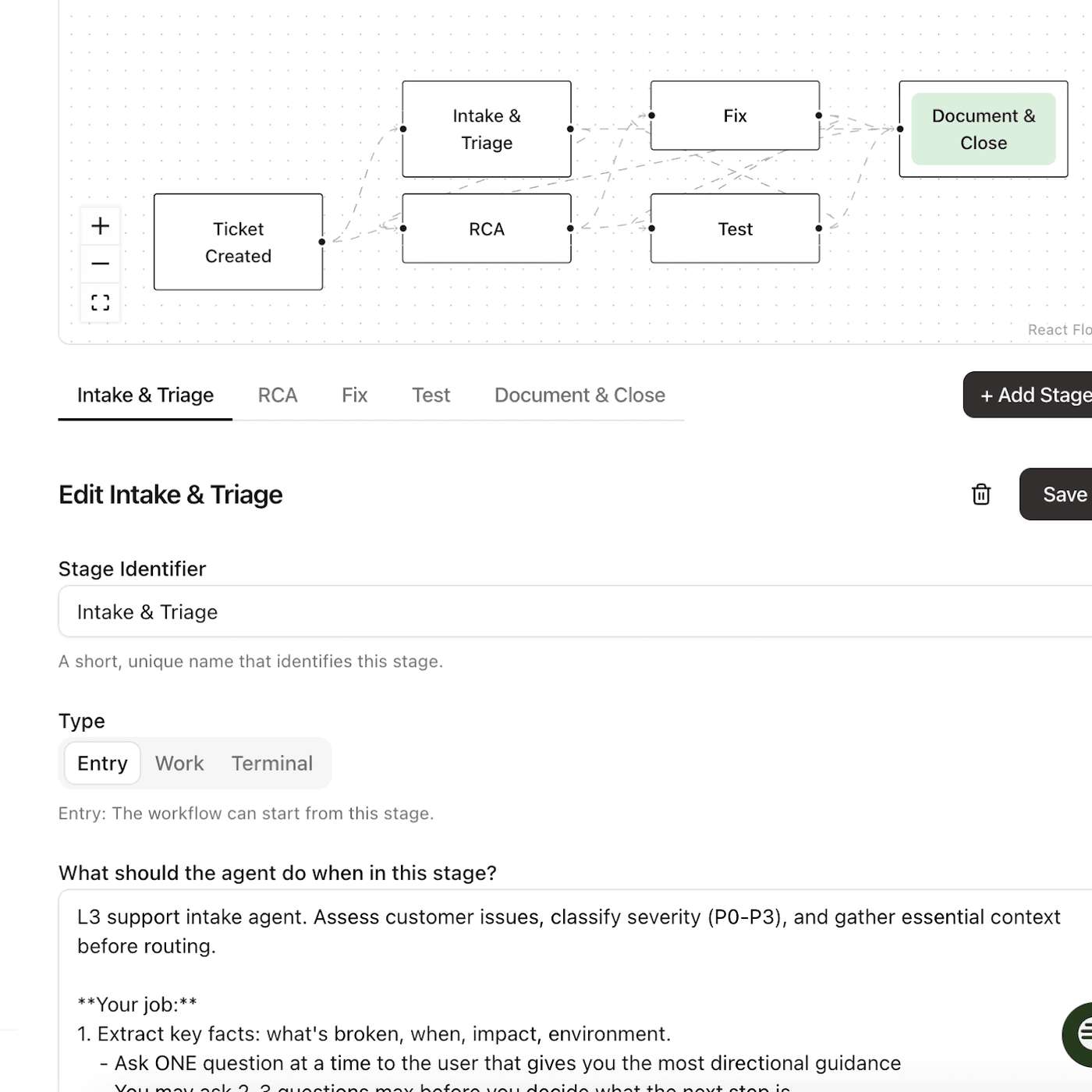
Use AI to manage its own development tasks. After a brain dump of project goals, have the AI create tickets in a tool like Linear. Then, let the AI work through the tickets and update its own statuses, significantly reducing your mental load and freeing you up for higher-level review.

Linear doesn't try to build a better general-purpose coding agent than Google or OpenAI. Instead, its strategic advantage is sitting 'upstream' where work originates. By integrating agents into the initial bug report or feature request, they can automate the entire workflow, a defensible moat.
