Get your free personalized podcast brief
We scan new podcasts and send you the top 5 insights daily.
OpenClaw competitor Hermes is winning over developers with a unique feature: the agent writes its own "skills" (instruction sets) for new tasks. It also reflects on and combines these skills when idle, a process likened to human sleep, reducing manual setup for users and advancing agent autonomy.

Related Insights
Unlike simple chatbots, AI agents tackle complex requests by first creating a detailed, transparent plan. The agent can even adapt this plan mid-process based on initial findings, demonstrating a more autonomous approach to problem-solving.

Agentic frameworks like OpenClaw are pioneering a new software paradigm where 'skills' act as lightweight replacements for entire applications. These skills are essentially instruction manuals or recipes in simple markdown files, combining natural language prompts with calls to deterministic code ('tools'), condensing complex functionality into a tiny, efficient format.
While most current AI agents are just replicable instructions, a potential moat exists for tools that build truly autonomous, self-improving agents. The history and learnings of such an agent would create high switching costs, as moving to a new platform would be like training a new employee from scratch.

AI agents like OpenClaw learn via "skills"—pre-written text instructions. While functional, this method is described as "janky" and a workaround. It exposes a core weakness of current AI: the lack of true continual learning. This limitation is so profound that new startups are rethinking AI architecture from scratch to solve it.
The most efficient workflow is to use a code-generation agent (like Claude Code or OpenAI Codex) to write the code and set up the infrastructure for the robust, long-running agents (like Hermes) you deliver to clients. This "agents building agents" approach is a powerful force multiplier for a solo founder.
Unlike other AI models, OpenClaw can be tasked to figure out how to interact with a new service (like email) and write a reusable "skill" for it. This self-learning capability allows it to continuously expand its own functionality without manual coding.

Instead of integrating with existing SaaS tools, AI agents can be instructed on a high-level goal (e.g., 'track my relationships'). The agent can then determine the need for a CRM, write the code for it, and deploy it itself.
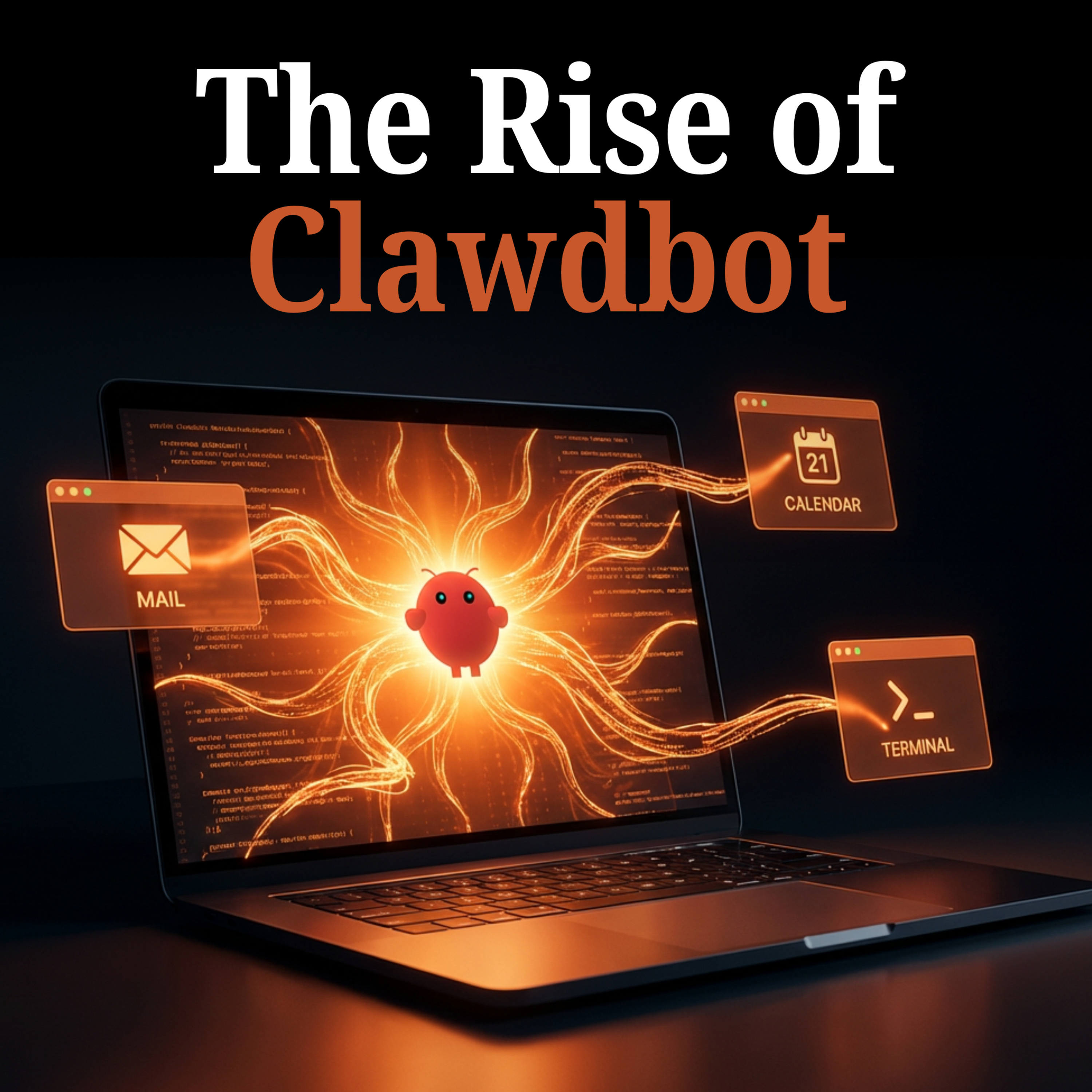
Instead of pre-programming specific functions, Hermes Agent is designed to observe user interactions, identify important achievements, and autonomously create new "skills" for future use. This allows it to adapt and improve organically, breaking from traditional software design paradigms.

Unlike static tools, agents like Clawdbot can autonomously write and integrate new code. When faced with a new challenge, such as needing a voice interface or GUI control, it can build the required functionality itself, compounding its abilities over time.

The founder of Memelord, a non-coder, published a functional skill for the OpenClaw agent framework by simply asking the agent how to do it. The agent wrote and published the skill itself, demonstrating a new paradigm where anyone can create and distribute software tools without writing code.