Get your free personalized podcast brief
We scan new podcasts and send you the top 5 insights daily.
Instead of pre-programming specific functions, Hermes Agent is designed to observe user interactions, identify important achievements, and autonomously create new "skills" for future use. This allows it to adapt and improve organically, breaking from traditional software design paradigms.
Related Insights
Unlike simple chatbots, AI agents tackle complex requests by first creating a detailed, transparent plan. The agent can even adapt this plan mid-process based on initial findings, demonstrating a more autonomous approach to problem-solving.

A static agent doesn't improve. To create a continuously learning system, build a secondary agent that observes a human's corrections. This "learner" agent synthesizes patterns from the feedback and suggests updates to the primary agent's instructions, creating a powerful self-improvement cycle.

Frame AI agent development like training an intern. Initially, they need clear instructions, access to tools, and your specific systems. They won't be perfect at first, but with iterative feedback and training ('progress over perfection'), they can evolve to handle complex tasks autonomously.

In this software paradigm, user actions (like button clicks) trigger prompts to a core AI agent rather than executing pre-written code. The application's behavior is emergent and flexible, defined by the agent's capabilities, not rigid, hard-coded rules.

Avoid brittle, high-maintenance productivity systems by letting your AI agent learn from your actual behavior over time. Instead of extensive setup, the AI observes what you do and don't accomplish, organically building a system that reflects reality, not your idealized intentions.

Unlike other AI models, OpenClaw can be tasked to figure out how to interact with a new service (like email) and write a reusable "skill" for it. This self-learning capability allows it to continuously expand its own functionality without manual coding.

Traditional software development iterates on a known product based on user feedback. In contrast, agent development is more fundamentally iterative because you don't fully know an agent's capabilities or failure modes until you ship it. The initial goal of iteration is simply to understand and shape what the agent *does*.
The next evolution for AI agents is recursive learning: programming them to run tasks on a schedule to update their own knowledge. For example, an agent could study the latest YouTube thumbnail trends daily to improve its own thumbnail generation skill.

Instead of integrating with existing SaaS tools, AI agents can be instructed on a high-level goal (e.g., 'track my relationships'). The agent can then determine the need for a CRM, write the code for it, and deploy it itself.
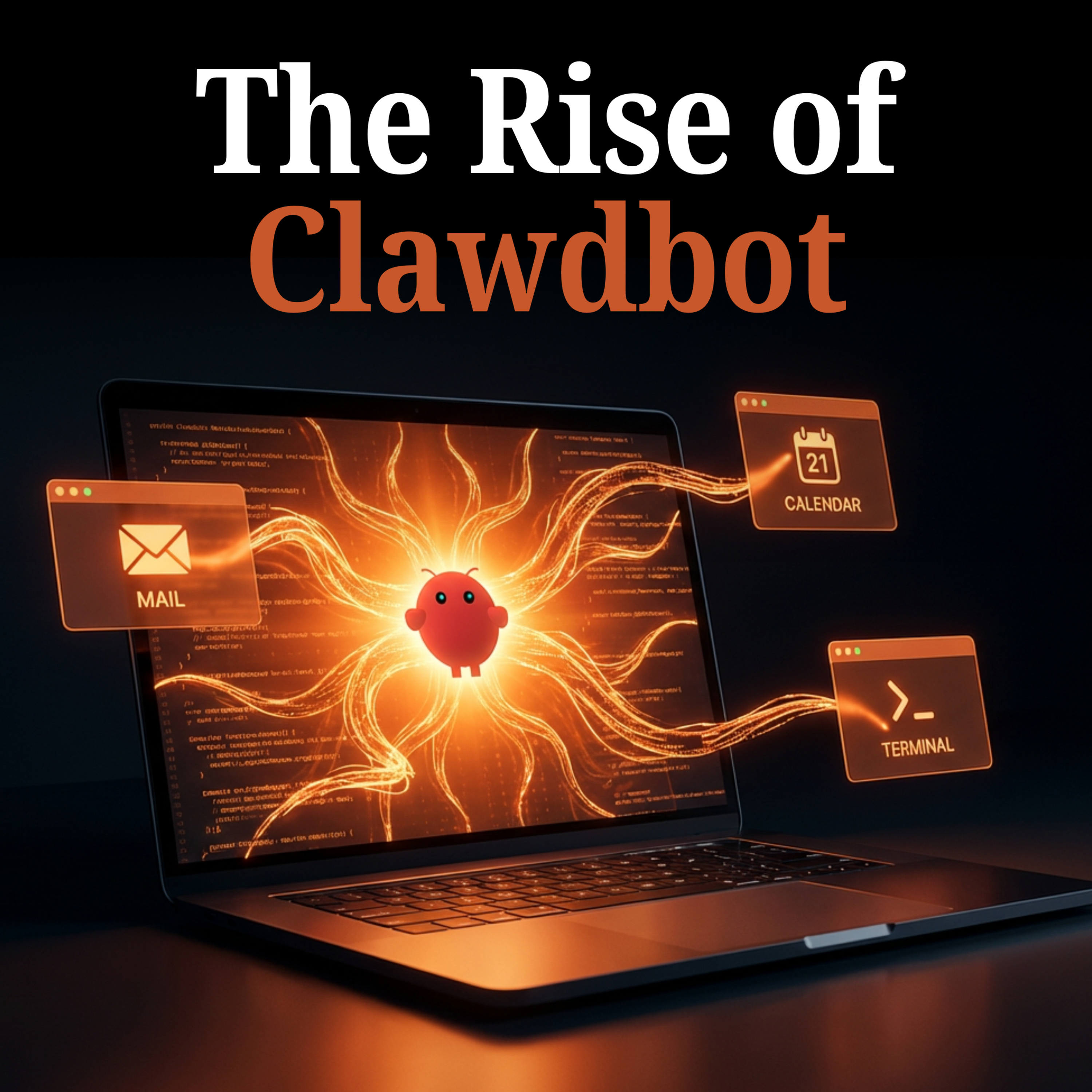
Unlike static tools, agents like Clawdbot can autonomously write and integrate new code. When faced with a new challenge, such as needing a voice interface or GUI control, it can build the required functionality itself, compounding its abilities over time.
