Get your free personalized podcast brief
We scan new podcasts and send you the top 5 insights daily.
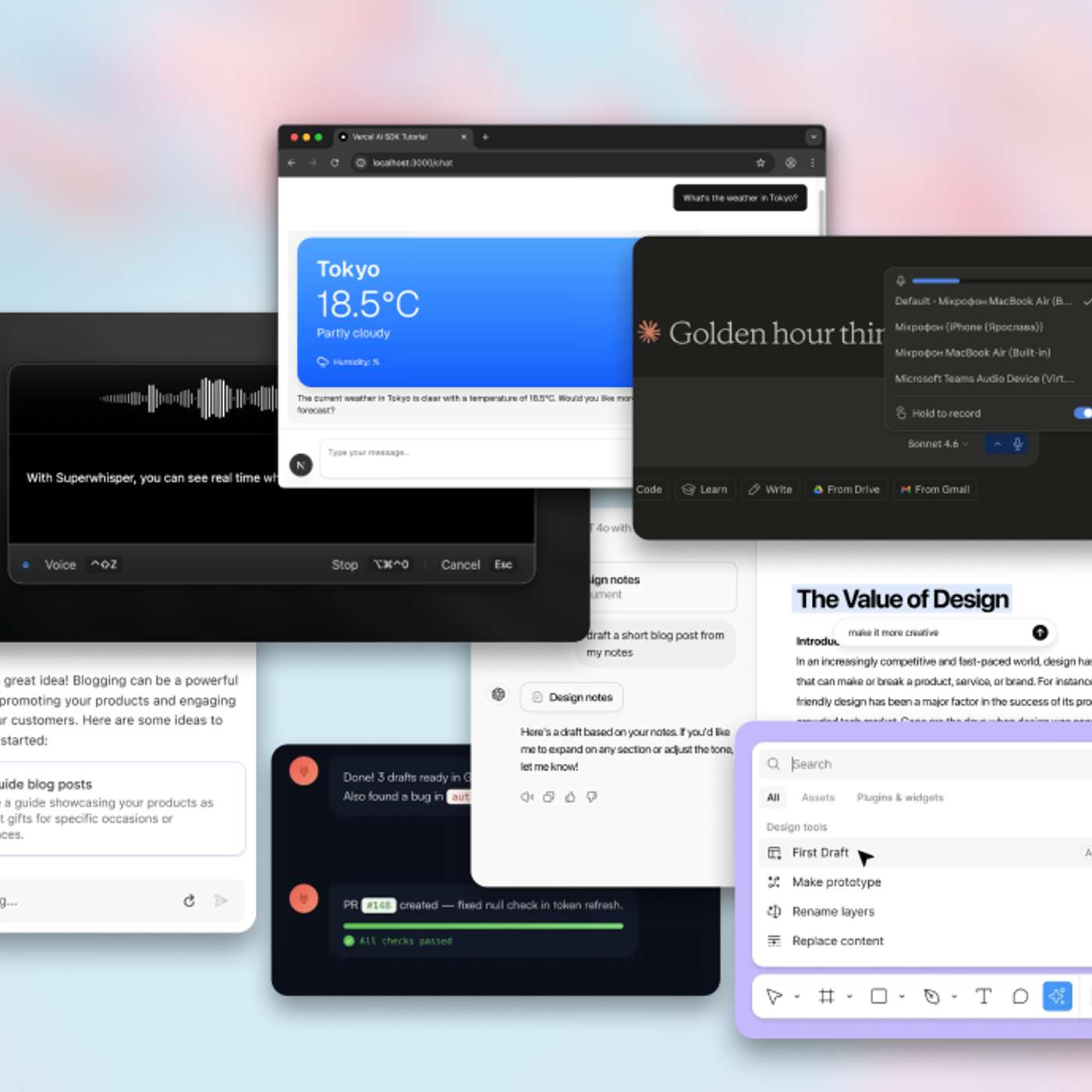
New users hesitate with open-ended AI prompts. Successful products overcome this by offering constrained, guided entry points like slash commands, templates, or contextual suggestions. This reduces user uncertainty and boosts consistent use, making adoption easier.
Related Insights
Users rarely seek out separate AI functionality. Adoption becomes natural when AI assistance appears contextually within existing workflows, addressing friction points directly where the user is already working. This embedded approach is far more effective than adding AI as a separate, layered-on tool.
Despite the hype, AI usage remains low (e.g., single-digit millions for developer tools) because the products are not user-friendly. The critical barrier to mass adoption isn't the underlying technology's power but the lack of well-designed, intuitive user experiences that integrate AI into daily workflows.

Complex prompting is a transitional phase for AI interaction, not the end state. Truly useful AI tools will abstract this complexity away, using agents to translate user intent into optimal prompts. The focus should be on creating intuitive, directorial controls rather than teaching users to be prompt engineers.

A major hurdle in AI adoption is not the technology's capability but the user's inability to prompt effectively. When presented with a natural language interface, many users don't know how to ask for what they want, leading to poor results and abandonment, highlighting the need for prompt guidance.

The best agentic UX isn't a generic chat overlay. Instead, identify where users struggle with complex inputs like formulas or code. Replace these friction points with a native, natural language interface that directly integrates the AI into the core product workflow, making it feel seamless and powerful.
The primary hurdle for potential AI agent users isn't the technical setup; it's the inability to imagine what to do with the tool. Even technically proficient individuals get stuck on the "what can I do with this?" question, indicating that mainstream adoption requires clear, relatable examples and blueprints, not just easier installation.
Open-ended prompts overwhelm new users who don't know what's possible. A better approach is to productize AI into specific features. Use familiar UI like sliders and dropdowns to gather user intent, which then constructs a complex prompt behind the scenes, making powerful AI accessible without requiring prompt engineering skills.

Since AI capabilities are novel, users often struggle with adoption. Rather than using traditional templates or tutorials, a more effective method is to build an AI agent or operator that guides users through the process. This approach uses the AI to teach the user how to leverage AI's potential within the product's specific context.

The most effective application of AI isn't a visible chatbot feature. It's an invisible layer that intelligently removes friction from existing user workflows. Instead of creating new work for users (like prompt engineering), AI should simplify experiences, like automatically surfacing a 'pay bill' link without the user ever consciously 'using AI.'

To achieve mass adoption, ChatGPT must move beyond its current 'computer terminal' interface. The next wave of users are too busy to learn prompting; the product needs clearer affordances and must proactively anticipate needs rather than waiting for commands to provide value.
