Get your free personalized podcast brief
We scan new podcasts and send you the top 5 insights daily.
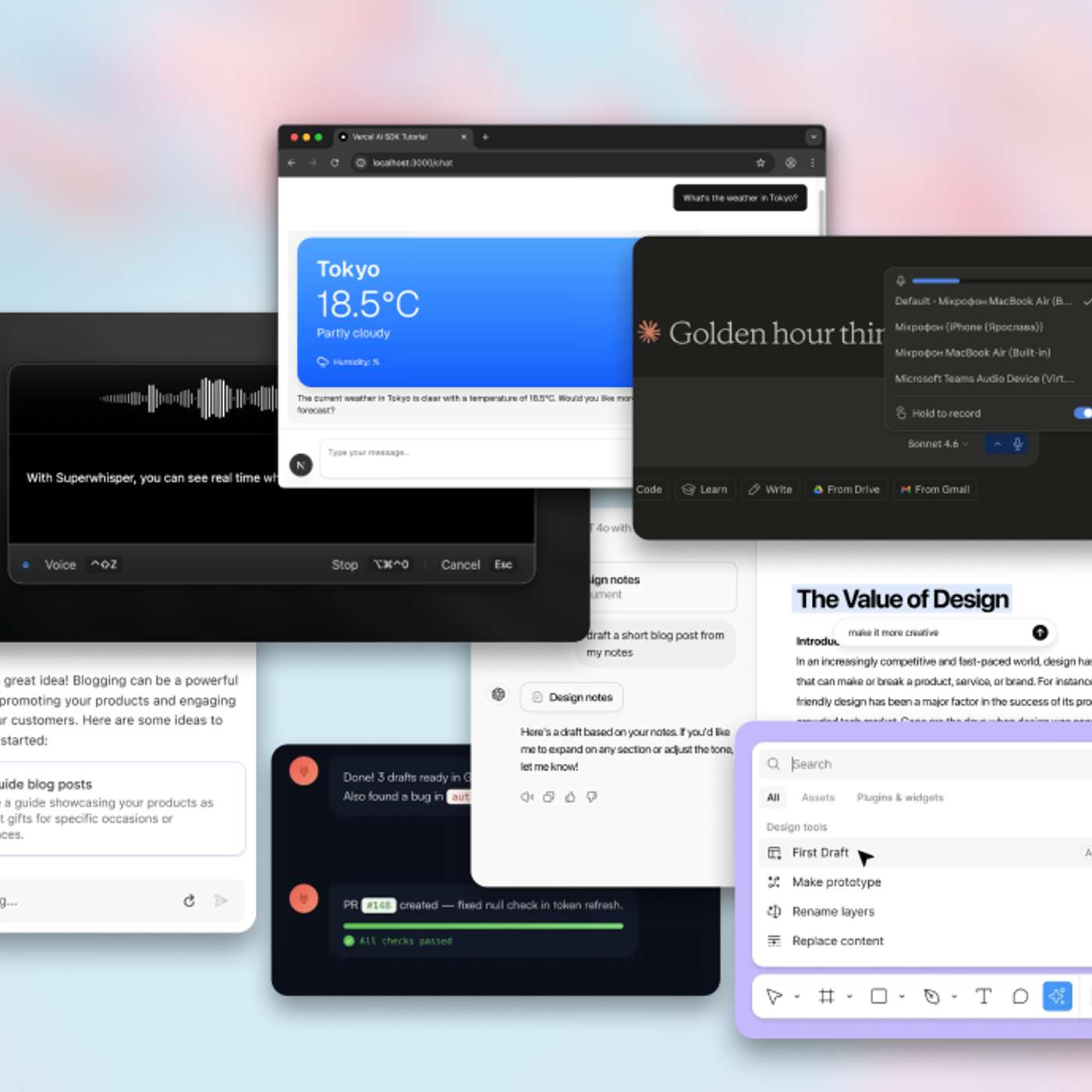
Users rarely seek out separate AI functionality. Adoption becomes natural when AI assistance appears contextually within existing workflows, addressing friction points directly where the user is already working. This embedded approach is far more effective than adding AI as a separate, layered-on tool.
Related Insights
Using AI as a separate, copy-paste tool is inefficient. The real breakthrough comes when AI is integrated directly into your work environment, providing full context and eliminating friction, as seen with AI-native IDEs for developers.

Atlassian's CEO argues that AI tools should not just focus on novel capabilities. They must also improve users' current processes (e.g., AI-assisted writing). This dual approach brings the existing user base along while simultaneously showing them new, transformative ways to work, ensuring broader and faster adoption.

A truly "AI-native" product isn't one with AI features tacked on. Its core user experience originates from an AI interaction, like a natural language prompt that generates a structured output. The product is fundamentally built around the capabilities of the underlying models, making AI the primary value driver.

The primary barrier to widespread AI adoption is not the power of the models, but the difficulty of embedding them into users' existing habits. Meeting users where they already are—like their email inbox—is more effective than forcing them to adopt new applications or behaviors.

The path to enterprise AI adoption follows a typical change curve. To bypass initial fear and rejection, organizations should first apply AI to transform familiar, high-friction workflows. This strategy builds momentum and demonstrates value before tackling entirely new, innovative business models.

The most effective application of AI isn't a visible chatbot feature. It's an invisible layer that intelligently removes friction from existing user workflows. Instead of creating new work for users (like prompt engineering), AI should simplify experiences, like automatically surfacing a 'pay bill' link without the user ever consciously 'using AI.'

To get mainstream users to adopt AI, you can't ask them to learn a new workflow. The key is to integrate AI capabilities directly into the tools and processes they already use. AI should augment their current job, not feel like a separate, new task they have to perform.
To maximize adoption and minimize frontline anxiety, embed new AI tools into existing workflows as an 'easy button.' By skipping a formal launch and training, the focus shifts from the technology's novelty to its intuitive utility, encouraging natural adoption as users discover its value organically.

A "bolt-on" AI strategy will fail. Successful integration isn't about adding an AI feature; it's about fundamentally re-evaluating and rebuilding the entire product experience and its economics around new AI capabilities, creating entirely new user interactions.

To drive adoption of AI agents, don't force users into a new application. Instead, integrate the agent directly into their existing collaboration tools like Slack. This approach reduces friction and makes the agent feel like a natural part of the team, leading to higher engagement and user satisfaction.
