Get your free personalized podcast brief
We scan new podcasts and send you the top 5 insights daily.
The president's explicit threat is perceived as a credible statement of genocidal intent, given US nuclear capabilities. This erodes any pro-American sentiment, uniting even pro-democracy Iranians with their regime for protection and fueling support for developing a nuclear deterrent.

Related Insights
Iran perceives the conflict not as a regional dispute but as a direct threat to its existence. Its strategy is to make the war so costly for adversaries that it secures long-term guarantees against future attacks, framing its actions through a lens of survival.

Constant military pressure and assassinations remove any disincentive for Iran to pursue nuclear weapons. When a regime is already being attacked, acquiring a nuclear deterrent becomes its most logical and effective path to survival, mirroring North Korea's strategy.

In geopolitical conflicts, nations often apply a double standard to rhetoric. An adversary's hyperbolic slogan like 'Death to America' is treated as a literal threat justifying war, while one's own equally extreme statements, like 'a whole civilization will die tonight,' are dismissed as mere posturing.

The bombing campaign, aimed at regime change, could be counterproductive. Prior to the conflict, Iran's regime was seen as unpopular and frail, potentially heading for collapse or moderation. The external attack risks creating a rally-round-the-flag effect, allowing the regime to consolidate power where mere survival becomes a victory.
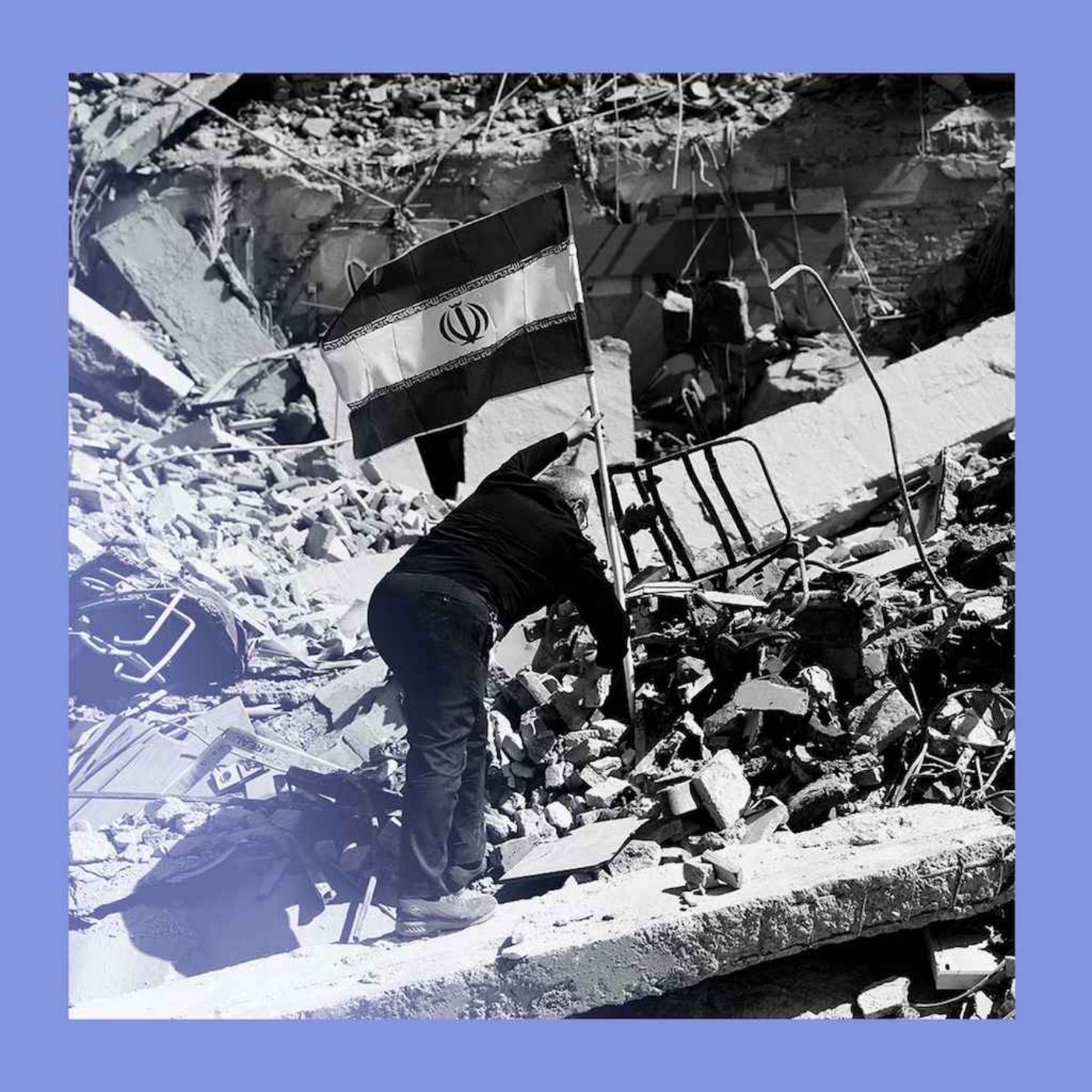
Before the conflict, Iran maintained a "credible but not actual" nuclear program as a deterrent. By assassinating the supreme leader and launching an air war, the US has proven this strategy insufficient, forcing Iran to pursue an actual nuclear weapon for survival.

Deterrence happens in the mind of the enemy. The US fails to deter Iran by attacking its Arab proxies because Iranian culture views Arabs as expendable. To be effective, deterrence must threaten what the target culture actually values. In Iran's case, this means threatening Persians, not their proxies.

The targeted Iranian supreme leader had issued two religious edicts (fatwas) against developing nuclear weapons. His assassination removed this key restraint and installed his more aggressive son, who has not issued similar edicts, thereby inadvertently accelerating the nuclear threat.
Trump's strategy of escalating threats is based on the model that rational actors will capitulate to overwhelming force. This fails when adversaries, viewing conflict as existential, operate under a different calculus, leading to unpredictable and dangerous escalations.

Previously a remote possibility, direct military intervention in Iran creates a scenario where an unconditional surrender is demanded. This leaves Iran with little to lose, making the use of a nuclear weapon a logical defensive step, likely delivered via a cargo ship to a major US port.
Despite widespread internal protests and instability, history shows that an external attack is one of the few things that can unify the Iranian population. A potential Israeli strike, meant to weaken the regime, could backfire by creating a 'rally 'round the flag' effect that shores up support for the Ayatollah.
