Get your free personalized podcast brief
We scan new podcasts and send you the top 5 insights daily.
In geopolitical conflicts, nations often apply a double standard to rhetoric. An adversary's hyperbolic slogan like 'Death to America' is treated as a literal threat justifying war, while one's own equally extreme statements, like 'a whole civilization will die tonight,' are dismissed as mere posturing.

Related Insights
Claiming you will only 'turn down the temperature' after your opponents do is not a strategy for de-escalation; it is a justification for retaliation. This 'counter-punching' approach ensures conflict continues. A genuine desire to reduce societal tension requires leading by example, not waiting for the other side to act first.

When a political leader frequently issues apocalyptic threats without acting on them, the public becomes desensitized. The rhetoric is dismissed as bluster (a "Taco Tuesday"), dangerously lowering the bar for acceptable discourse and eroding the impact of genuine warnings.
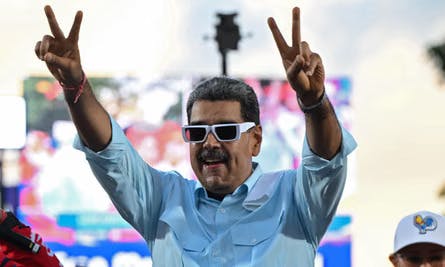
Authoritarian leaders who publicly mock or dismiss threats risk triggering a military response driven by personal pride. Venezuelan President Maduro's televised dancing was reportedly perceived by the Trump administration as calling their bluff, demonstrating how avoiding the appearance of being a 'chump' can become a primary motivator for military action.
In conflicts, a critical error is to believe that escalating pressure will automatically force an opponent to back down. This overlooks that for the adversary, the fight may be existential, leaving them no room to retreat and thus leading to a more dangerous conflict.

A leader's bombastic, civilization-ending rhetoric often serves as a distraction from the military's actual strategy. While Trump threatened to "wipe out" Iran, the US military was simultaneously conducting a targeted strike, showing a disconnect between public posturing and operational reality.
While Americans may become desensitized to a president's unconventional statements, allies like Australia do not see it as a joke. They interpret threats to treaty obligations as genuine disrespect and aggression, compelling them to develop independent defense strategies and fundamentally altering geopolitical relationships built over decades.

Trump's strategy of escalating threats is based on the model that rational actors will capitulate to overwhelming force. This fails when adversaries, viewing conflict as existential, operate under a different calculus, leading to unpredictable and dangerous escalations.

In the aftermath of political violence, the targeted group often mirrors the very dehumanizing tactics they condemn. While correctly identifying an attacker's ideology, they risk escalating the conflict by applying labels like 'evil' to the entire opposing side, thus perpetuating the cycle of radicalization that fuels violence.
Societies adapt to escalating geopolitical tensions much like a frog being slowly boiled. Threats that would have seemed outrageous months ago become the new normal, masking the true severity and risk of the current situation until it's too late.
Trump simultaneously suggests the war is nearly complete to reassure investors and threatens "death, fire and fury" to deter adversaries. This is not confusion, but a deliberate dual-messaging strategy to manage both economic fallout and geopolitical posturing, targeting different audiences with different messages.
