Get your free personalized podcast brief
We scan new podcasts and send you the top 5 insights daily.
Much of the public conflict between powerful leaders isn't about substantive policy differences but about ego. The desire to avoid looking weak or like they are capitulating leads to political theater that prevents rational cooperation, even when both sides know the eventual outcome is inevitable.

Related Insights
Claiming you will only 'turn down the temperature' after your opponents do is not a strategy for de-escalation; it is a justification for retaliation. This 'counter-punching' approach ensures conflict continues. A genuine desire to reduce societal tension requires leading by example, not waiting for the other side to act first.

Trump's erratic approach isn't random; it's a strategy to create chaos and uncertainty. This keeps adversaries off-balance, allowing him to exploit openings that emerge, much like a disruptive CEO. He is comfortable with instability and uses it as a tool for negotiation and advantage.

A political party might intentionally trigger a government shutdown not to win policy concessions, but to create a public narrative of a dysfunctional opposition. The true victory isn't legislative but reputational, aiming to sway voters in upcoming elections by making the ruling party look incompetent.

Authoritarian leaders who publicly mock or dismiss threats risk triggering a military response driven by personal pride. Venezuelan President Maduro's televised dancing was reportedly perceived by the Trump administration as calling their bluff, demonstrating how avoiding the appearance of being a 'chump' can become a primary motivator for military action.
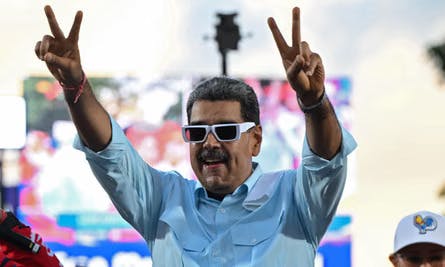
According to a former U.S. negotiator, Nicolás Maduro's personality is a key factor in diplomacy. His thin skin and brittle ego mean he will reject any proposal, even a beneficial one, if he perceives it as being forced upon him, making traditional pressure tactics ineffective.

The core driver of a 'Thucydides Trap' conflict is the psychological distress experienced by the ruling power. For the U.S., the challenge to its identity as '#1' creates a disorienting fear and paranoia, making it prone to miscalculation, independent of actual military or economic shifts.

Viewing politicians as athletes in a game reveals their true motivation: gaining and retaining power. This framework explains seemingly inconsistent actions, like flip-flopping, as strategic plays for short-term public sentiment rather than reflections of moral conviction or long-term vision.

Political figures often focus on superficial issues like beards and physical fitness, which directly conflicts with the professional military's culture. The armed services value deep competence, humility, and character—qualities essential for managing lethal force and complex global operations, regardless of appearance.

A leadership style centered on "kindness" doesn't mean avoiding disagreement. It means setting a firm boundary: policy and decisions are fair game for debate, but personal attacks on opponents are off-limits. This strategy combats public "conflict fatigue."

Understanding political behavior is simplified by recognizing the primary objective is not ideology but accumulating and holding power. Actions that seem hypocritical are often rational calculations toward this singular goal, including telling 'horrific lies.'