Get your free personalized podcast brief
We scan new podcasts and send you the top 5 insights daily.
Companies like Google were so cash-rich they didn't need Wall Street or other powerful trading partners. This financial independence meant that when they faced political threats, they lacked a coalition of powerful allies whose own financial interests were tied to their survival, making them politically vulnerable.

Related Insights
The dynamic between tech and government is not a simple decline but a cycle of alignment (post-WWII), hostility (2000s-2010s), and a recent return to collaboration. This "back to the future" trend is driven by geopolitical needs and cultural shifts, suggesting the current alignment is a return to a historical norm.

When governments become top shareholders, corporate focus shifts from pleasing customers to securing political favor and appropriations. R&D budgets are reallocated to lobbying, and market competition devolves from building the best product to playing the policy game most effectively, strangling innovation.

The fastest path to generating immense wealth is shifting from pure innovation to achieving regulatory capture via proximity to the president. This strategy is designed to influence policy, secure government contracts, or even acquire state-seized assets like TikTok at a steep discount, representing a new form of crony capitalism.

Business leaders may see short-term benefits in aligning with an aspiring autocrat. However, this alliance is temporary. In Hungary, 15 years after Viktor Orbán took power, only 23% of the country's 50 wealthiest people remained on the list, as the regime moved to consolidate power by bankrupting or eliminating rivals.

Google's strategy may be to offer its powerful AI models for free or at a significant loss. As a trillion-dollar company, it can sustain these losses indefinitely, forcing smaller competitors like OpenAI into an "endless sea of red ink" until they collapse, thereby securing a market monopoly.

As the current low-cost producer of AI tokens via its custom TPUs, Google's rational strategy is to operate at low or even negative margins. This "sucks the economic oxygen out of the AI ecosystem," making it difficult for capital-dependent competitors to justify their high costs and raise new funding rounds.
![Gavin Baker - Nvidia v. Google, Scaling Laws, and the Economics of AI - [Invest Like the Best, EP.451] thumbnail](https://megaphone.imgix.net/podcasts/d97fee14-d4d7-11f0-8951-8324b640c1c1/image/d3a8b5ecbf3957de5b91f278a191c9ff.jpg?ixlib=rails-4.3.1&max-w=3000&max-h=3000&fit=crop&auto=format,compress)
Google can dedicate nearly all its resources to AI product development because its core business handles infrastructure and funding. In contrast, OpenAI must constantly focus on fundraising and infrastructure build-out. This mirrors the dynamic where a focused Facebook outmaneuvered a distracted MySpace, highlighting a critical incumbent advantage.
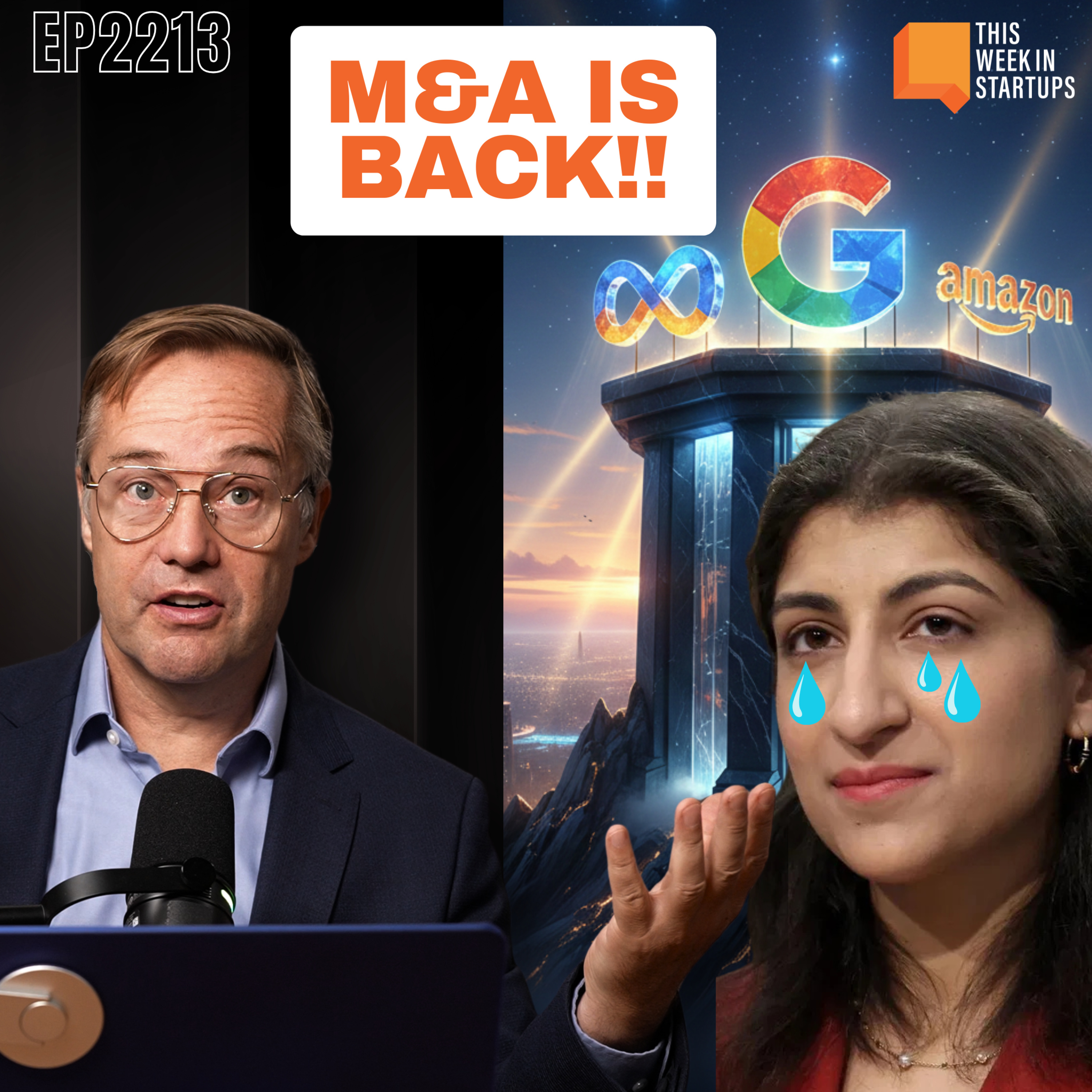
The global economy's reliance on a few dominant tech companies creates systemic risk. Unlike a robust, diversified economy, a downturn in a single key player like NVIDIA could trigger a disproportionately severe global recession, described as 'stage four walking pneumonia.' This concentration makes the entire system fragile.
Unlike Big Tech firms with nearly unlimited resources to fight legal battles, traditional media companies are financially weaker than ever. This economic vulnerability makes them susceptible to government pressure, as they often cannot afford the protracted litigation required to defend their First Amendment rights.

Large corporations can afford lobbyists and consultants to navigate geopolitical shifts, but their size makes strategic pivots notoriously difficult. This creates opportunities for agile startups and SMEs, which can adapt their strategies and organizations much faster to the changing landscape.