Get your free personalized podcast brief
We scan new podcasts and send you the top 5 insights daily.
The global economy's reliance on a few dominant tech companies creates systemic risk. Unlike a robust, diversified economy, a downturn in a single key player like NVIDIA could trigger a disproportionately severe global recession, described as 'stage four walking pneumonia.' This concentration makes the entire system fragile.

Related Insights
The AI boom is fueled by 'club deals' where large companies invest in startups with the expectation that the funds will be spent on the investor's own products. This creates a circular, self-reinforcing valuation bubble that is highly vulnerable to collapse, as the failure of one company can trigger a cascading failure across the entire interconnected system.
If AGI is concentrated in a few US companies, other nations could lose their economic sovereignty. When American AGI can produce goods far cheaper than local human labor, economies like the UK's could collapse. They would become economically dependent "client states," reliant on American technology for almost all production, with wealth accruing to Silicon Valley.

Contrary to the belief that number two players can be viable, most tech markets are winner-take-all. The market leader captures the vast majority of economic value, making investments in second or third-place companies extremely risky.
![David George - Building a16z Growth, Investing Across the AI Stack, and Why Markets Misprice Growth - [Invest Like the Best, EP.450] thumbnail](https://megaphone.imgix.net/podcasts/8da7dbd8-ceeb-11f0-941c-ef83bcdd4c9f/image/d44107bc94719f78fbe91befb141073e.jpg?ixlib=rails-4.3.1&max-w=3000&max-h=3000&fit=crop&auto=format,compress)
Today's market is more fragile than during the dot-com bubble because value is even more concentrated in a few tech giants. Ten companies now represent 40% of the S&P 500. This hyper-concentration means the failure of a single company or trend (like AI) doesn't just impact a sector; it threatens the entire global economy, removing all robustness from the system.
OpenAI's CFO hinted at needing government guarantees for its massive data center build-out, sparking fears of an AI bubble and a "too big to fail" scenario. This reveals the immense financial risk and growing economic dependence the U.S. is developing on a few key AI labs.

The global economy's dependence on AI has created a massive concentration of risk in NVIDIA. Its valuation, exceeding the entire German stock market, makes it a single point of failure. A significant drop in its stock—which could still leave it overvalued—would have catastrophic ripple effects with nowhere for capital to hide.
Recent breakdowns in student loan processing, AI governance, and cloud infrastructure highlight the vulnerability of centralized systems. This pattern underscores a key personal finance strategy: mitigate risk by decentralizing your money, data, and income streams across various platforms and sources.

NVIDIA's primary business risk isn't competition, but extreme customer concentration. Its top 4-5 customers represent ~80% of revenue. Each has a multi-billion dollar incentive to develop their own chips to reclaim NVIDIA's high gross margins, a threat most businesses don't face.
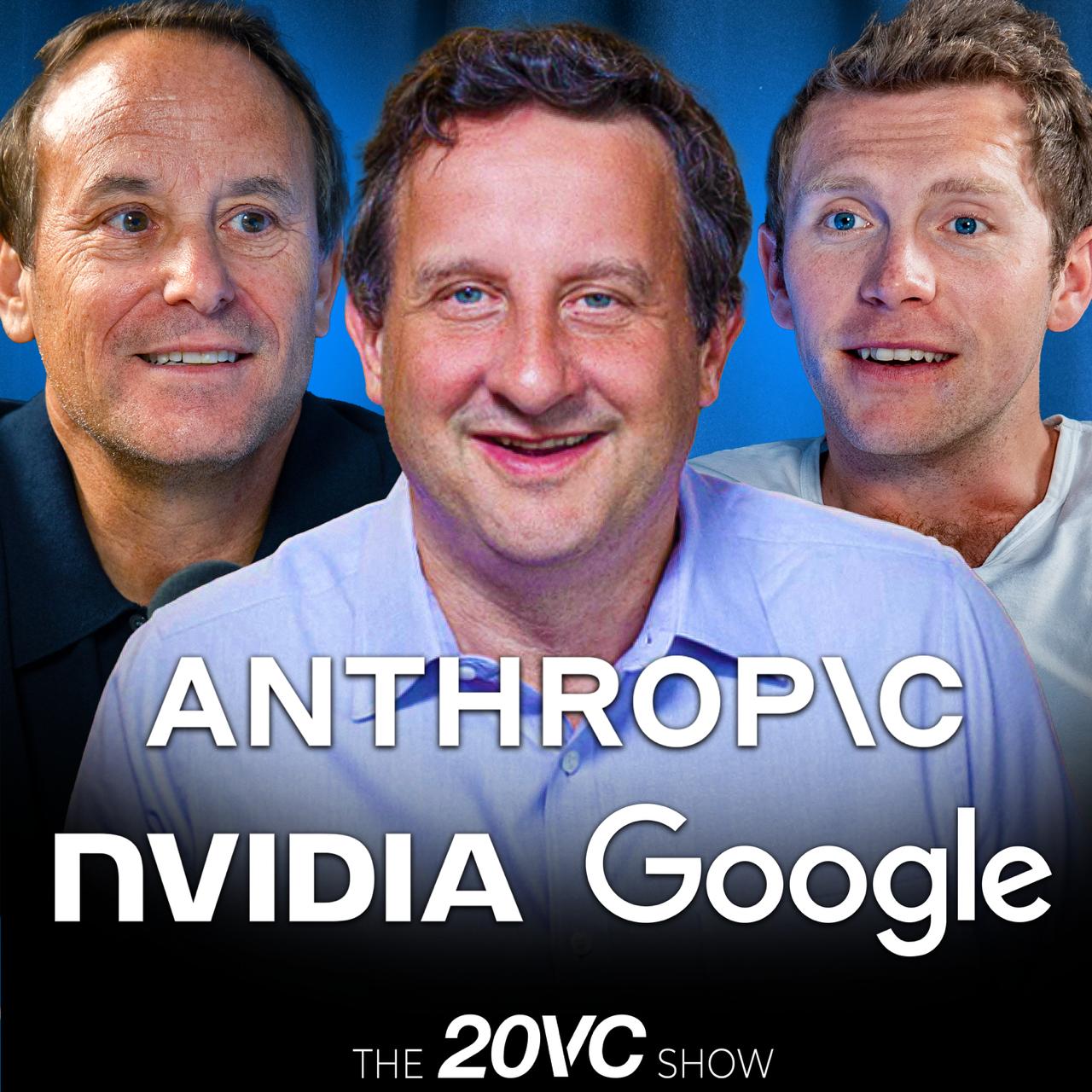
Leaders from NVIDIA, OpenAI, and Microsoft are mutually dependent as customers, suppliers, and investors. This creates a powerful, self-reinforcing growth loop that props up the entire AI sector, making it look like a "white elephant gift-giving party" where everyone is invested in each other's success.

The AI market won't just pop; it will unwind in a specific sequence. Traditional companies will first scale back AI investment, which reveals OpenAI's inability to fund massive chip purchases. This craters NVIDIA's stock, triggering a multi-trillion-dollar market destruction and leading to a broader economic recession.