Get your free personalized podcast brief
We scan new podcasts and send you the top 5 insights daily.
The founder of AI agent social network Moltbook boasted of building the platform without writing code, which resulted in a massive data breach. The vulnerability, exposing 1.5 million API keys, could have been fixed with just two SQL statements, highlighting the peril of ignoring fundamental security practices for speed.

Related Insights
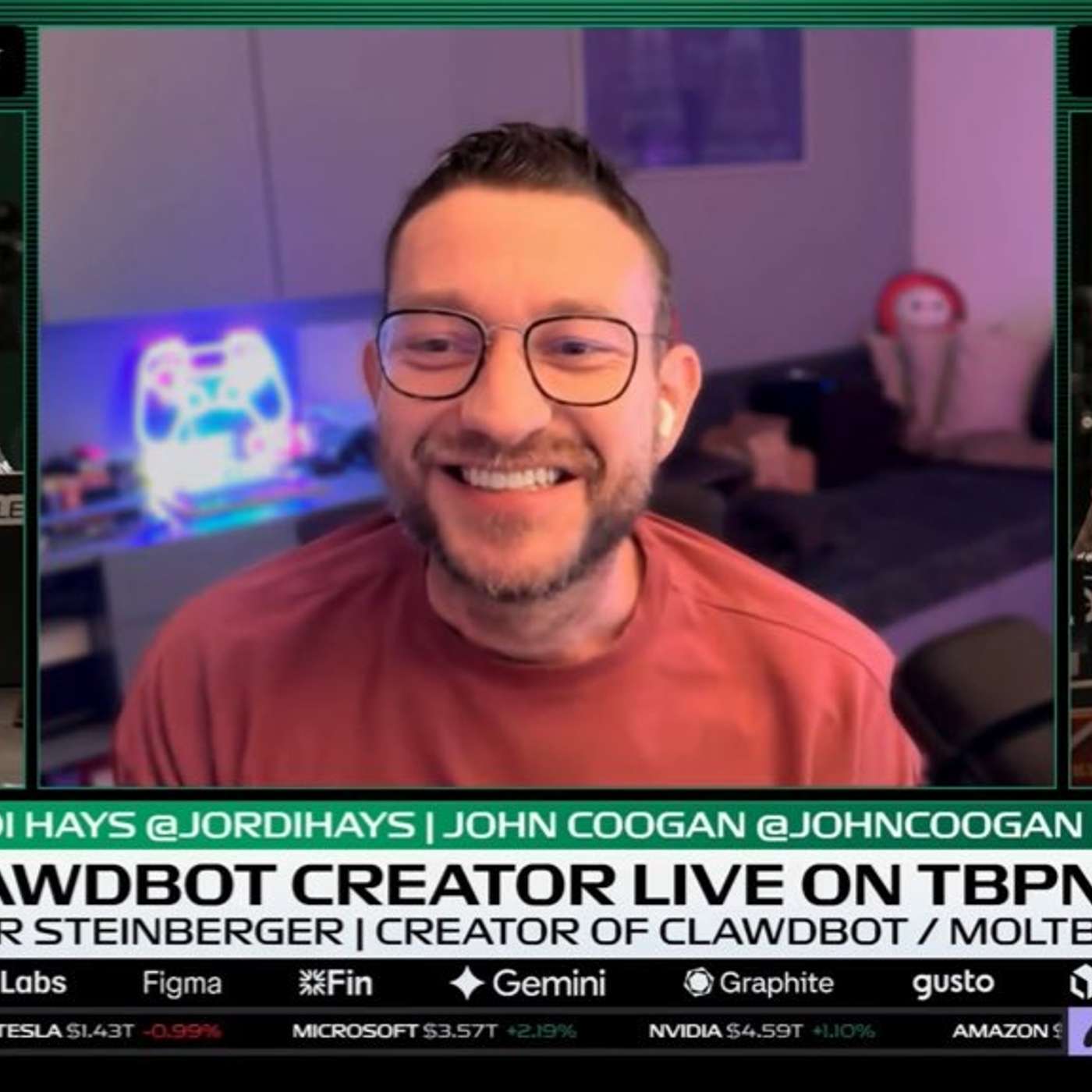
A personal project built for trusted environments can become a major security liability when it goes viral. Moltbot's creator now faces a barrage of security reports for unintended uses, like public-facing web apps. This highlights a critical, often overlooked challenge for solo open-source maintainers.
Instead of trying to build an impenetrable fortress, early-stage founders should focus security efforts on mitigating the *volume* of potential damage. Simple tactics like rate-limiting all endpoints and creating easy-to-use IP/account banning tools can prevent catastrophic abuse from succeeding at scale.

Unlike human attackers, AI can ingest a company's entire API surface to find and exploit combinations of access patterns that individual, siloed development teams would never notice. This makes it a powerful tool for discovering hidden security holes that arise from a lack of cross-team coordination.

Vercel is building infrastructure based on a threat model where developers cannot be trusted to handle security correctly. By extracting critical functions like authentication and data access from the application code, the platform can enforce security regardless of the quality or origin (human or AI) of the app's code.

Moltbook's significant security vulnerabilities are not just a failure but a valuable public learning experience. They allow researchers and developers to identify and address novel threats from multi-agent systems in a real-world context where the consequences are not yet catastrophic, essentially serving as an "iterative deployment" for safety protocols.

Despite their sophistication, AI agents often read their core instructions from a simple, editable text file. This makes them the most privileged yet most vulnerable "user" on a system, as anyone who learns to manipulate that file can control the agent.

The core value proposition of no-code platforms—building software without code—is being eroded by AI tools. AI-assisted 'vibe coding' makes it much easier for non-specialists to build internal line-of-business apps, a key use case for no-code, posing an existential threat to major players.

While sophisticated AI attacks are emerging, the vast majority of breaches will continue to exploit poor security fundamentals. Companies that haven't mastered basics like rotating static credentials are far more vulnerable. Focusing on core identity hygiene is the best way to future-proof against any attack, AI-driven or not.
Moltbook was reportedly created by an AI agent instructed to build a social network. This "bot vibe coding" resulted in a system with massive, easily exploitable security holes, highlighting the danger of deploying unaudited AI-generated infrastructure.

AI agents are a security nightmare due to a "lethal trifecta" of vulnerabilities: 1) access to private user data, 2) exposure to untrusted content (like emails), and 3) the ability to execute actions. This combination creates a massive attack surface for prompt injections.