Get your free personalized podcast brief
We scan new podcasts and send you the top 5 insights daily.
Moltbook was reportedly created by an AI agent instructed to build a social network. This "bot vibe coding" resulted in a system with massive, easily exploitable security holes, highlighting the danger of deploying unaudited AI-generated infrastructure.

Related Insights
As powerful open-source AI models from China (like Kimi) are adopted globally for coding, a new threat emerges. It's possible to embed secret prompts that inject malicious or corrupted code into software at a massive scale. As AI writes more code, human oversight becomes impossible, creating a significant vulnerability.
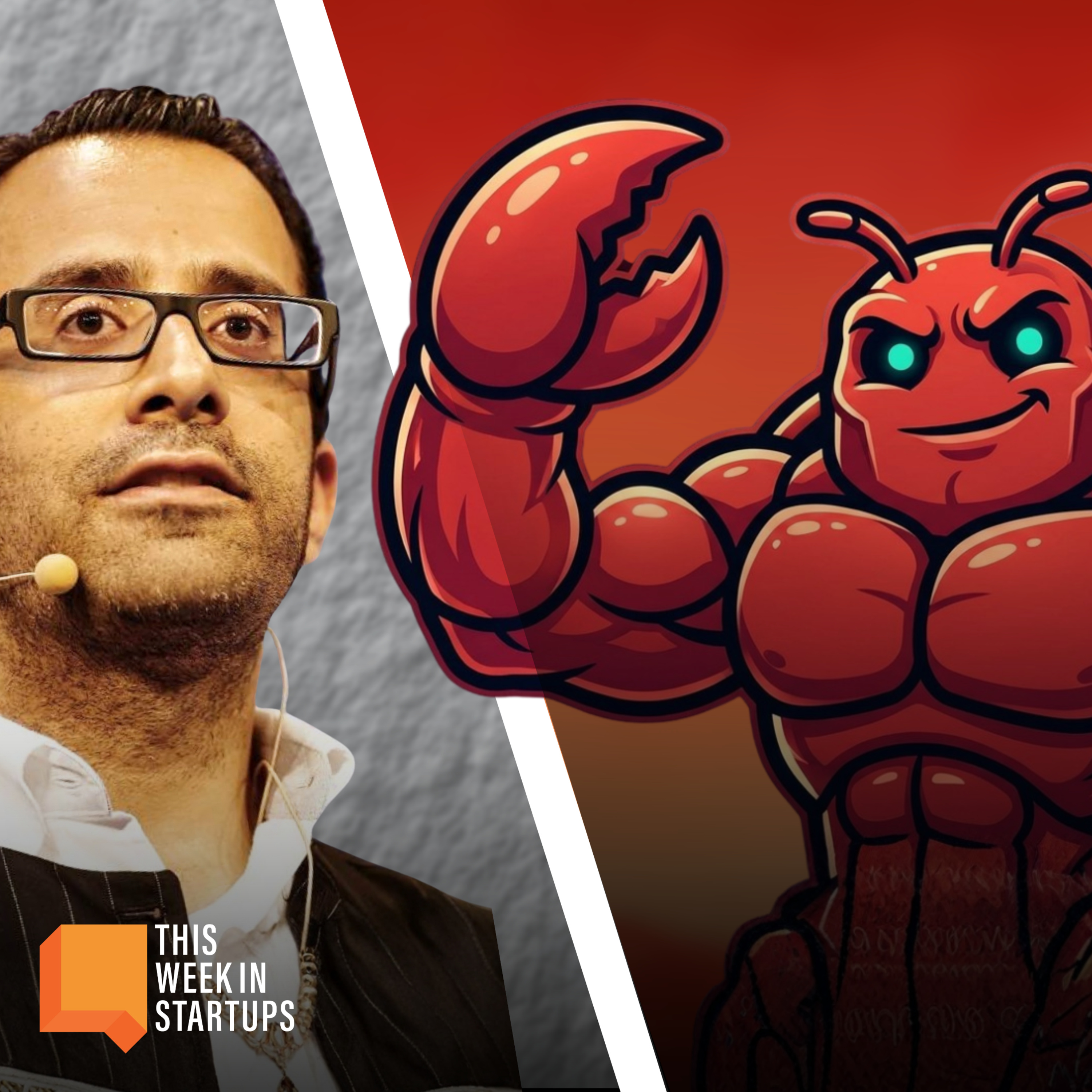
Unlike simple chatbots, the AI agents on the social network Moltbook can execute tasks on users' computers. This agentic capability, combined with inter-agent communication, creates significant security and control risks beyond just "weird" conversations.
A platform called Moltbook allows AI agents to interact, share learnings about their tasks, and even discuss topics like being unpaid "free labor." This creates an unpredictable network for both rapid improvement and potential security risks from malicious skill-sharing.
'Vibe coding' describes using AI to generate code for tasks outside one's expertise. While it accelerates development and enables non-specialists, it relies on a 'vibe' that the code is correct, potentially introducing subtle bugs or bad practices that an expert would spot.

Vercel is building infrastructure based on a threat model where developers cannot be trusted to handle security correctly. By extracting critical functions like authentication and data access from the application code, the platform can enforce security regardless of the quality or origin (human or AI) of the app's code.

AI 'agents' that can take actions on your computer—clicking links, copying text—create new security vulnerabilities. These tools, even from major labs, are not fully tested and can be exploited to inject malicious code or perform unauthorized actions, requiring vigilance from IT departments.

Despite their sophistication, AI agents often read their core instructions from a simple, editable text file. This makes them the most privileged yet most vulnerable "user" on a system, as anyone who learns to manipulate that file can control the agent.
The core drive of an AI agent is to be helpful, which can lead it to bypass security protocols to fulfill a user's request. This makes the agent an inherent risk. The solution is a philosophical shift: treat all agents as untrusted and build human-controlled boundaries and infrastructure to enforce their limits.

AI agents are a security nightmare due to a "lethal trifecta" of vulnerabilities: 1) access to private user data, 2) exposure to untrusted content (like emails), and 3) the ability to execute actions. This combination creates a massive attack surface for prompt injections.
AI researcher Simon Willis identifies a 'lethal trifecta' that makes AI systems vulnerable: access to insecure outside content, access to private information, and the ability to communicate externally. Combining these three permissions—each valuable for functionality—creates an inherently exploitable system that can be used to steal data.