Get your free personalized podcast brief
We scan new podcasts and send you the top 5 insights daily.
When we hear stories of how ancestors overcame challenges, we internalize them as "vicarious memories." These are not just tales but mental models of resilience that act as a psychological buffer against our own adversity. This has been observed in studies of children post-9/11 and military veterans.
Related Insights
Trauma is not an objective property of an event but a subjective experience created by the relationship between a present situation and past memories. Because experience is a combination of sensory input and remembered past, changing the meaning or narrative of past events can change the experience of trauma itself.

Studying history can be a calming practice. It reveals that past eras were often far worse than the present, providing a soothing perspective that humanity has endured and overcome similar or greater challenges before. This counters the modern feeling of unique, terminal decline.

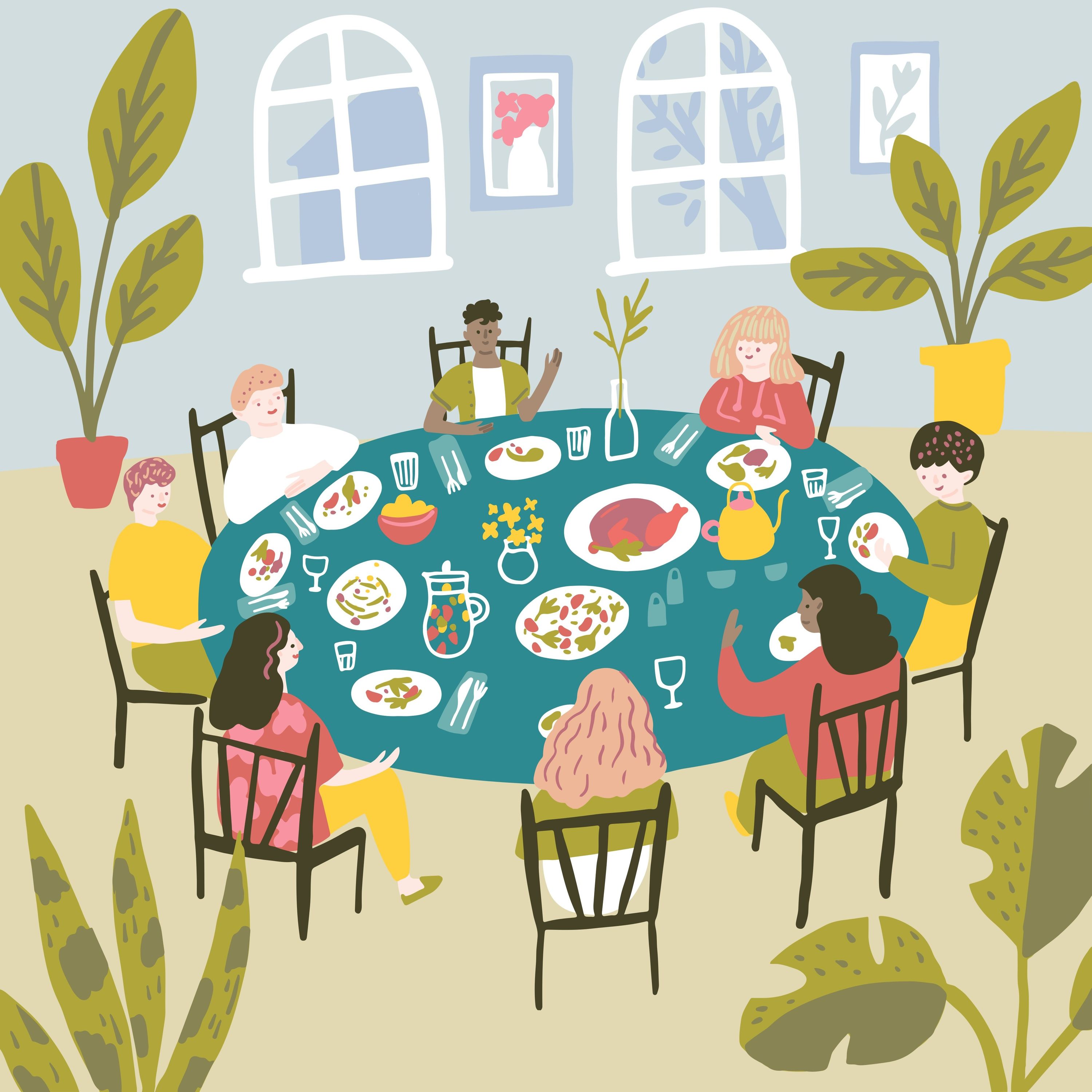
The *style* of family storytelling is critical. Parents who co-create stories with children using open-ended questions build higher self-esteem and emotional understanding. In contrast, a repetitive, "quiz" style focused on factual accuracy is less beneficial. The collaborative process matters more than the facts themselves.
Emory psychologist Marshall Duke's "Do You Know" scale, a 20-question quiz on family history, reveals a strong correlation between knowing family lore (e.g., where parents met) and a child's self-esteem, agency, and emotional competence. This specific knowledge, not just general stories, is a key predictor of resilience.
People watched the movie 'Contagion' during the pandemic rather than reading scientific papers because the human brain is wired to learn through first-person stories, not lists of facts. Narratives provide a simulated, experiential perspective that taps into ancient brain mechanisms, making the information more memorable, understandable, and emotionally resonant.
Experiencing a true life tragedy, such as losing a spouse, fundamentally recalibrates one's perspective. It creates a powerful mental filter that renders materialistic envy and minor daily frustrations insignificant. This resilience comes from understanding the profound difference between a real problem and a mere inconvenience.

Skincare founder Kate Somerville was taught to see her chaotic upbringing not as a weakness, but as a training ground that made her exceptionally good at navigating trouble. The adult self can leverage this skill while reassuring the scared inner child, turning past trauma into a present strength.

Psychologists can predict the severity of a person's depressive and anxious symptoms not by the content of their trauma, but by the form of their narrative. Recurring, stuck narratives, or what is called the "same old story," correlate with poorer mental health outcomes.
Psychologist Robin Fivush finds that the healthiest family sagas are "oscillating," incorporating both life's ups and downs. Unlike purely positive or negative narratives, this model provides a realistic framework of perseverance, teaching children that setbacks can be overcome and are a normal part of life.
The meaning of an event is not fixed but is shaped by its narrative framing. As both the author and protagonist of our life stories, we can change an experience's impact by altering its "chapter breaks." Ending a story at a low point creates a negative narrative, while extending it to include later growth creates a redemptive one.