Get your free personalized podcast brief
We scan new podcasts and send you the top 5 insights daily.
Unlike chatbots that simply respond to queries, agentic AI systems can interact with external tools, access data from various sources, and perform actions on a user's computer. This capability to operate outside its immediate interface is the key differentiator.
Related Insights
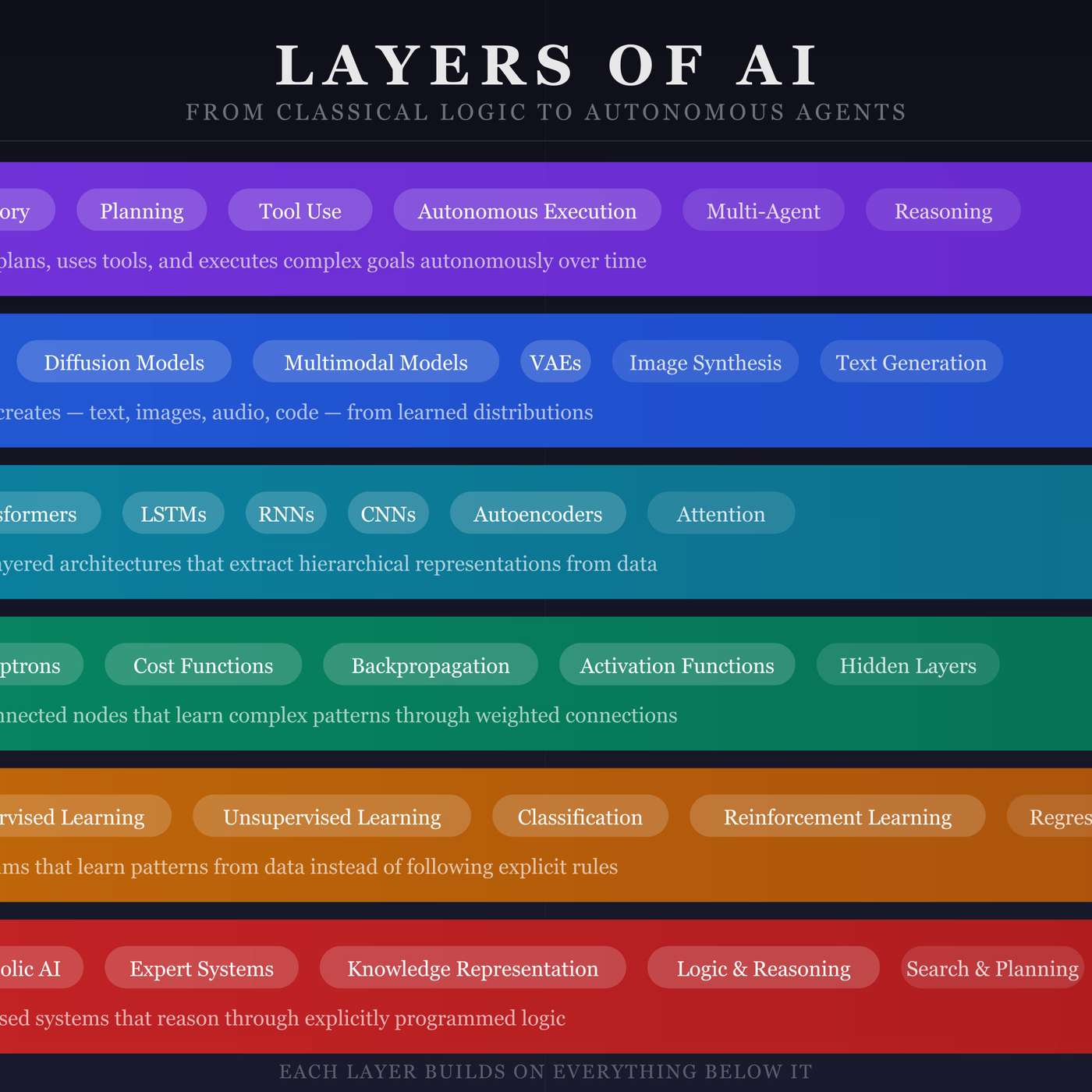
The current pinnacle of the AI stack, 'Agentic AI,' moves beyond simply generating answers to performing autonomous actions. By combining generative models with planning, memory, and tool use (like APIs or code interpreters), these systems can execute complex, multi-step tasks, defining the next wave of product development.
AI agents are not just chatbots; they are powerful orchestrators that connect to various underlying tools (e.g., portfolio analyzers, databases). This allows non-technical users to perform complex data analysis and execute subsequent actions using simple natural language commands.

The fundamental difference that elevates a chatbot to a true agent is its capacity to use tools, such as a browser or local files. This seemingly minor addition completely transforms the product's utility and what it can accomplish for a user.

While conversational AI was an initial breakthrough, the more profound user experience shift comes from AI agents that can act autonomously. The ability for an AI to read files, run commands, and manage tasks in the background without constant input marks the transition from a passive tool to a proactive partner.
An AI feature like a chatbot requires turn-based user interaction. In contrast, a true AI agent is defined by its autonomy. It integrates with business systems (e.g., email, databases) to independently execute tasks and achieve a specified outcome without constant human input.
Advanced AI agents like Codex offer a "Computer Use" skill that lets them control your computer's browser and mouse. This is a paradigm shift from traditional automation, which relies on APIs or command-line interfaces. It allows the agent to perform tasks on any application, just as a human would.

The paradigm for using AI is fundamentally changing. It's no longer just about chatting with a bot for information. It is now about deploying agentic systems that can operate a computer, take complex actions, and complete hours of human work in a single command, requiring a new user skillset.

Unlike generative AI (like ChatGPT) which only provides text output, agentic AI can perform actions on your behalf. It can log into accounts, click buttons, and complete multi-step tasks, shifting AI from a smart consultant to an autonomous digital assistant.

The next wave of AI is 'agentic,' meaning it can control a computer to execute commands and complete tasks, not just generate responses to prompts. This profound shift automates workflows like coding and administrative tasks, freeing humans for high-level creative and strategic work.

The next evolution of enterprise AI isn't conversational chatbots but "agentic" systems that act as augmented digital labor. These agents perform complex, multi-step tasks from natural language commands, such as creating a training quiz from a 700-page technical document.
