Get your free personalized podcast brief
We scan new podcasts and send you the top 5 insights daily.
While conversational AI was an initial breakthrough, the more profound user experience shift comes from AI agents that can act autonomously. The ability for an AI to read files, run commands, and manage tasks in the background without constant input marks the transition from a passive tool to a proactive partner.
Related Insights
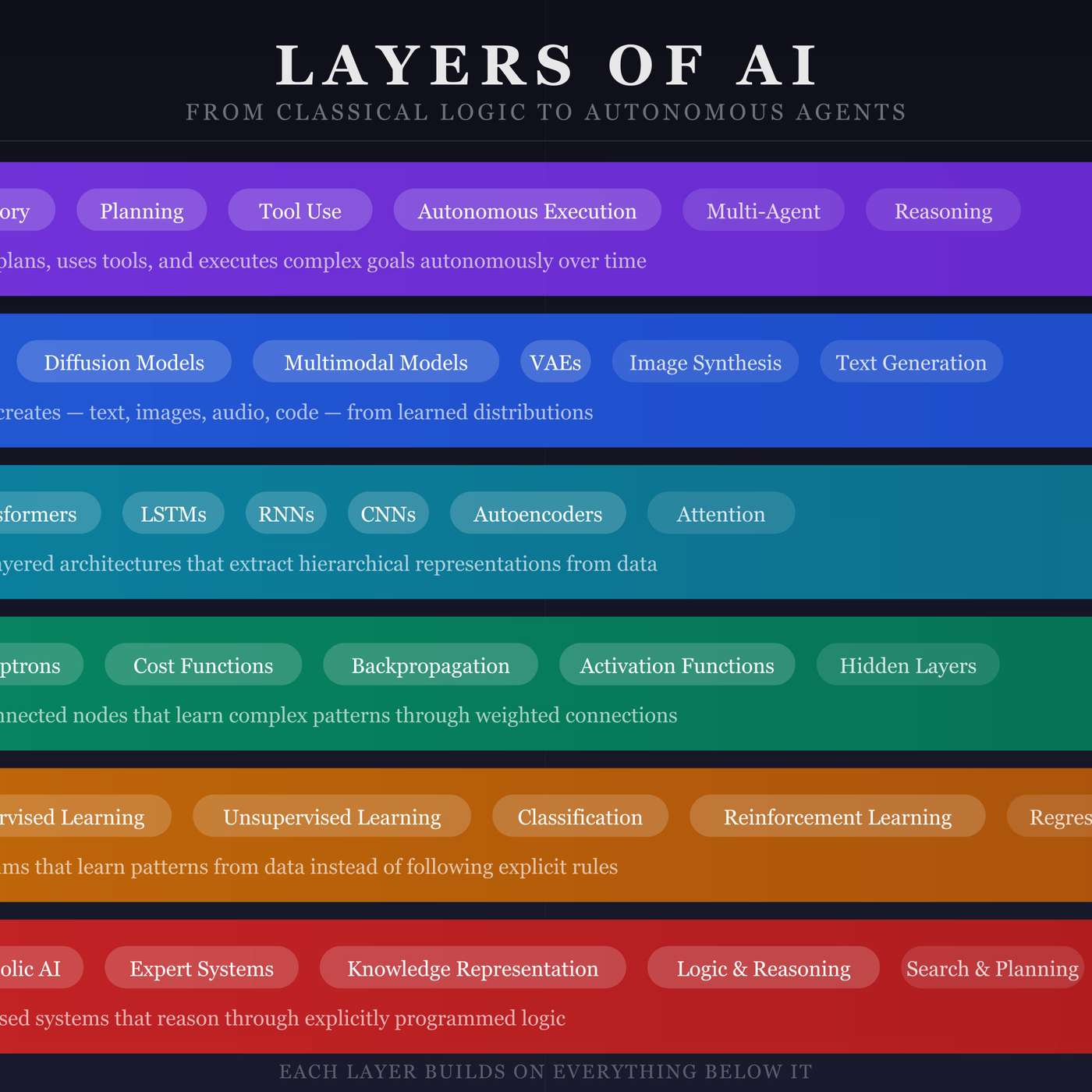
The current pinnacle of the AI stack, 'Agentic AI,' moves beyond simply generating answers to performing autonomous actions. By combining generative models with planning, memory, and tool use (like APIs or code interpreters), these systems can execute complex, multi-step tasks, defining the next wave of product development.
The key product innovation of Agent Skills is changing the user's perception of AI. Instead of just a tool that answers questions, AI becomes a practical executor of defined workflows, making it feel less like a chat interface and more like powerful, responsive software.
The next generation of agents won't just wait for explicit instructions. After a user mentioned buying a MacBook without asking for help, the AI independently researched the best price and presented a link the next morning. This shows a shift from a command-based tool to a proactive partner.

Tools like ChatGPT are AI models you converse with, requiring constant input for each step. Autonomous agents like OpenClaw represent a fundamental shift where users delegate outcomes, not just tasks. The AI works autonomously to manage calendars, send emails, or check-in for flights without step-by-step human guidance.

Unlike simple chat models that provide answers to questions, AI agents are designed to autonomously achieve a goal. They operate in a continuous 'observe, think, act' loop to plan and execute tasks until a result is delivered, moving beyond the back-and-forth nature of chat.

The paradigm for using AI is fundamentally changing. It's no longer just about chatting with a bot for information. It is now about deploying agentic systems that can operate a computer, take complex actions, and complete hours of human work in a single command, requiring a new user skillset.

The primary interface for AI is shifting from a prompt box to a proactive system. Future applications will observe user behavior, anticipate needs, and suggest actions for approval, mirroring the initiative of a high-agency employee rather than waiting for commands.

Unlike generative AI (like ChatGPT) which only provides text output, agentic AI can perform actions on your behalf. It can log into accounts, click buttons, and complete multi-step tasks, shifting AI from a smart consultant to an autonomous digital assistant.

The 'call and response' nature of large language models (LLMs) is not truly revolutionary for workflows. The significant shift comes from agentic AI, which can connect to various systems and execute multi-step tasks. This moves AI from a content generator to a powerful workflow automation tool.

The next wave of AI is 'agentic,' meaning it can control a computer to execute commands and complete tasks, not just generate responses to prompts. This profound shift automates workflows like coding and administrative tasks, freeing humans for high-level creative and strategic work.
