Get your free personalized podcast brief
We scan new podcasts and send you the top 5 insights daily.
To prevent a "ball of mud" codebase, OpenAI's system defines strict architectural layers using package boundaries and folder structures. By convention and tooling, different roles are restricted to specific layers—designers to the UI, PMs to business logic—ensuring modularity and preventing architectural decay.

Related Insights
To ensure high code quality, Gabor created a specialized 'code maintainability agent.' This AI's sole job is to check for circular references, enforce naming conventions, and ensure high-quality comments—technical details a product manager might overlook but are critical for long-term project health.

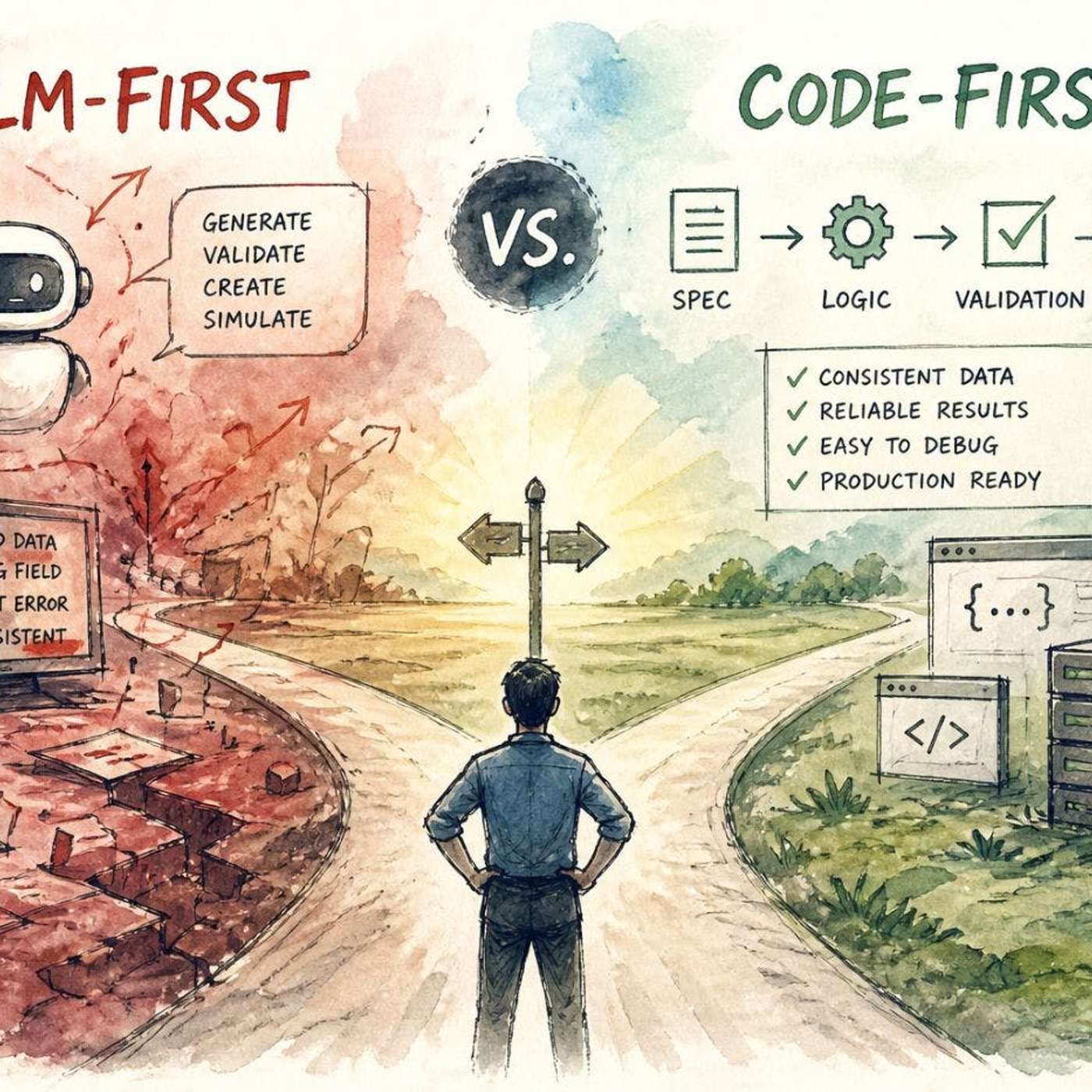
Don't give LLMs full control. Use deterministic code for core logic, validation, and enforcing rules. Delegate only tasks requiring flexibility or understanding of unstructured input to the LLM, treating it as a specialized component, not the entire system.
To build a useful multi-agent AI system, model the agents after your existing human team. Create specialized agents for distinct roles like 'approvals,' 'document drafting,' or 'administration' to replicate and automate a proven workflow, rather than designing a monolithic, abstract AI.

Even as AI allows a designer to code or a PM to prototype, the fundamental responsibilities of each role persist. Design champions the user, product management owns business outcomes, and engineering ensures system integrity. The tools converge, but the core mindsets do not.
OpenAI's own AI adoption strategy involves creating small, dedicated teams for each business vertical (e.g., finance, sales). These teams deeply understand the domain to build custom AI skills and UIs. Crucially, they maintain a human-in-the-loop to be accountable for all final decisions, like approving code merges.
AI tooling is creating a 'fluid model' where any employee, regardless of role, can potentially ship code. This dramatically expands the design system team's responsibility, which must now create tooling and guardrails to support a much broader and less technical user base across the entire organization.
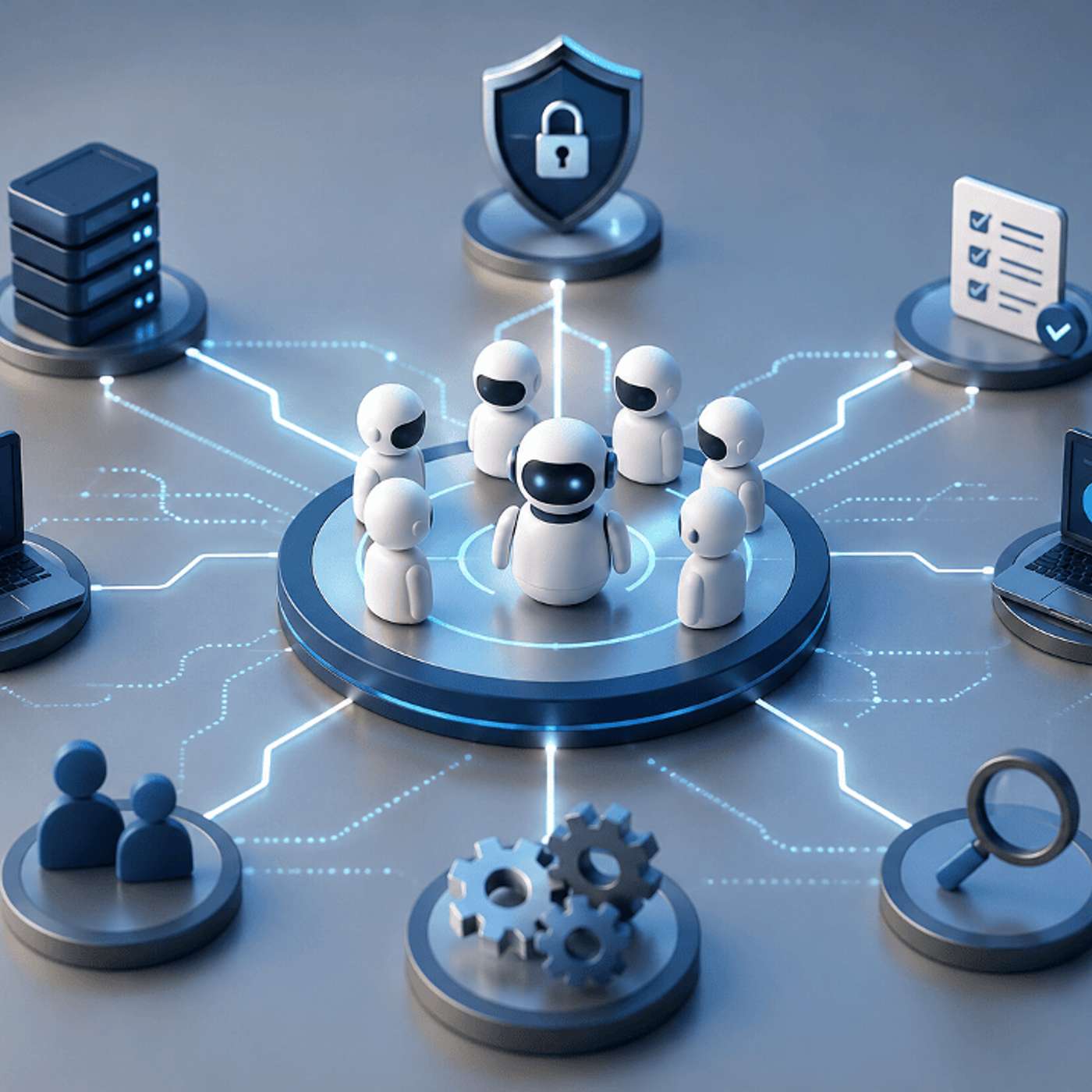
The conversation around Agentic AI has matured beyond abstract policies. The consensus among consultancies, tech firms, and academics is that effective governance requires embedding controls, like access management and validation, directly into the system's architecture as a core design principle.
When using AI for complex but solved problems (like user permissions), don't jump straight to code generation. First, use the AI as a research assistant to find the established architectural patterns used by major companies. This ensures you're building on a proven foundation rather than a novel, flawed solution.

To build a truly AI-native engineering team, Artemis makes technical architecture decisions based on a primary question: will this choice increase or decrease the likelihood of AI tools generating correct answers? This optimizes the entire system for AI-assisted development and debugging.

Create a clear chain of command for AI agents. Allow a primary "builder" agent to spawn sub-agents for specific tasks, but hold it directly responsible for their output. The "reviewer" or quality agent, however, should be a singleton with no subordinates, acting as a final, singular gatekeeper like a principal engineer.