Get your free personalized podcast brief
We scan new podcasts and send you the top 5 insights daily.
According to Lionel Shriver, a novelist's task is not to reinforce beliefs but to plant a seed of doubt. By presenting a compelling alternative reality, fiction can contaminate a reader's innocent assumptions and force them to contend with complexity, splitting their perspective.

Related Insights
Titus uses his sci-fi novel to create an "ethical crucible" for human genetic engineering, forcing readers into a binary choice between extinction and genetic modification. This medium allows for exploring high-stakes scenarios and removing the "edge cases" that often bog down real-world policy discussions.

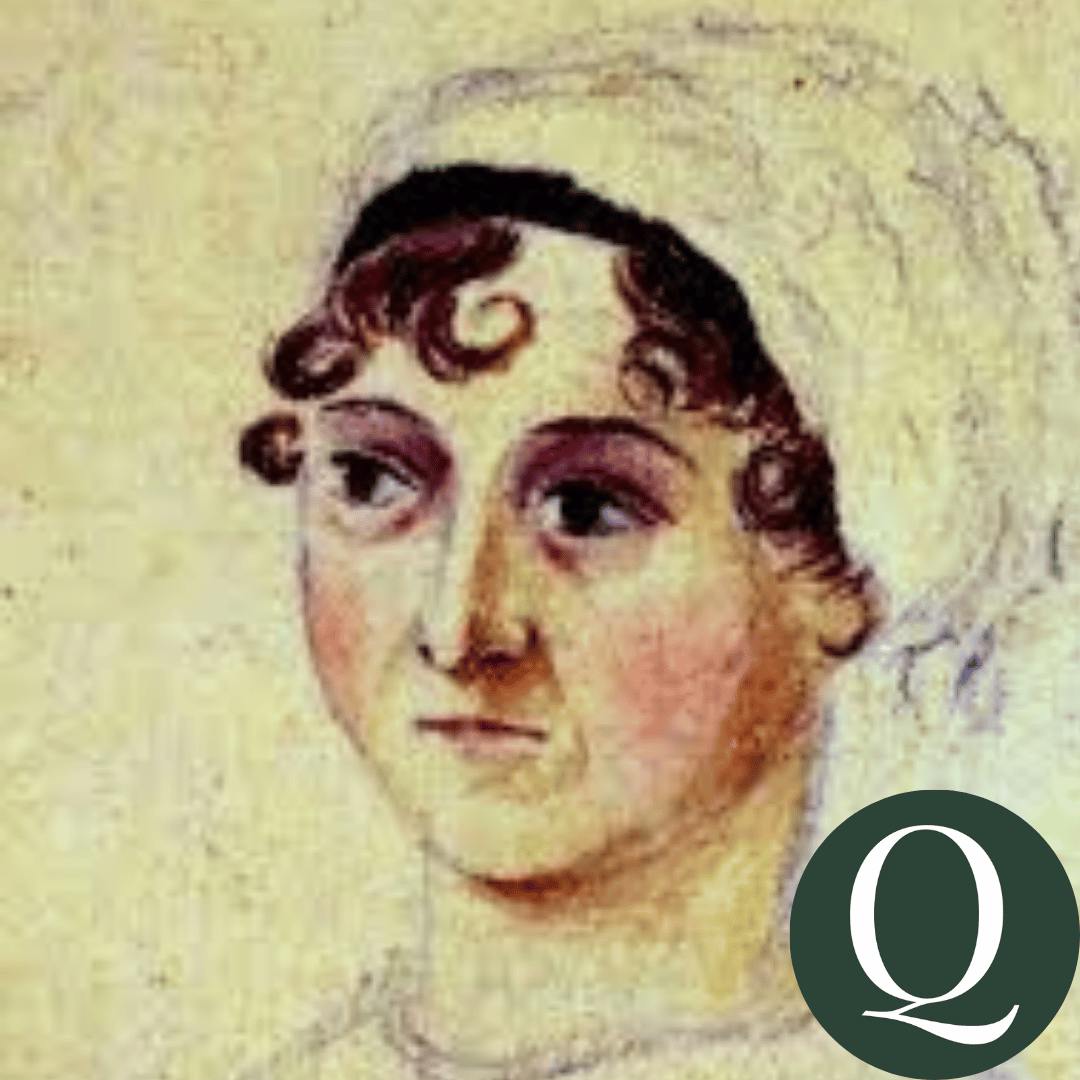
Austen pioneered the 'free indirect style,' where the third-person narrative adopts a character's thoughts, feelings, and—crucially—their delusions. This forces the reader to actively distinguish a character's biased perspective from reality, a technique used powerfully to show internal conflict in novels like 'Persuasion' and 'Emma.'
Art is a mechanism for changing perception. It often makes audiences uncomfortable at first by introducing a novel idea or form. Over time, great art guides people from that initial discomfort to a new state of understanding, fundamentally altering how they see the world.

Contrary to being escapist, the best fantasy literature, from Tolkien to L'Engle, uses imaginary worlds to explore complex real-world issues like war, environmentalism, and social conformity. This fictional distance allows authors to make profound statements and challenge readers' assumptions without being preachy.

To avoid confirmation bias, seek out well-argued books that challenge your core beliefs. The goal isn't necessarily to change your mind but to develop a more nuanced understanding of complex issues and be able to argue the other side effectively. This practice is crucial in a polarized world.

Author Lionel Shriver prefers writing in "Third-Person Limited" (seeing the world through one character's eyes) because it replicates the human condition. We are trapped in our own heads and must interpret others based on external evidence, making this narrative style deeply realistic.
Unlike watching a movie as an observer, reading makes you embody the character, lighting up the brain as if you're living their experiences. This unique power to generate deep empathy is why books face such intense banning efforts from those who want to control who children empathize with.

We operate with two belief modes. For our immediate lives, we demand factual truth. For abstract domains like mythology or ideology, we prioritize morally uplifting or dramatically compelling narratives over facts. The Enlightenment was a push to apply the first mode to everything.

A story's core mechanic for engagement is not just emotion, but the constant betrayal of the audience's expectations. People are drawn to narratives, jokes, and songs precisely because they want their predictions about what happens next to be wrong. This element of surprise is what makes a story satisfying and compels an audience to continue.

Improving imagination is less like a painter adding to a blank canvas and more like a sculptor removing material. The primary task is to forget expected answers and consensus reality. This subtractive process uncovers the truly novel ideas that are otherwise obscured by convention.
![Kevin Kelly - Be Generous and Unique - [Invest Like the Best, CLASSICS] thumbnail](https://megaphone.imgix.net/podcasts/9e957b1c-b60e-11f0-8fae-c3720ebd149d/image/fe443cb4b0d58f10dbccb1cf43a6abe2.jpg?ixlib=rails-4.3.1&max-w=3000&max-h=3000&fit=crop&auto=format,compress)