Get your free personalized podcast brief
We scan new podcasts and send you the top 5 insights daily.
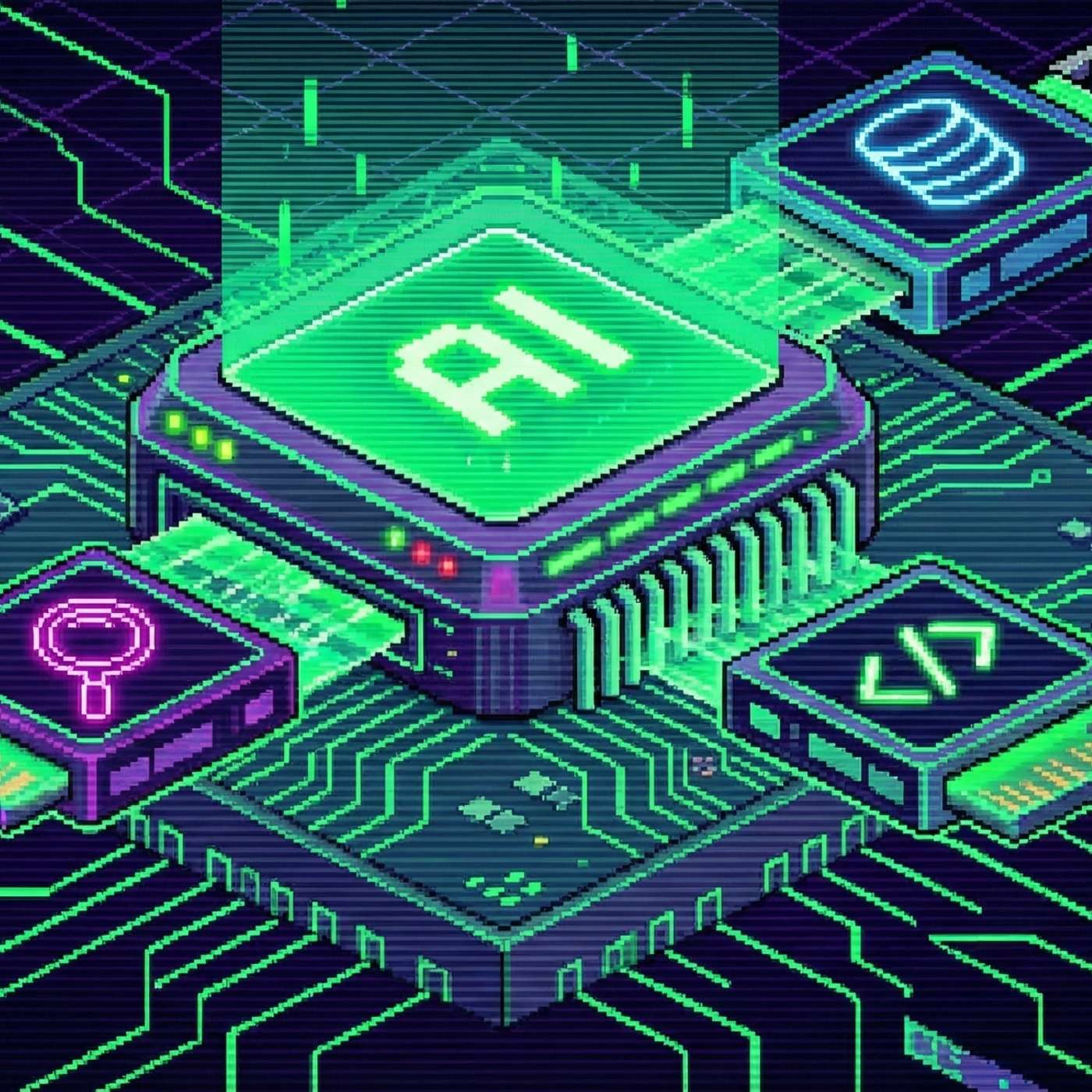
Agent Skills and the Model Context Protocol (MCP) are complementary, not redundant. Skills package internal, repeatable workflows for 'doing the thing,' while MCP provides the open standard for connecting to external systems like databases and APIs for 'reaching the thing.'
Related Insights
Instead of complex SDKs or custom code, users can extend tools like Cowork by writing simple Markdown files called "Skills." These files guide the AI's behavior, making customization accessible to a broader audience and proving highly effective with powerful models.

An autonomous agent is a complete software system, not merely a feature of an LLM. Dell's CTO defines it by four key components: an LLM (for reasoning), a knowledge graph (for specialized memory), MCP (for tool use), and A2A protocols (for agent collaboration).

MCP shouldn't be thought of as just another developer API like REST. Its true purpose is to enable seamless, consumer-focused pluggability. In a successful future, a user's mom wouldn't know what MCP is; her AI application would just connect to the right services automatically to get tasks done.

OpenAI has quietly launched "skills" for its models, following the same open standard as Anthropic's Claude. This suggests a future where AI agent capabilities are reusable and interoperable across different platforms, making them significantly more powerful and easier to develop for.

OpenAI integrated the Model-Centric Protocol (MCP) into its agentic APIs instead of building its own. The decision was driven by Anthropic treating MCP as a truly open standard, complete with a cross-company steering committee, which fostered trust and made adoption easy and pragmatic.
MCP was born from the need for a central dev team to scale its impact. By creating a protocol, they empowered individual teams at Anthropic to build and deploy their own MCP servers without being a bottleneck. This decentralized model is so successful the core team doesn't know about 90% of internal servers.
MCP acts as a universal translator, allowing different AI models and platforms to share context and data. This prevents "AI amnesia" where customer interactions start from scratch, creating a continuous, intelligent experience by giving AI a persistent, shared memory.

Skills and MCP are not competitors but complementary layers in an agent's architecture. Skills provide vertical, domain-specific knowledge (e.g., how to behave as an accountant), while MCP provides the horizontal communication layer to connect the agent to external tools and data sources.
The concept of "Skills" was born when the team found that telling Claude *how* to query a data source and follow design guidelines produced better, more flexible dashboards than building rigid, parameterized tools. This discovery highlighted the power of instruction over hard-coding.
Unlike Claude Projects or OpenAI's Custom GPTs which apply a general context to all chats, Claude Skills are task-specific instruction sets that can be dynamically called upon within any conversation. This allows for reusable, on-demand workflows without being locked into a specific project's context.