Get your free personalized podcast brief
We scan new podcasts and send you the top 5 insights daily.
MCP provides a standardized way to connect AI models with external tools, actions, and data. It functions like an API layer, enabling agents in environments like Claude Code or Cursor to pull analytics data from Amplitude, file tickets in Linear, or perform other external actions seamlessly.

Related Insights
Agent Skills and the Model Context Protocol (MCP) are complementary, not redundant. Skills package internal, repeatable workflows for 'doing the thing,' while MCP provides the open standard for connecting to external systems like databases and APIs for 'reaching the thing.'
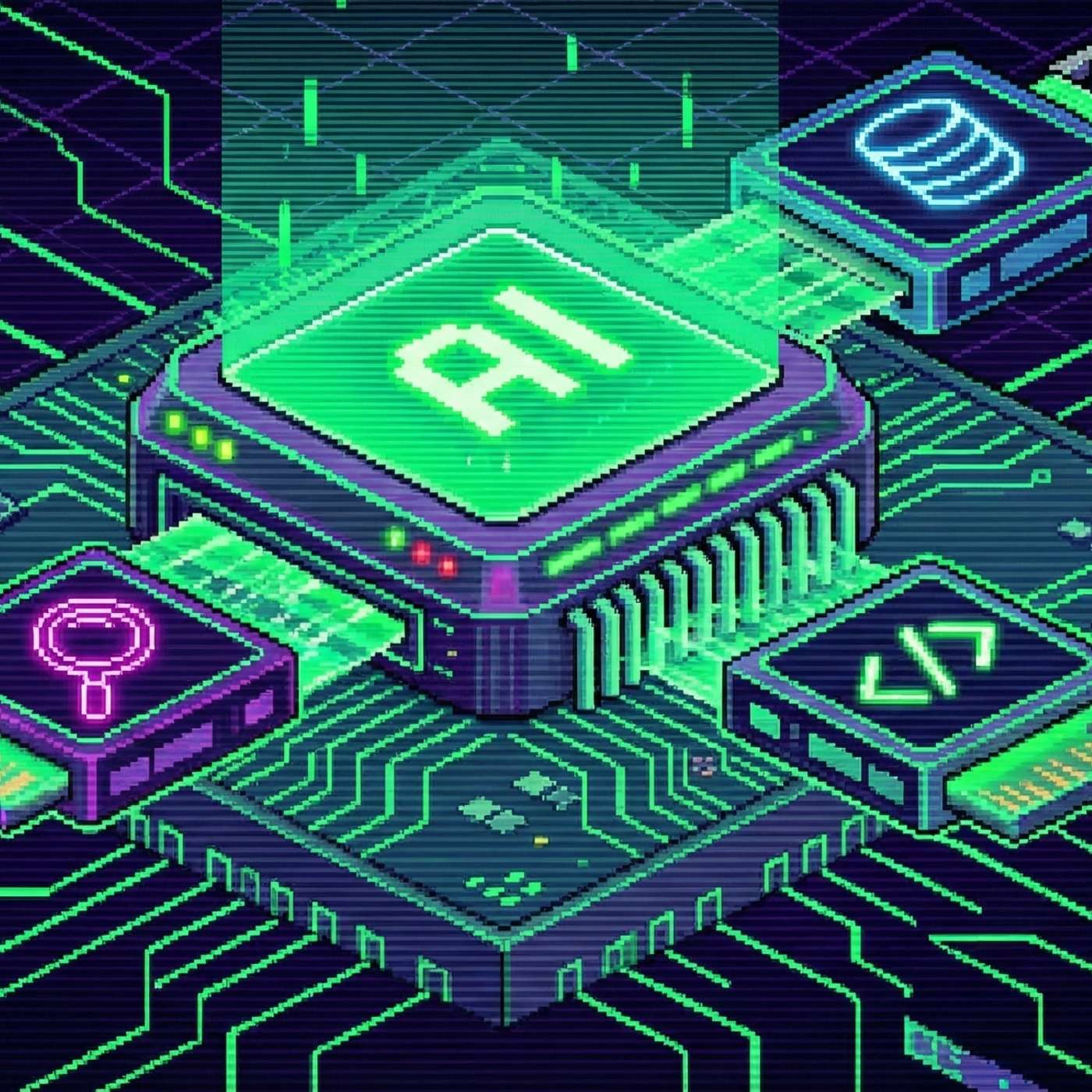
An autonomous agent is a complete software system, not merely a feature of an LLM. Dell's CTO defines it by four key components: an LLM (for reasoning), a knowledge graph (for specialized memory), MCP (for tool use), and A2A protocols (for agent collaboration).

MCP shouldn't be thought of as just another developer API like REST. Its true purpose is to enable seamless, consumer-focused pluggability. In a successful future, a user's mom wouldn't know what MCP is; her AI application would just connect to the right services automatically to get tasks done.

If a tool, like the meeting-note app Granola, lacks an official MCP for integration, you can write a simple script for your AI agent to execute. The script can fetch data and save it as local files, effectively making any external data source part of the agent's accessible context.
MCP acts as a universal translator, allowing different AI models and platforms to share context and data. This prevents "AI amnesia" where customer interactions start from scratch, creating a continuous, intelligent experience by giving AI a persistent, shared memory.

Skills and MCP are not competitors but complementary layers in an agent's architecture. Skills provide vertical, domain-specific knowledge (e.g., how to behave as an accountant), while MCP provides the horizontal communication layer to connect the agent to external tools and data sources.
AI developer environments with Model Context Protocols (MCPs) create a unified workspace for data analysis. An analyst can investigate code in GitHub, write and execute SQL against Snowflake, read a BI dashboard, and draft a Notion summary—all without leaving their editor, eliminating context switching.
The technical term "MCP" (Model Component Provider) is confusing. It's simpler and more accurate to think of them as connectors that give AI tools access to knowledge within your other apps and the ability to perform actions in them.
MCP emerged as a critical standard for AI agents to interact with tools, much like USB-C for hardware. However, its rapid adoption overlooked security, leading to significant vulnerabilities like tool poisoning and prompt injection attacks in its early, widespread implementations.

ChatGPT Apps are built on the Model Context Protocol (MCP), invented by Anthropic. This means tools built for ChatGPT can theoretically run on other MCP-supporting models like Claude. This creates an opportunity for cross-platform distribution, as you aren't just building for OpenAI's ecosystem but for a growing open standard.