Get your free personalized podcast brief
We scan new podcasts and send you the top 5 insights daily.
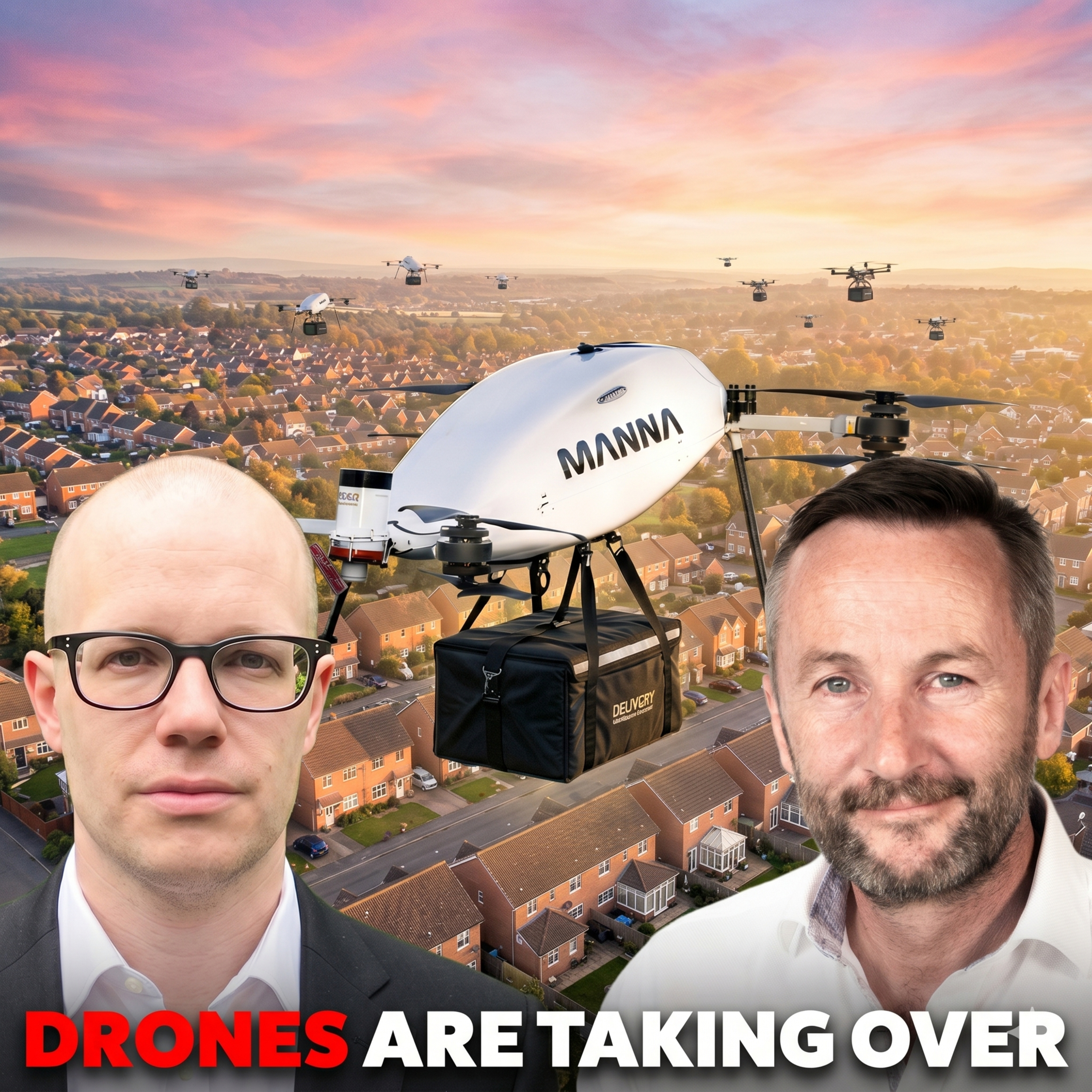
Just as DoorDash initially found success by focusing on suburbs instead of dense cities, its drone delivery service is best suited for the same environment. Suburbs present ideal conditions for drones: longer delivery routes, fewer aerial obstacles, and easy drop-off points at single-family homes.

Related Insights
DoorDash's move into building its own delivery drones is a defensive strategy. Jason Calacanis points out that physical real estate for drone pickups at locations like Starbucks is limited. By controlling its own hardware, DoorDash avoids ceding this critical infrastructure and customer relationship to a third-party partner who could become a competitor.

DoorDash found robotics startups often build tech in a vacuum, then seek a problem. To succeed, DoorDash reversed this: they defined their specific delivery use case (3-5 mile suburban routes) and then designed a custom robot, avoiding the common "technology-first" trap.

While competitors burned cash fighting over major hubs, delivery startup Fancy focused on Tier 2 cities. This strategy gave them a local monopoly, leading to far better unit economics and retention. This strong performance was a key factor in their acquisition by GoPuff.

A new economic layer is forming in the low-altitude airspace above urban areas. This "1,000-foot economy" includes drone delivery for retail and medical supplies (Walmart, Zipline) and passenger air taxis (Joby), signaling a shift in infrastructure investment from ground-level to the sky.

To scale nationally, first 'crawl' by perfecting operations and unit economics in a single market. Then 'walk' by adapting the model to a few different market types (e.g., city vs. suburb). Only then can you 'run' by creating a playbook for rapid expansion.

While competitors focused on dense urban centers, DoorDash built its foundation by defying industry wisdom and serving the suburbs. This contrarian strategy proved suburban delivery was a massive, untapped market, allowing DoorDash to build scale before entering highly contested cities.

DoorDash leverages data from its billions of human-powered deliveries to solve the "last 100 feet" problem for its robots. This data, showing precise drop-off locations at complex venues like apartments, provides a competitive advantage over generic mapping solutions.
Drone delivery service Zipline achieved 46% market penetration among households in one of its Dallas service areas, far exceeding typical 2-5% market share benchmarks for new tech. This demonstrates that highly differentiated services can achieve utility-like adoption levels very rapidly, becoming a new normal for communities.

While an AI agent could find the cheapest meal, it cannot replicate the dense, optimized network of couriers, merchants, and consumers. DoorDash's defensibility lies in managing the complex, real-world handoffs and operational details, not just the software interface.

Instead of relying on a single central hub, Mana's drones fly out to various pre-set pads each morning. They then migrate between these locations throughout the day based on anticipated order flow, balancing rapid delivery times with capital expenditure on depots.