Get your free personalized podcast brief
We scan new podcasts and send you the top 5 insights daily.
According to screenwriter Robert Towne, stories tap into two fundamental human drivers: achieving a cherished outcome or avoiding a negative one. This binary is a powerful lens for product development and marketing. Frame your offering to either fulfill a deep-seated aspiration or eliminate a persistent fear.
![Wolfgang Hammer - The Power of Story - [Invest Like the Best, EP.447] thumbnail](https://megaphone.imgix.net/podcasts/adaa55e4-bead-11f0-a5d6-a799713dc0a0/image/a76713c3a8fb2abf443f9164703734c5.jpg?ixlib=rails-4.3.1&max-w=3000&max-h=3000&fit=crop&auto=format,compress)
Related Insights
Marketing messages should appeal to two distinct buyer motivations. Some are drawn to positive future outcomes ("painting possibility"), while others are driven to escape current struggles ("running from the pain"). Effective campaigns test and incorporate both angles to maximize reach and resonance with a wider audience.

Buyers are motivated either by moving toward a desired outcome (possibility) or away from a problem (pain). Marketers often unconsciously favor one style based on their own personality. Crafting copy that addresses both motivations allows you to resonate with a broader, more diverse audience.

Your website's headline should evoke a feeling, specifically the relief from a customer's core pain point. Instead of describing your product's function (e.g., 'AI tax assistant'), describe the emotional state it eliminates (e.g., 'Taking the terror out of tax season'). This connects with the user immediately.

Traditional pain-point marketing ('Aren't you tired of...') attracts people stuck in their problems and reinforces a negative state. 'Mirror Messaging' attracts your 'Highest Self' buyer by reflecting the transformation they seek, calling in people who are actively looking for a solution.

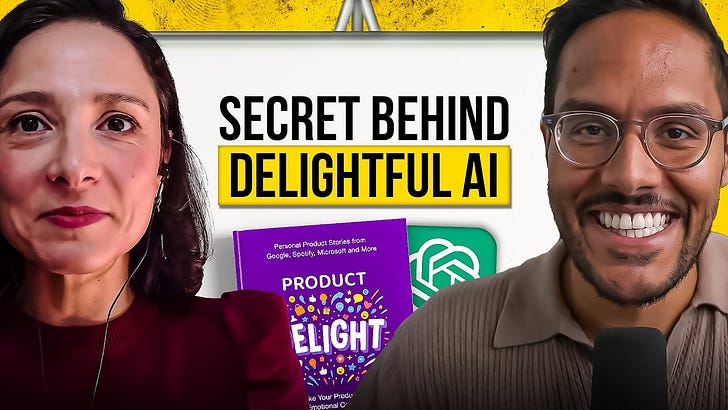
True differentiation comes from "deep delight," where emotional needs are addressed within the core functional solution. This is distinct from "surface delight" like animations or confetti, which are nice but fail to build the strong emotional connections that drive loyalty.
The founder of Billy Bob's Teeth, a gag gift, reframed his product as a "permission slip for people to be silly." This strategy gives a trivial product a deeper, more compelling purpose by connecting it to a fundamental human desire. This elevates the brand and makes the product more than just a novelty item.

Go beyond features (what it is) and benefits (what it does) by focusing on 'dimensionalized benefits': how the customer's life tangibly changes after experiencing the benefit. This is the ultimate outcome people are buying, and it should be the core of your marketing message.

Modern advertising weaponizes fear to generate sales. By creating or amplifying insecurities about health, social status, or safety, companies manufacture a problem that their product can conveniently solve, contributing to a baseline level of societal anxiety for commercial gain.

One of five timeless marketing principles is that humans are wired to avoid pain more than they are to seek gain. Marketing that speaks to a customer's secret worries—a missed goal, a clunky process, or looking stupid—will grab attention more effectively than messages focused purely on benefits.

Move beyond listing features and benefits. The most powerful brands connect with customers by selling the emotional result of using the product. For example, Swishables sells 'confidence' for a meeting after coffee, not just 'liquid mouthwash.' This emotional connection is the ultimate brand moat.
