Get your free personalized podcast brief
We scan new podcasts and send you the top 5 insights daily.
Many writers view editing as a chore. Nick Thompson, CEO of The Atlantic, argues the opposite: editing is where the most creative work occurs. This is the phase where you confront core questions about audience, structure, and clarity, transforming raw ideas into a polished, impactful piece of communication.
Related Insights
The best editors possess an innate instinct for structure and improvement, a mindset distinct from reporting. The common career path of reporter-to-editor is often unnatural and counterproductive because the skill sets are fundamentally different, not a natural progression.

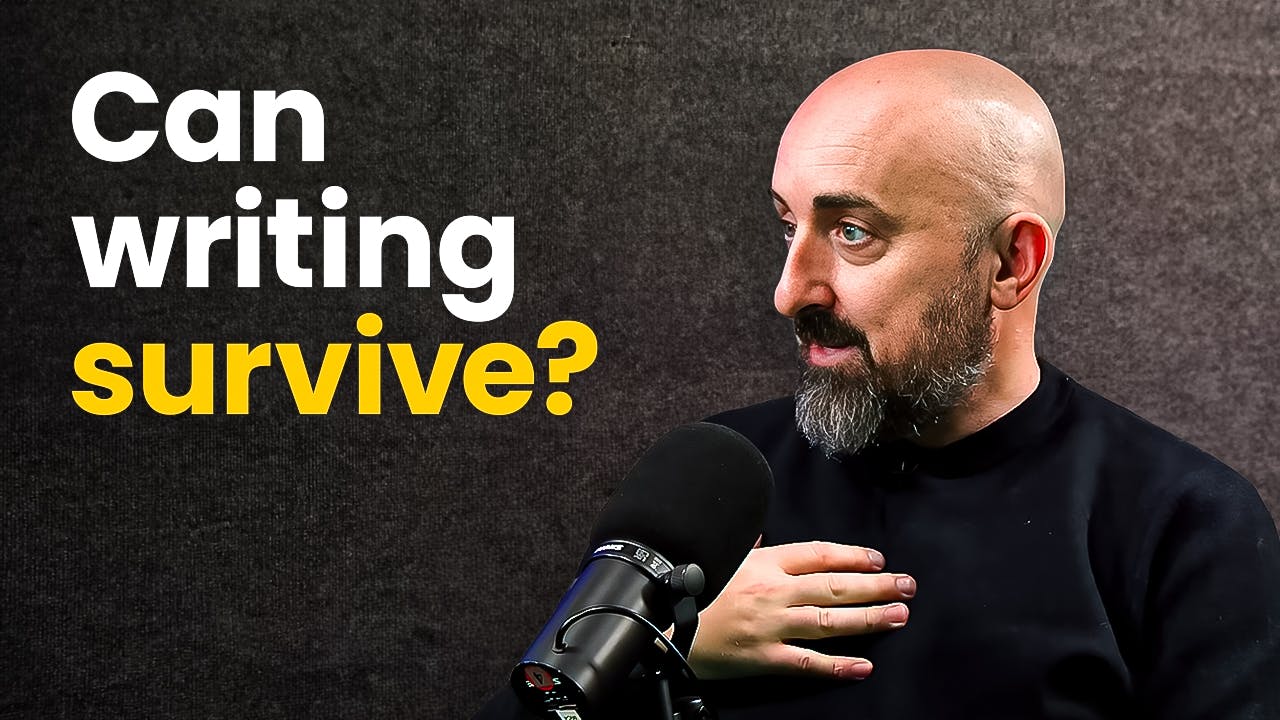
Medium's CEO argues that writing's future is secure because its core function is the process of structured thinking, not just content output. The act of articulating ideas reveals flaws and deepens understanding for the writer—a cognitive benefit that delegating to AI would eliminate.
Great writing is not a stroke of genius but a craft of intense iteration. Observing Y Combinator founder Paul Graham showed that he would rewrite a single sentence dozens of times to achieve clarity and impact. This process of refinement is the key to persuasive and concise communication, demystifying the path to becoming a better writer.

The process of articulating ideas in writing forces clarity and exposes flaws that remain hidden when they are just thoughts. It serves as a powerful filtering mechanism for bad ideas before they consume resources.
Imposing strict constraints on a creative process isn't a hindrance; it forces innovation in the remaining, more crucial variables like message and resonance. By limiting degrees of freedom, you are forced to excel in the areas that matter most, leading to more potent output.

Creative resistance follows a predictable pattern, peaking not at the start but just before the finish line. Like a marathoner hitting "the wall," creators face their strongest self-doubt when a project is nearly complete. Recognizing this as a normal stage is key to finishing.

For certain individuals, the process of editing provides a sense of calm and control. By taking a disorganized piece of writing and imposing structure, clarity, and flow—metaphorically 'detangling hair'—an editor can create a tangible piece of order in a chaotic world.
Instead of seeking feedback on a finished manuscript, authors can use a "writer's room" mid-process. Assembling a group to brainstorm and challenge plot points leads to a better final product because the author is less attached to the material and more open to fundamental changes.
Shift away from the traditional model of drafting content yourself and asking AI for edits. Instead, leverage the AI's near-infinite output capacity to generate a wide range of initial ideas or drafts. This allows you to quickly identify patterns, discard unworkable concepts, and focus your energy on high-level refinement rather than initial creation.

When writing his book, Steve Garrity hired a developmental editor who did more than proofread. The editor cut 40% of the text and restructured the entire story to begin at the emotional low point, rather than chronologically. This highlights that an editor's greatest value can be in re-architecting the narrative for maximum impact.