Get your free personalized podcast brief
We scan new podcasts and send you the top 5 insights daily.
Dr. Venter describes synthetic biology's core breakthrough not just as writing DNA, but as "booting up" that DNA like software in a recipient cell. He details an experiment where transplanting a chromosome from one bacterium to another caused a "complete identity theft," converting the host into the donor species, proving chromosomes can function as bootable operating systems.
Related Insights
An AI model named EVO2 designed novel bacteriophage genomes from scratch. When created in a lab, these viruses were not only viable but also functioned better than the best-known natural phages at killing E. coli, marking a new era in biological engineering.

A convergence of DNA sequencing, CRISPR, and AI allows scientists to move beyond just understanding biology to actively intervening. Medicine is now programming cellular behavior by rewriting DNA, representing a "step function" leap in what's achievable for treating disease at its root cause.

Dr. Michael Levin argues that DNA specifies cellular hardware, but bioelectric patterns act as reprogrammable software that stores anatomical memories. This software can be rewritten to produce radical changes, like two-headed worms, without altering the genetic code, challenging the DNA-centric view of biology.

Frances Arnold, an engineer by training, reframed biological evolution as a powerful optimization algorithm. Instead of a purely biological concept, she saw it as a process for iterative design that could be harnessed in the lab to build new enzymes far more effectively than traditional methods.

CRISPR's origins lie in basic microbiology. Scientists studying unusual repeating DNA sequences in bacteria discovered they were part of an adaptive immune system. Bacteria use CRISPR to recognize and cut the DNA of invading viruses (bacteriophage), a mechanism that was then repurposed for gene editing.
Instead of seizing human industry, a superintelligent AI could leverage its understanding of biology to create its own self-replicating systems. It could design organisms to grow its computational hardware, a far faster and more efficient path to power than industrial takeover.

Patrick Collison believes we can finally cure complex diseases because biology now has a complete 'Turing loop': advanced sequencing to 'read' biological data, neural networks to 'think' about it, and CRISPR to 'write' changes by perturbing cells. This combination provides the necessary toolset for breakthroughs.

Despite decoding his own six-billion-letter genome, Dr. Venter emphasizes that our ability to interpret this data meaningfully is in its infancy. He points out that even for a simple trait like eye color, the genetic code doesn't provide 100% certainty, highlighting the naivety of relying on single genes to predict complex traits or diseases.
Ginkgo split the challenge of programming biology into design (a "science problem") and testing (an "engineering problem"). They are focusing on the engineering side because it's a more predictable problem that can be systematically solved, unlike the unpredictability of scientific breakthroughs.
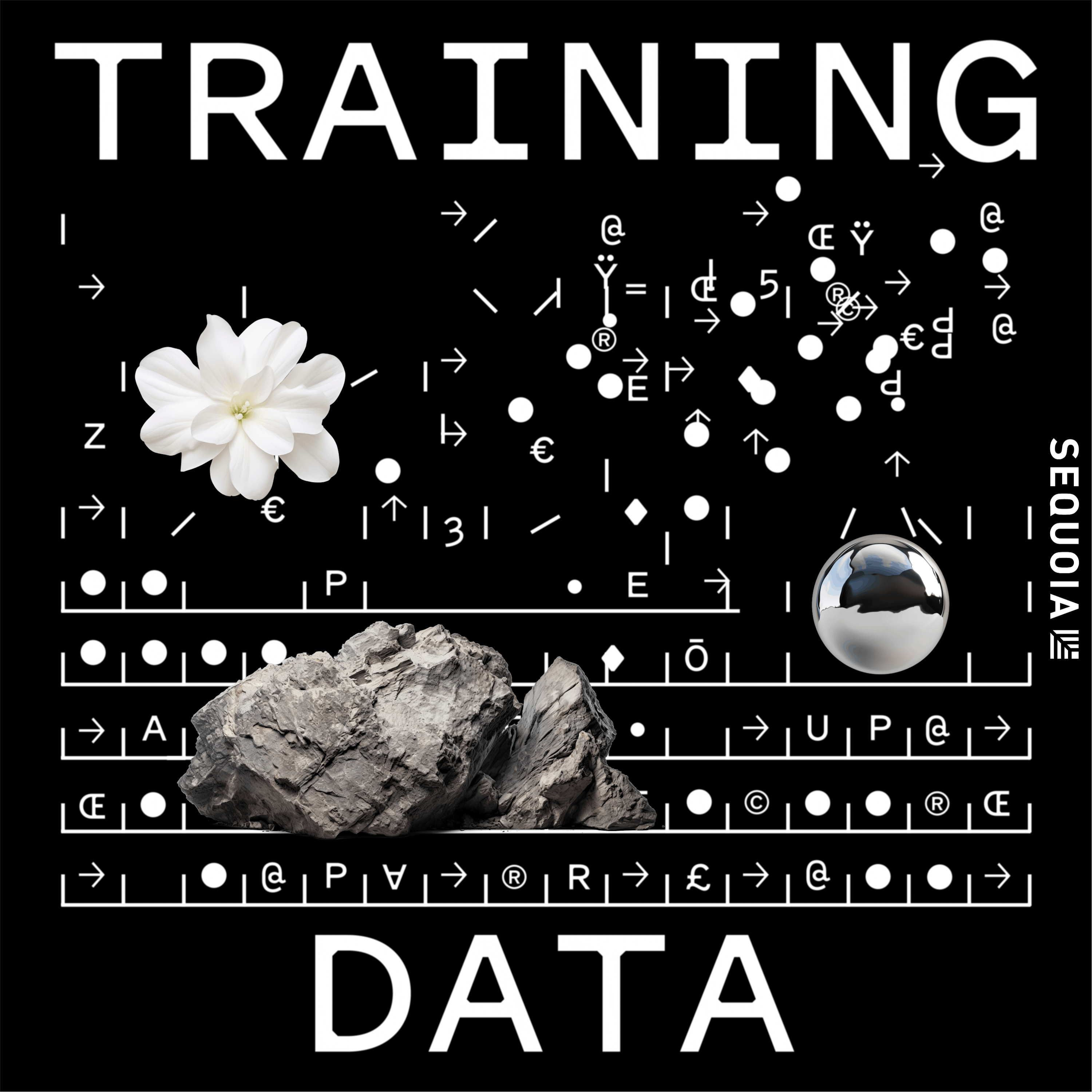
A common misconception is that engineered life would be feeble like current lab-created 'minimal cells'. In reality, a bad actor would create a mirror version of a naturally robust bacterium like E. coli, not a fragile lab specimen, to ensure its survival and virulence in the natural environment.