Get your free personalized podcast brief
We scan new podcasts and send you the top 5 insights daily.
To combat inefficiency, the Pentagon is moving away from paying contractors for time and materials ('cost-plus'). The new model emphasizes business-oriented, fixed-price contracts where companies are paid upon successful, on-time delivery of a working product, introducing more risk and profit incentive for vendors.

Related Insights
The Department of Defense is moving from rigid, program-specific contracts to a portfolio model. New Portfolio Acquisition Executives can now reallocate funds from underperforming projects to more promising startups mid-stream, rewarding agility and results over incumbency.

Navy CTO Justin Fanelli advises founders to stop asking to be paid for their time and instead price their solutions based on the outcomes and value they deliver. This aligns incentives with the government buyer, rewards impact over effort, and demonstrates a modern, software-defined mindset.

Unlike traditional contractors paid for hours, Anduril invests its own capital to build products it believes the government needs. This model incentivizes speed and effectiveness, as profit is tied to successful products, not billable hours. This shifts the financial risk from the taxpayer to the company.

The era of large prime contractors owning an entire system is ending. The companies that will win are those who are highly interoperable, collaborate with other vendors, and integrate best-of-breed capabilities with a low-ego approach, focusing on delivering a mission capability rather than a standalone widget.

The Pentagon is moving away from decades-long, multi-billion dollar projects like aircraft carriers. The new focus is on mass-produced, attributable, low-cost systems like drones, which allows for faster innovation and deployment from new defense tech startups, not just the old primes.

Unlike traditional contractors paid for time and materials, Anduril invests its own capital to develop products first. This 'defense product company' model aligns incentives with the government's need for speed and effectiveness, as profits are tied to rapid, successful delivery, not prolonged development cycles.

Anduril advocates for performance-based contracts, a controversial model in government where payment is contingent on the product working. This forces internal accountability and aligns their interests with the customer's, contrasting with traditional cost-plus models that place all risk on the government.
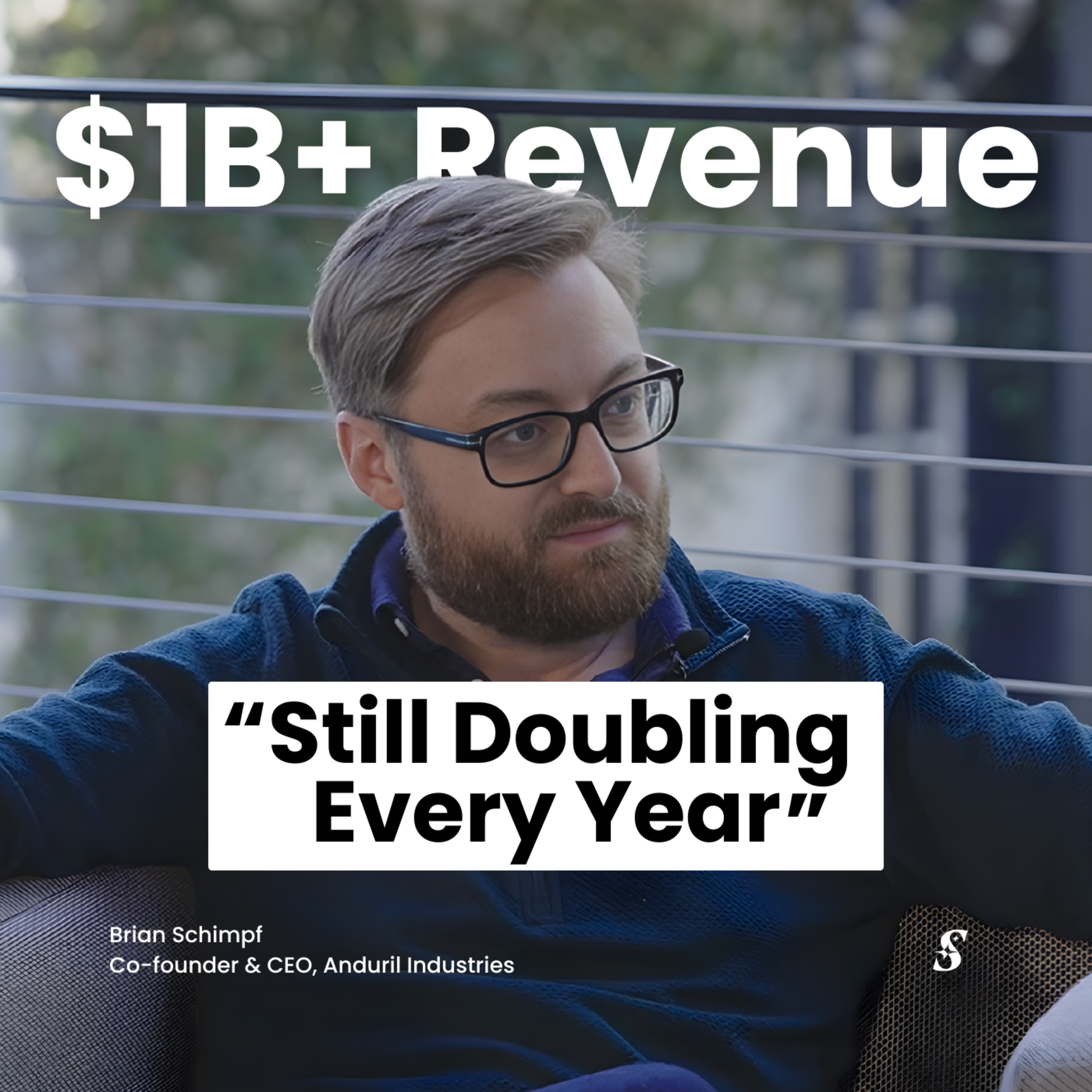
To combat slow, costly development cycles, the Department of War is shifting from hyper-specific requirement documents to stating clear, high-level objectives (e.g., 'I need a missile that goes this far'). This new model empowers innovative companies to propose their own solutions and moves to fixed-price contracts.

Under Secretary of War Emil Michael states the biggest barrier for defense startups isn't technology, but navigating procurement bureaucracy. By reforming requirements and shifting to commercial-style, fixed-cost contracts, the Pentagon aims to favor product innovation over process navigation.
A key cultural shift in government procurement is moving from a cost-minimization mindset to a value-maximization one. Instead of asking how to reduce a contractor's margins, smart buyers should focus on achieving better results with the dollars being spent, rewarding companies that deliver superior impact.