Get your free personalized podcast brief
We scan new podcasts and send you the top 5 insights daily.
Regal Partners uses a rigorous four-step process: 1) Valuation, 2) Macro Environment, 3) Catalyst, and 4) Edge. The final step—forcing the team to articulate what specific insight they have that the market is missing—is crucial for ensuring conviction and identifying true alpha opportunities.

Related Insights
Effective due diligence isn't a checklist, but the collection of many small data points—revenue, team retention, customer love, CVC interest. A strong investment is a "beam" where all points align positively. Any misalignment creates doubt and likely signals a "no," adhering to the "if it's not a hell yes, it's a no" rule.

Identifying a stock trading below its intrinsic value is only the first step. To avoid "value traps" (stocks that stay cheap forever), investors must also identify a specific catalyst that will unlock its value over a reasonable timeframe, typically 2-4 years.

A simple framework to evaluate a VC's skill is the four 'D's'. They need proprietary Deal Flow, the ability to make good Decisions (initial investment), the conviction to Double Down on winners, and the discipline to generate Distributions (returns) for LPs.

Most good investors succeed by recognizing patterns (e.g., "SaaS for X"). However, the truly exceptional investors analyze businesses from first principles, understanding their deep, fundamental merits. This allows them to spot outlier opportunities that don't fit any existing mold, which is where the greatest returns are found.
![Luca Ferrari - Building Bending Spoons - [Invest Like the Best, EP.446] thumbnail](https://megaphone.imgix.net/podcasts/b29cbd80-b93a-11f0-a1b7-2b977c9469a2/image/39f7864ea628f71a81b94662bd4a86df.jpg?ixlib=rails-4.3.1&max-w=3000&max-h=3000&fit=crop&auto=format,compress)
Alex Sacerdote's investment thesis identifies technologies at their adoption inflection point (S-curve), finds companies with strong competitive advantages within that trend, and capitalizes on the resulting exponential, often overlooked, earnings growth. This three-part framework guides their entire investment process for technology stocks.
Elite decision-making transcends pure analytics. The optimal process involves rigorously completing a checklist of objective criteria (the 'mind') and then closing your eyes to assess your intuitive feeling (the 'gut'). This 'educated intuition' framework balances systematic analysis with the nuanced pattern recognition of experience.
![Martín Escobari - Inside General Atlantic - [Invest Like the Best, EP.449] thumbnail](https://megaphone.imgix.net/podcasts/90e6e3e6-c984-11f0-ae5f-27bb851bdc56/image/608fac468f77cb3014e96336896d96de.jpg?ixlib=rails-4.3.1&max-w=3000&max-h=3000&fit=crop&auto=format,compress)
Before committing capital, professional investors rigorously challenge their own assumptions. They actively ask, "If I'm wrong, why?" This process of stress-testing an idea helps avoid costly mistakes and strengthens the final thesis.

Massive opportunities are built on a three-legged framework, starting with an undeniable market gap. This gap must be an unequivocal data point, not a manufactured projection. Only after identifying this 'force of nature' can a great team be assembled, which then makes securing funding significantly easier.

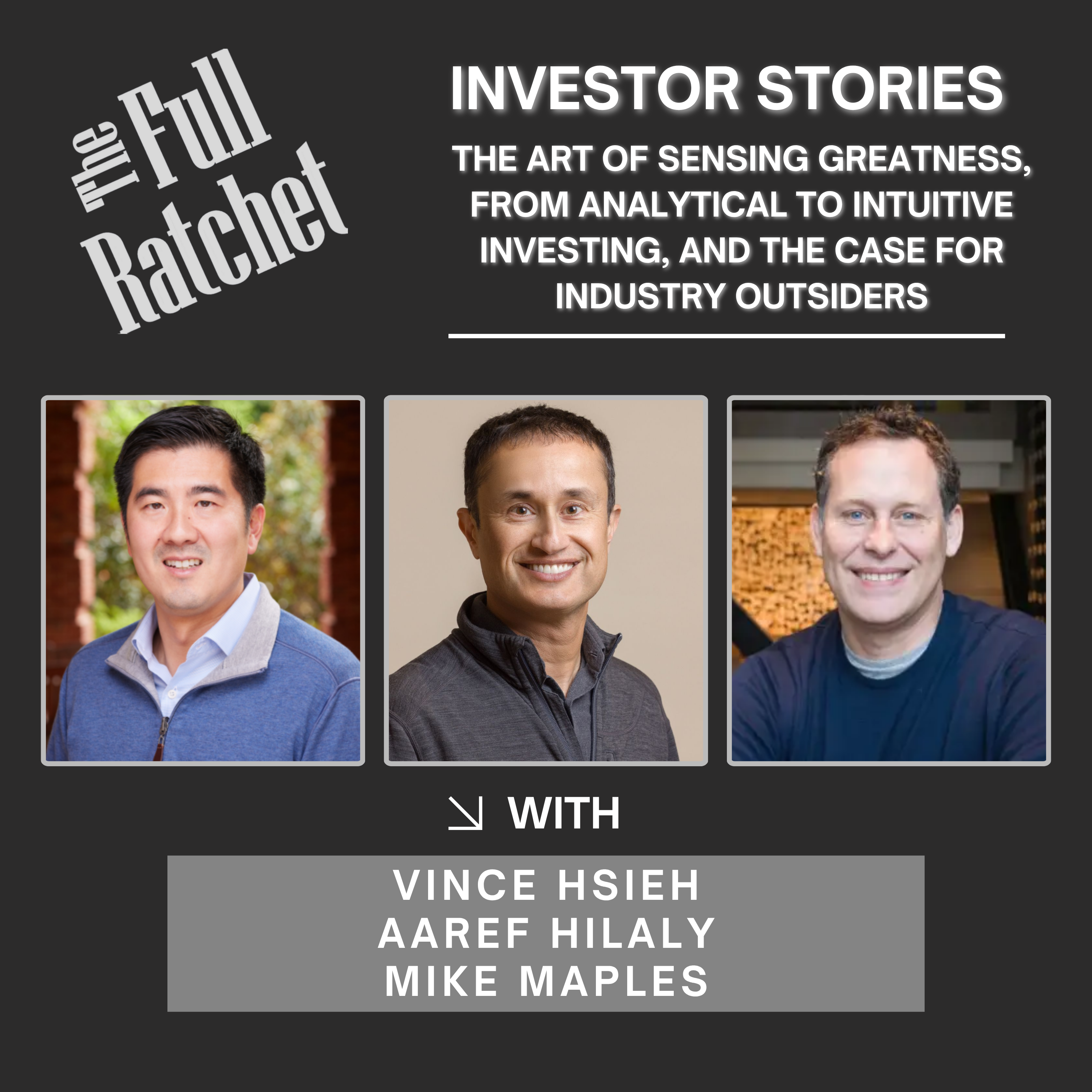
Experienced VCs may transition from rigid analytical frameworks to an intuitive search for outliers. Instead of asking if a business plan 'makes sense,' they look for unusual qualities that challenge their worldview and hint at massive potential.
Instead of focusing on process, allocators should first ask managers fundamental questions like "What do you believe?" and "Why does this work?" to uncover their core investment philosophy. This simple test filters out the majority of firms that lack a deeply held, clearly articulated conviction about their edge.