Get your free personalized podcast brief
We scan new podcasts and send you the top 5 insights daily.
Experienced VCs may transition from rigid analytical frameworks to an intuitive search for outliers. Instead of asking if a business plan 'makes sense,' they look for unusual qualities that challenge their worldview and hint at massive potential.
Related Insights
The most successful venture investors share two key traits: they originate investments from a first-principles or contrarian standpoint, and they possess the conviction to concentrate significant capital into their winning portfolio companies as they emerge.

The stock market is a 'hyperobject'—a phenomenon too vast and complex to be fully understood through data alone. Top investors navigate it by blending analysis with deep intuition, honed by recognizing patterns from countless low-fidelity signals, similar to ancient Polynesian navigators.

Founders with deep market fit must trust their unique intuition over persuasive, but generic, VC advice. Following the standard playbook leads to cookie-cutter companies, while leaning into the 'weird' things that make your business different is what creates a unique, defensible moat.

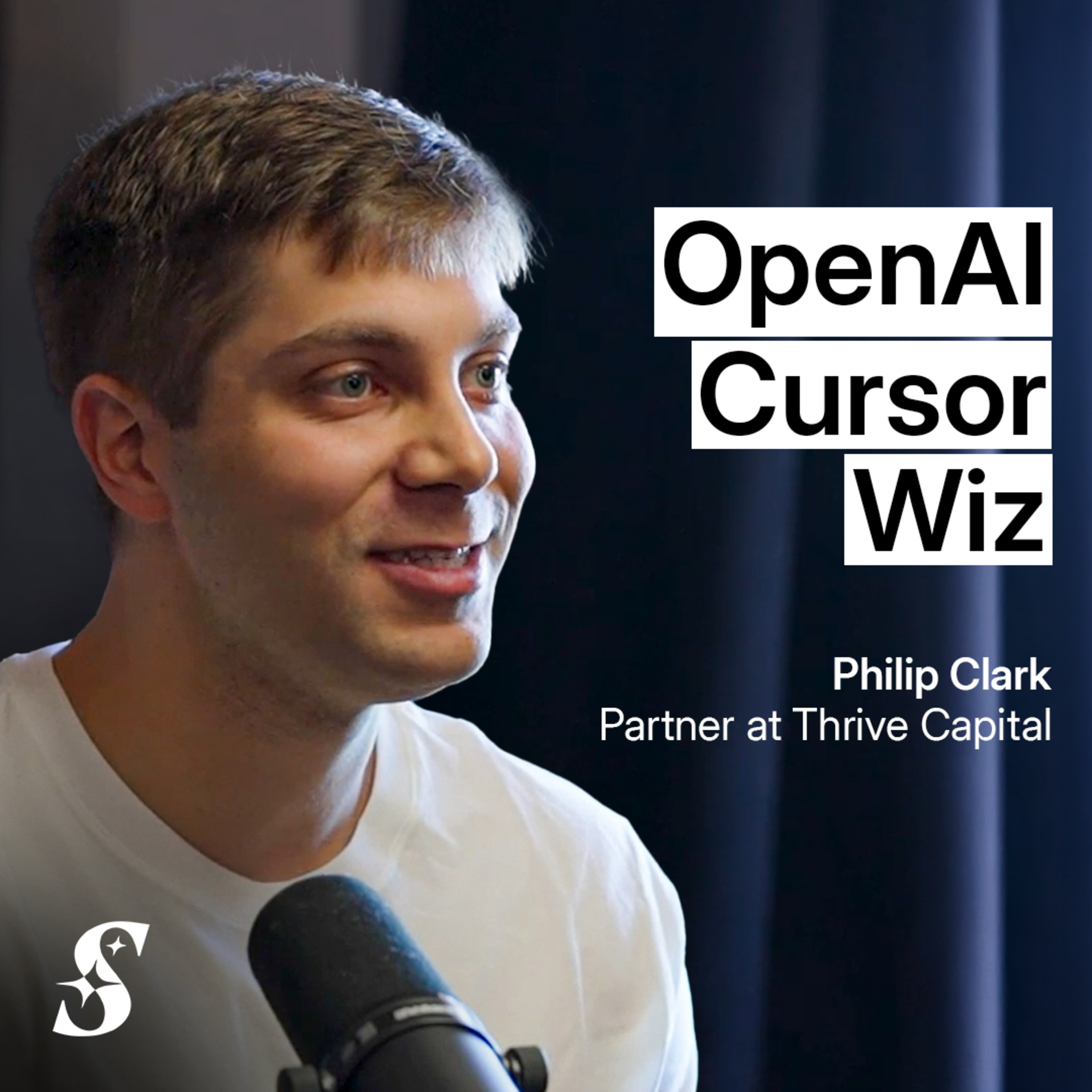
When meeting Cursor's founder, the investor felt an "electric energy" even as the founder was pivoting away from his original idea. This highlights that for elite early-stage investors, the founder's intrinsic drive and potential are the constant to bet on, as ideas will inevitably change.
Elite decision-making transcends pure analytics. The optimal process involves rigorously completing a checklist of objective criteria (the 'mind') and then closing your eyes to assess your intuitive feeling (the 'gut'). This 'educated intuition' framework balances systematic analysis with the nuanced pattern recognition of experience.
![Martín Escobari - Inside General Atlantic - [Invest Like the Best, EP.449] thumbnail](https://megaphone.imgix.net/podcasts/90e6e3e6-c984-11f0-ae5f-27bb851bdc56/image/608fac468f77cb3014e96336896d96de.jpg?ixlib=rails-4.3.1&max-w=3000&max-h=3000&fit=crop&auto=format,compress)
Thrive's late-stage philosophy starts with qualitative conviction in the team and product. Quantitative analysis is used to confirm this hypothesis, not generate it. This approach builds resilience against short-term metric fluctuations that cause purely quantitative investors to lose confidence, allowing for bolder, long-term bets.

The hardest transition from entrepreneur to investor is curbing the instinct to solve problems and imagine "what could be." The best venture deals aren't about fixing a company but finding teams already on a trajectory to succeed, then helping change the slope of that success line on the margin.

Unlike operating companies that seek consistency, VC firms hunt for outliers. This requires a 'stewardship' model that empowers outlier talent with autonomy. A traditional, top-down CEO model that enforces uniformity would stifle the very contrarian thinking necessary for venture success. The job is to enable, not manage.

Strict investment theses (e.g., "only second-time founders") are merely guidelines. The high volume of meetings required in venture capital provides the essential context and pattern recognition needed to identify exceptional outliers that defy rigid heuristics.
When evaluating revolutionary ideas, traditional Total Addressable Market (TAM) analysis is useless. VCs should instead bet on founders with a "world-bending vision" capable of inducing a new market, not just capturing an existing one. Have the humility to admit you can't predict market size and instead back the visionary founder.
