Get your free personalized podcast brief
We scan new podcasts and send you the top 5 insights daily.
The founder of automation platform n8n intentionally limited the naming process to just one hour. He correctly believed that the product's success was not dependent on a perfect name, a counter-intuitive approach for brand-focused founders that allowed him to focus on building.

Related Insights
By naming his company "Nerd Fitness" instead of tying it to his own name, Steve Kamb created an asset that could outgrow him. This strategic choice allowed him to eventually step back from running the company and pursue personal projects without destroying the brand he built.

Peter Steinberger's ability to rename Clawdbot to Moltbot in an hour reflects the mindset of a prolific developer with dozens of projects. He doesn't treat names as precious, multi-million dollar decisions but as functional labels. This allows for extreme agility that established companies, who agonize over branding for years, cannot match.
Companies like Apple, Stripe, and the speaker's own BrainCo began with placeholder names that were never intended to be permanent. However, internal momentum and team attachment often make finding a 'better' alternative impossible, causing the temporary name to stick. This highlights the power of early internal branding.

Pigford argues against spending months building before launching. He's shipped products on the same day he had the idea, believing it's a "real bad idea" to delay. This speed is crucial for getting immediate user feedback to understand their problems, which often differ from a founder's assumptions.

Building a startup with severe personal time constraints, such as raising young children, is a crucible that forges essential skills. It forces you to learn ruthless prioritization and delegation—'superpowers' that unconstrained founders often neglect, leading to greater long-term effectiveness.

The team avoids traditional design reviews and handoffs, fostering a "process-allergic" culture where everyone obsessively builds and iterates directly on the product. This chaotic but passionate approach is key to their speed and quality, allowing them to move fast, make mistakes, and fix them quickly.
In fast-paced environments like AI, the opportunity cost of lengthy internal debates over good-enough options is enormous. A founder mindset prioritizes rapid execution and learning over achieving perfect consensus, creating a significant competitive advantage through speed.
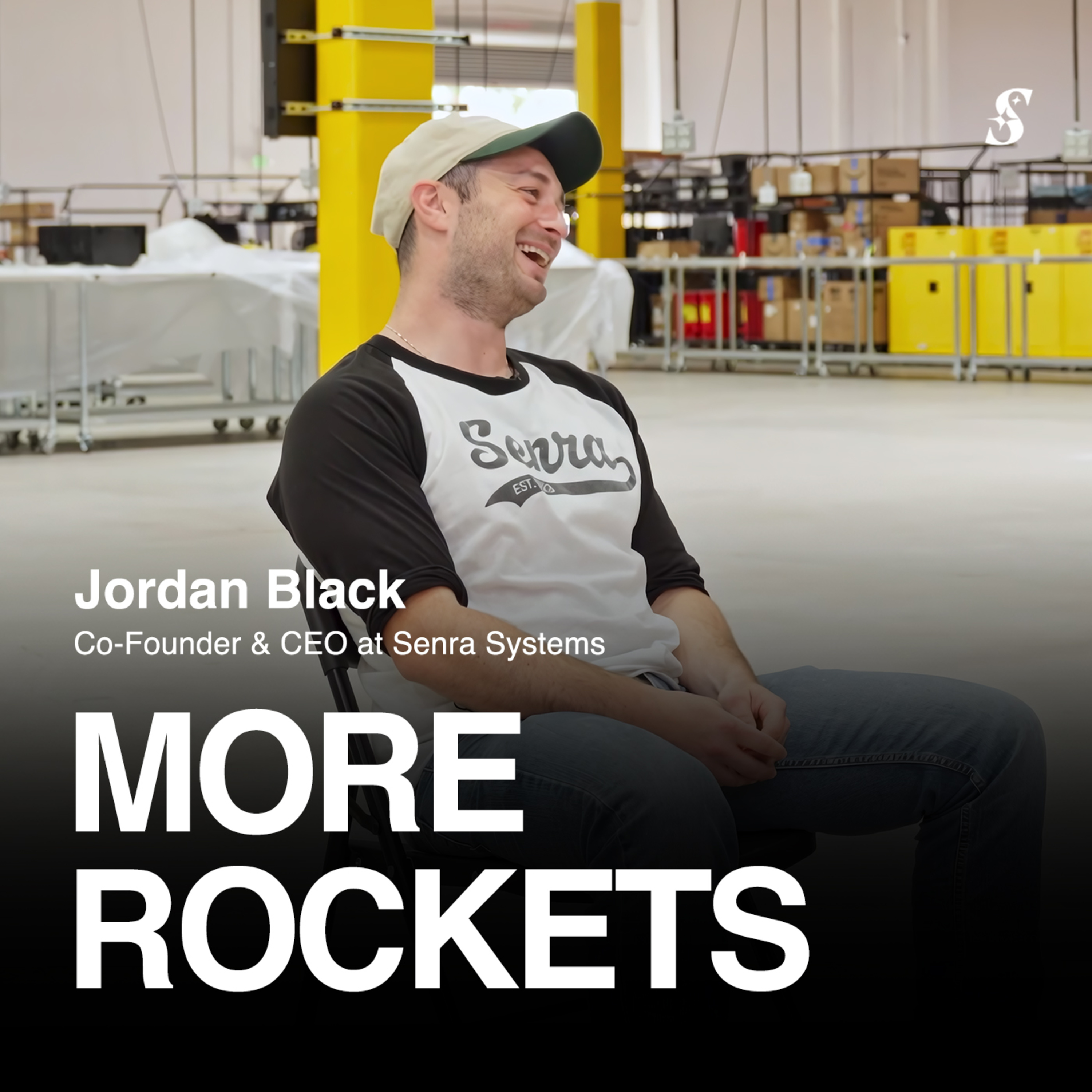
Senra Systems' name is 'harness' spelled backward, with the 'h' and 's' removed. This stands for their mission to 'delete the horseshit' from the wire harnessing industry. This clever origin story transforms a simple name into a memorable, daily reminder of the company's core value of radical simplification.
The path to a great name is paved with mediocre ones. The key is embracing quantity to find quality. Teams that stop after generating only 50-100 names get stuck, whereas a professional process might explore over 2,000 possibilities to uncover a true gem.

Jamie Siminoff has always used "Chief Inventor" on his LinkedIn. He views business as a necessary vehicle to support his primary passion: inventing. This mindset keeps the product at the core of the company's identity and strategy.
