Get your free personalized podcast brief
We scan new podcasts and send you the top 5 insights daily.
The rigorous training of a scientist—learning how to learn, managing uncertainty, and iterating toward solutions—provides a powerful and directly transferable skill set for the unique challenges of building a company from the ground up.

Related Insights
Scientist-founders often believe one more experiment will prove their hypothesis. To succeed as a CEO, they must shift from scientific curiosity to ruthless capital discipline, killing unviable programs and building a team that challenges ideas, not just executes them.

A scientific background can be a major asset in a CEO role, not a liability. The core principles of science—making data-driven, rational, and unemotional decisions—translate directly to the business world. This allows for objective choices that align scientific development with the company's business needs.
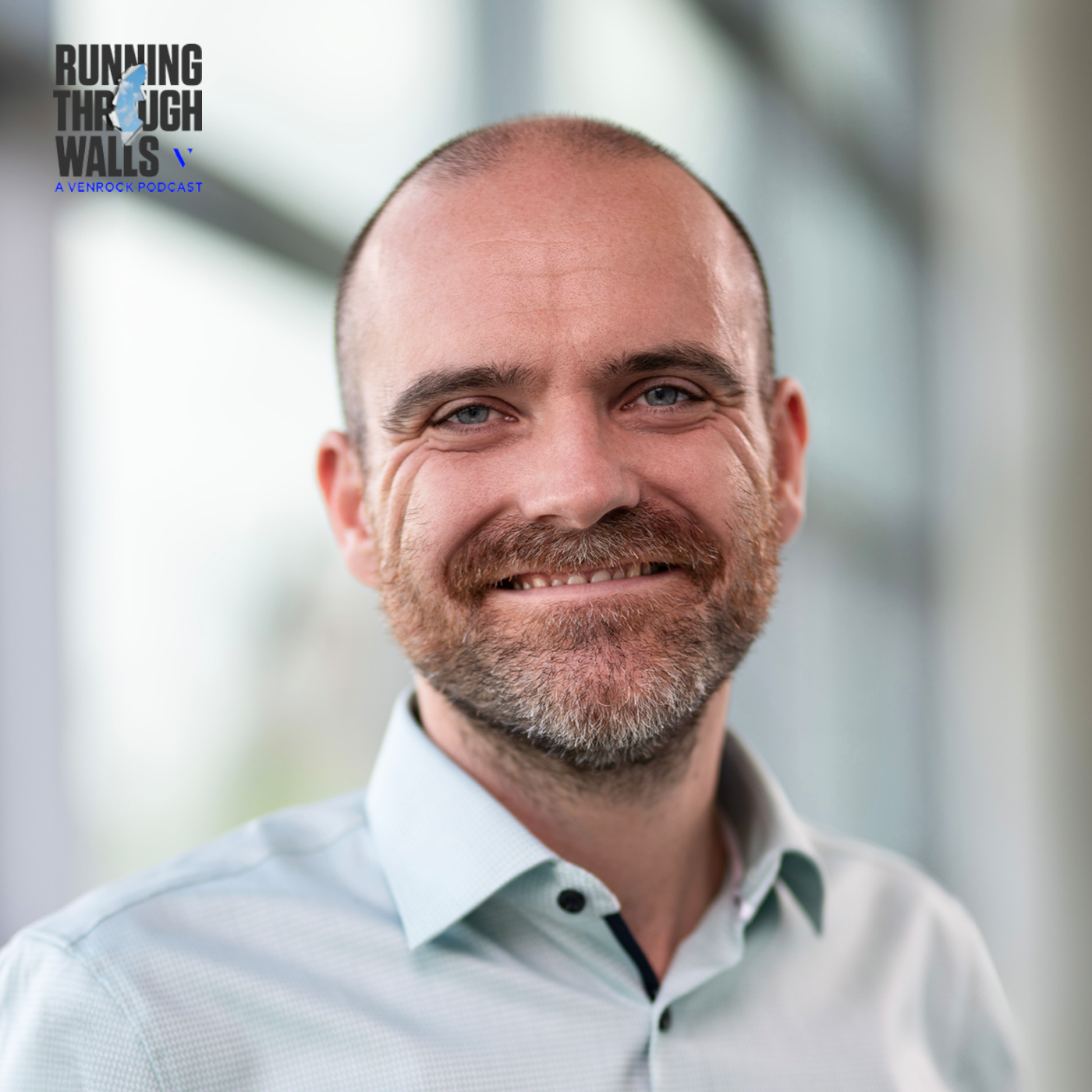
Training in a resource-constrained Irish lab taught deep, focused thinking and prioritization—essential for running a lean startup. Conversely, a well-funded Boston lab enabled large-scale, exploratory science leading to breakthroughs. Hegarty credits this dual experience for his success in both academic discovery and biotech leadership.

Since startups lack infinite time and money, an investor's key diligence question is whether the team can learn and iterate fast enough to find a valuable solution before resources run out. This 'learning velocity' is more important than initial traction or a perfect starting plan.

The core job of a scientist isn't knowing facts, but figuring out what's unknown. This problem-solving 'toolbox'—how to think, act, and work with teams to tackle new problems—is directly transferable to the CEO role, enabling leaders to navigate unfamiliar domains like corporate finance or legal structures.

Many scientists are driven by pure curiosity. However, the mindset that pushes an academic toward entrepreneurship is a relentless focus on reaching a definitive conclusion—a 'yes or no' answer. This goal-oriented drive to translate a concept into a real-world application is a key founder trait in biotech.
Merrick Smela found the switch from academia to his startup, Ovelle, to be a small one. During his PhD, he operated with a clear, product-focused goal: "I want to make an egg." This contrasts the stereotype of purely exploratory academic research, showing that a mission-driven approach is excellent training for entrepreneurship.

A PhD forces you to a point where you are the world expert on a niche problem, with no books or advisors to provide the answer. This emotionally challenging process of navigating total uncertainty teaches you to think for yourself, a critical skill that is hard to acquire otherwise.

The most successful founders rarely get the solution right on their first attempt. Their strength lies in persistence combined with adaptability. They treat their initial ideas as hypotheses, take in new data, and are willing to change their approach repeatedly to find what works.

The transition from academia to a startup can be viewed as an acceleration of the same mission. While academic grants are written about solving problems for millions, building a company offers a direct, focused, and "freeing" path to actually delivering a solution to those patients, who serve as the consistent "North Star" across both worlds.