Get your free personalized podcast brief
We scan new podcasts and send you the top 5 insights daily.
Training in a resource-constrained Irish lab taught deep, focused thinking and prioritization—essential for running a lean startup. Conversely, a well-funded Boston lab enabled large-scale, exploratory science leading to breakthroughs. Hegarty credits this dual experience for his success in both academic discovery and biotech leadership.

Related Insights
Axonis co-founder Shane Hegarty left a secure tenure-track faculty position to return to a frontline research role in a top Boston lab. This seemingly backward step gave him access to cutting-edge tools and a different research philosophy, which directly led to the discoveries that founded his company.
Unlike large pharma where novel projects compete with established, safer alternatives, biotech startups derive immense power from their singular focus. The "live or die" mentality on a single hard problem forces teams to innovate and persevere through setbacks, which is essential for pushing true scientific boundaries.

Ovelle's co-founders exemplify a common success pattern in biotech: one partner with profound scientific knowledge (Merrick) and another with extensive business experience (Travis). This combination covers critical aspects from research to capital raising and team building, as it's rare to find both skill sets in one person.

Contrary to startup culture, the best training for biotech leadership is gaining broad, cross-functional experience in a large, structured pharmaceutical company. This foundation provides the necessary depth and breadth to navigate the complexities of leading a smaller, resource-constrained biotech later on.
Dr. Vibha Jawa's career shows a powerful strategy: learning drug development fundamentals in large companies (Amgen, Merck) and applying them in nimble startups. This cycle across different environments accelerates learning and deepens expertise in a specialized field like immunogenicity.

Starting in a government lab where he had to raise his own funding ('soft money') forced Brad Ringeisen to master pitching and framing the impact of his science. This early entrepreneurial pressure built a critical skill set for leading large-scale research initiatives, making him a 'hungry scientist.'
The core job of a scientist isn't knowing facts, but figuring out what's unknown. This problem-solving 'toolbox'—how to think, act, and work with teams to tackle new problems—is directly transferable to the CEO role, enabling leaders to navigate unfamiliar domains like corporate finance or legal structures.

The transition from a resource-rich environment like Novartis to an early-stage biotech reveals a stark contrast. The unlimited access to a global organization is replaced by a total reliance on a small, nimble team where everyone must be multi-skilled and hands-on, a change even experienced executives find jarring.
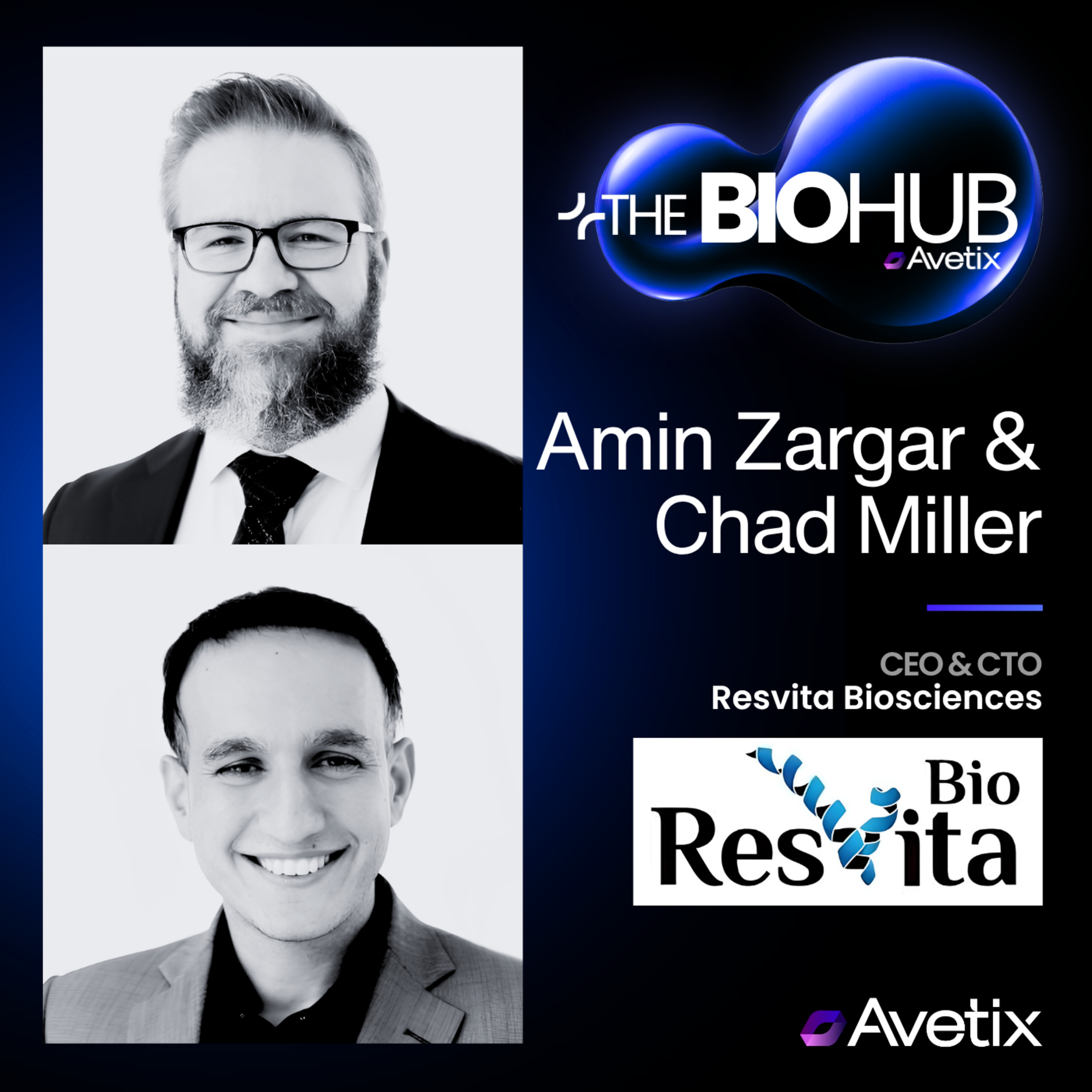
Resvita Bio's CEO notes that in academia, scientists conduct numerous experiments to prove a single point for publication. In a startup, the focus shifts to building momentum. Once a concept is proven, the team must immediately move to the next challenge rather than over-verifying with redundant experiments.
Merrick Smela found the switch from academia to his startup, Ovelle, to be a small one. During his PhD, he operated with a clear, product-focused goal: "I want to make an egg." This contrasts the stereotype of purely exploratory academic research, showing that a mission-driven approach is excellent training for entrepreneurship.