Get your free personalized podcast brief
We scan new podcasts and send you the top 5 insights daily.
For advanced users, different specialized custom GPTs can collaborate within a single chat thread. By using the "@" symbol, you can call on different "AI team members" (e.g., @MarketingStrategist and @ContentCreator) to work together sequentially on a complex task.

Related Insights
Instead of switching between ChatGPT, Claude, and others, a multi-agent workflow lets users prompt once to receive and compare outputs from several LLMs simultaneously. This consolidates the AI user experience, saving time and eliminating 'LLM ping pong' to find the best response.

For its user assistant, Brex moved beyond a single agent with many tools. Instead, they built a network where specialized sub-agents (e.g., policy, travel) have multi-turn conversations with an orchestrator agent to collaboratively solve complex user requests.

To build a useful multi-agent AI system, model the agents after your existing human team. Create specialized agents for distinct roles like 'approvals,' 'document drafting,' or 'administration' to replicate and automate a proven workflow, rather than designing a monolithic, abstract AI.
Beyond individual productivity, a shared AI tool fosters collaboration. Marketers can share effective prompts and custom GPTs, creating a living repository of best practices. This turns the tool into a third space for team communication, alongside Slack and email.

Building a single, all-purpose AI is like hiring one person for every company role. To maximize accuracy and creativity, build multiple custom GPTs, each trained for a specific function like copywriting or operations, and have them collaborate.

Treat different LLMs like colleagues with distinct personalities. Zevi Arnovitz views Claude as a collaborative dev lead, Codex (GPT) as a brilliant but terse bug-fixer, and Gemini as a creative but chaotic designer. This mental model helps in delegating tasks to the most suitable AI, maximizing their strengths and mitigating their weaknesses.
Separating AI agents into distinct roles (e.g., a technical expert and a customer-facing communicator) mirrors real-world team specializations. This allows for tailored configurations, like different 'temperature' settings for creativity versus accuracy, improving overall performance and preventing role confusion.
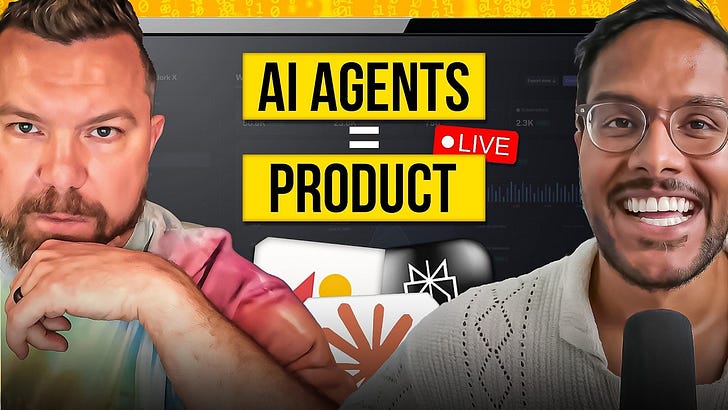
Instead of relying on a single, all-purpose coding agent, the most effective workflow involves using different agents for their specific strengths. For example, using the 'Friday' agent for UI tasks, 'Charlie' for code reviews, and 'Claude Code' for research and backend logic.

Top performers won't rely on a single AI platform. Instead, they will act as a conductor, directing various specialized AI agents (like Claude, Gemini, ChatGPT) to perform specific tasks. This requires understanding the strengths of different tools and combining their outputs for maximum productivity.

Shift from using AI as a tool to building a team of custom GPTs with specific roles (e.g., Marketing Strategist). "Train" them with comprehensive documentation and SOPs, just as you would a new human hire, to achieve specialized, high-quality output.