Get your free personalized podcast brief
We scan new podcasts and send you the top 5 insights daily.
Uber's CEO advises against overly detailed career plans, arguing they create confirmation bias and a lack of curiosity. People with rigid plans look for signals that validate their path and ignore unexpected opportunities. His advice: "Before you go out and try to change a world, let the world change you first."

Related Insights
Don't commit to a rigid career plan. Instead, treat your career like a product. Run small-scale experiments or 'MVPs'—like a 20% project, a volunteer role, or a teaching gig—to test your interest and aptitude for new skills before making a full commitment, then iterate based on the results.
A fixed long-term career plan can be paralyzing. Instead, view your dream future as being on the other side of a lake covered in lily pads. Your job is to leap to the next immediate opportunity that energizes you, creating a flexible, compounding journey without the pressure of a grand vision.

Instead of having a fixed career goal, Ryan Smith evaluated opportunities against core attributes he valued, such as uncapped potential and leadership. This allowed him to recognize the massive opportunity in enterprise software, a field he never would have considered otherwise.

Ferriss advises against rigid long-term career plans, which he believes are too safe. Instead, he focuses on 6-12 month projects chosen specifically for the transferable skills and relationships they build. These assets create compounding value, even if the initial project fails, as shown by his journey from StumbleUpon to Uber.

Dara Khosrowshahi advises ambitious professionals to focus on working for exceptional individuals rather than seeking specific titles. Successful people create a "wake" of opportunities, allowing you to learn from the best and "free ride" their upward momentum.

A complicated system (a Ferrari) has linear steps, while a complex system (a teenager) changes as you interact with it. Your life and career are complex. Instead of fighting for a straight-line path, embrace the "squiggly" nature of growth, treat wrong turns as valuable information, and learn through exploration rather than rigid planning.

Creating a long-term career master plan is often counterproductive, leading people onto generic conveyor belts like consulting or banking. A better strategy is to consistently choose the best opportunity available at the moment. Optimizing for the right things in the short term allows for more powerful, organic compounding over time.

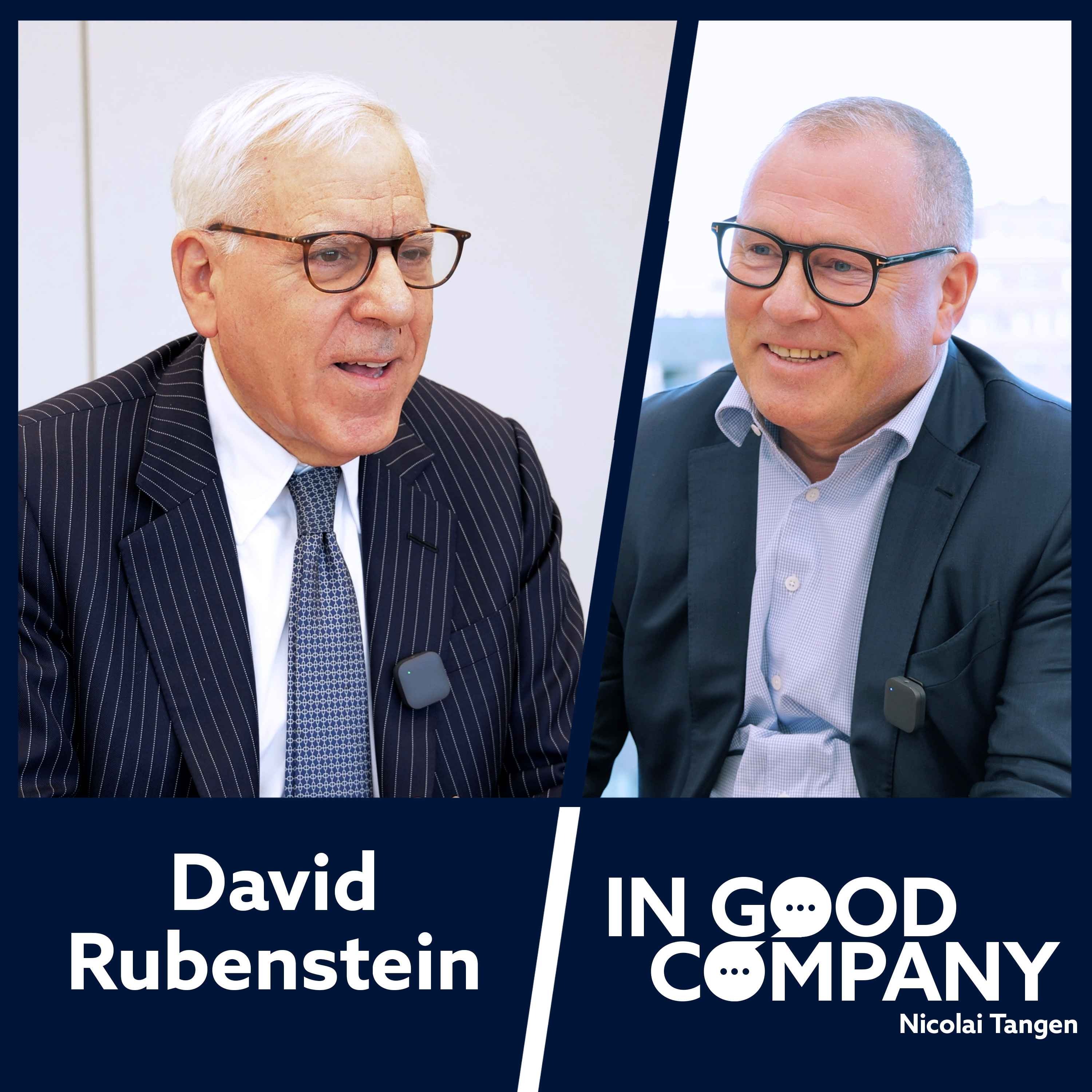
David Rubenstein's successful second act as a TV interviewer wasn't a planned career move calculated with consultants. It emerged organically from a simple need to make his firm's investor events less boring. This highlights how the most transformative professional opportunities often arise from solving unexpected problems, not from a formal strategic plan.
Alexander Titus's career path has been shaped by prioritizing working on hard things with good people over a fixed, long-term plan. This flexible, people-first approach has led him to unique, "first-of-their-kind" roles across government, VC, and industry that a rigid plan would have missed.

Successful people with unconventional paths ('dark horses') avoid rigid five or ten-year plans. Like early-stage founders, they focus on making the best immediate choice that aligns with their fulfillment, maintaining the agility to pivot. This iterative approach consistently outperforms fixed, long-term roadmaps.