Get your free personalized podcast brief
We scan new podcasts and send you the top 5 insights daily.
Although initially conceived as an easy deployment layer for Codex-generated frontends to bypass local DevOps, ChatGPT Sites has expanded into infrastructure. It incorporates native components like D1 data storage and R2 buckets, and can actually host Model Context Protocol (MCP) plugins, creating a virtuous workflow loop where Sites hosts both the backend plugin architecture and the consuming site.

Related Insights
Model-Context Protocol (MCP) is a standardized layer that allows an LLM to communicate with various software tools without needing custom integrations for each. It acts like a universal translator, enabling the LLM to 'speak English' while the MCP handles communication with each tool's unique API.

Instead of building one monolithic AI application, this architecture promotes creating smaller, specialized AI services. The Model Context Protocol (MCP) allows an AI agent to discover and use these tools on the fly, treating them like microservices rather than hardcoded functions, which enhances flexibility and scalability.
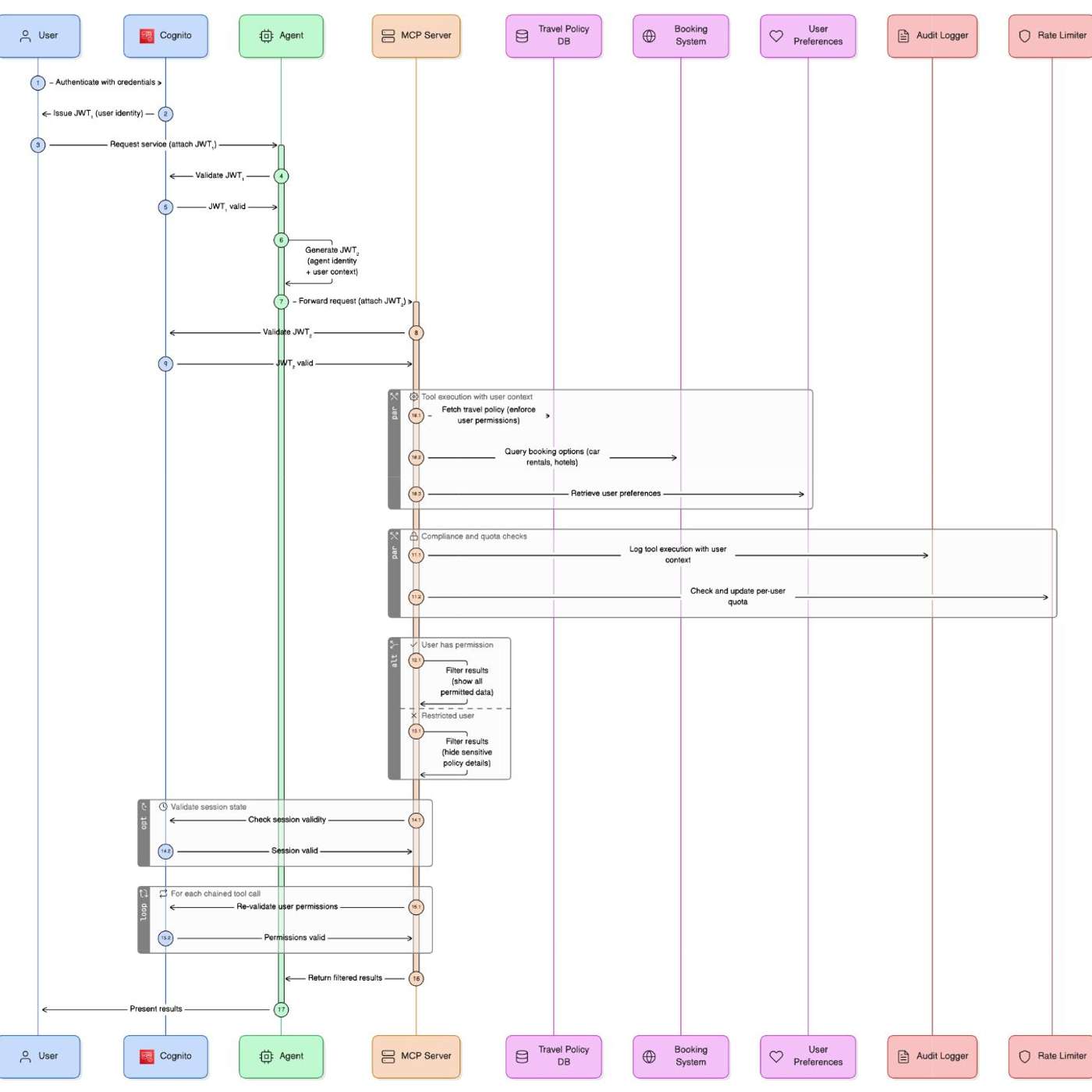
When sharing an internal app built with ChatGPT Sites, authentication isn't centralized through shared API keys. Instead, it leverages 'bring your own plugin' architecture where each team member brings their own authenticated connectors (e.g., Slack, Notion). Visitors view the same site template, but content dynamically scopes to their identity and team permissions, making it ideal for teams handling sensitive data.
Instead of direct API calls, build Model-Controlled Program (MCP) servers. They act as better guardrails for the AI, allowing it to interact with external data more effectively and even suggest novel use cases based on API documentation.

The value of AI-native builders like Wix's Base44 isn't just the AI model, which is often a third party. It's the seamless integration of backend infrastructure—hosting, databases, authentication—that eliminates significant technical friction for non-developers, making it more than a simple "wrapper."

Despite technical debates about bloat, MCPs (Model-Component Packages) serve a crucial strategic role as the "third-party apps" for AI platforms like OpenAI and Anthropic. They provide a vital distribution layer for new products to enter the ecosystem, similar to the App Store.

MCP is a specialized layer for AI agents to consume services, translating traditional APIs (like REST) into a format Large Language Models can better utilize. It doesn't replace existing APIs but rather wraps them, acting as an adapter for a new type of consumer.

MCP provides a standardized way to connect AI models with external tools, actions, and data. It functions like an API layer, enabling agents in environments like Claude Code or Cursor to pull analytics data from Amplitude, file tickets in Linear, or perform other external actions seamlessly.
ChatGPT Apps are built on the Model Context Protocol (MCP), invented by Anthropic. This means tools built for ChatGPT can theoretically run on other MCP-supporting models like Claude. This creates an opportunity for cross-platform distribution, as you aren't just building for OpenAI's ecosystem but for a growing open standard.

Beyond code generation, AI agents can now deploy and manage live web applications on a 'chatgpt.site' domain. These sites are not static; they support a SQL database, S3 file storage, and environment variables. Users can manage the entire lifecycle, from creation to deployment and updates, entirely through chat, even on mobile.