Get your free personalized podcast brief
We scan new podcasts and send you the top 5 insights daily.
Countering the narrative that AI will kill software, NVIDIA CEO Jensen Huang argues agents will be tool users, not tool builders. Just as a robot would pick up a screwdriver instead of reinventing one, AI agents will leverage existing platforms. This positions AI as an accelerator for current software, not an immediate replacement.

Related Insights
Jensen Huang argues the "AI bubble" framing is too narrow. The real trend is a permanent shift from general-purpose to accelerated computing, driven by the end of Moore's Law. This shift powers not just chatbots, but multi-billion dollar AI applications in automotive, digital biology, and financial services.

Nadella adopts a grounded perspective on AI's current state. He likens it to past technological revolutions, viewing it as a powerful tool that enhances human intellect and productivity, rather than subscribing to the more mystical 'final revolution' narrative about AGI.
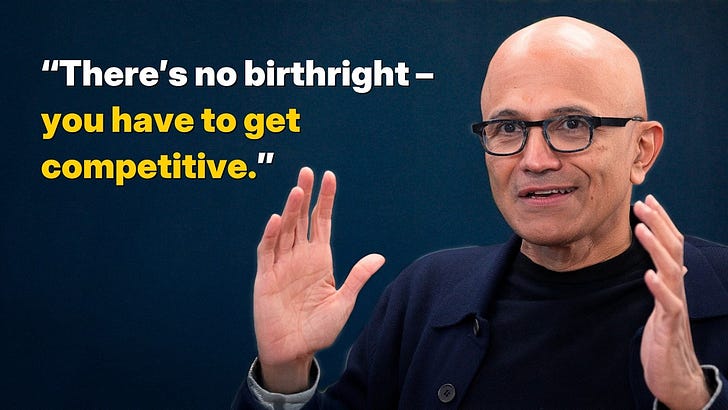
The rise of AI doesn't change your team's fundamental goals. Leaders should demystify AI by positioning it as just another powerful tool, similar to past technological shifts. The core work remains the same; AI just helps you do it better and faster.

Jensen Huang criticizes the focus on a monolithic "God AI," calling it an unhelpful sci-fi narrative. He argues this distracts from the immediate and practical need to build diverse, specialized AIs for specific domains like biology, finance, and physics, which have unique problems to solve.
As AI evolves from single-task tools to autonomous agents, the human role transforms. Instead of simply using AI, professionals will need to manage and oversee multiple AI agents, ensuring their actions are safe, ethical, and aligned with business goals, acting as a critical control layer.

If NVIDIA's CEO truly believed AGI was imminent, the most rational action would be to hoard his company's chips to build it himself. His current strategy of selling this critical resource to all players is the strongest evidence that he does not believe in a near-term superintelligence breakthrough.

The tangible nature of hardware, like an iPhone or an NVIDIA GPU, makes it easier for a charismatic leader to demonstrate and generate excitement. AI software, being abstract and like a "blank box," poses a much harder marketing challenge that currently lacks a Steve Jobs-like figure.

The 'agents vs. applications' debate is a false dichotomy. Future applications will be sophisticated, orchestrated systems that embed agentic capabilities. They will feature multiple LLMs, deterministic logic, and robust permission models, representing an evolution of software, not a replacement of it.

The future of software isn't just AI-powered features. It's a fundamental shift from tools that assist humans to autonomous agents that perform tasks. Human roles will evolve from *doing* the work to *orchestrating* thousands of these agents.
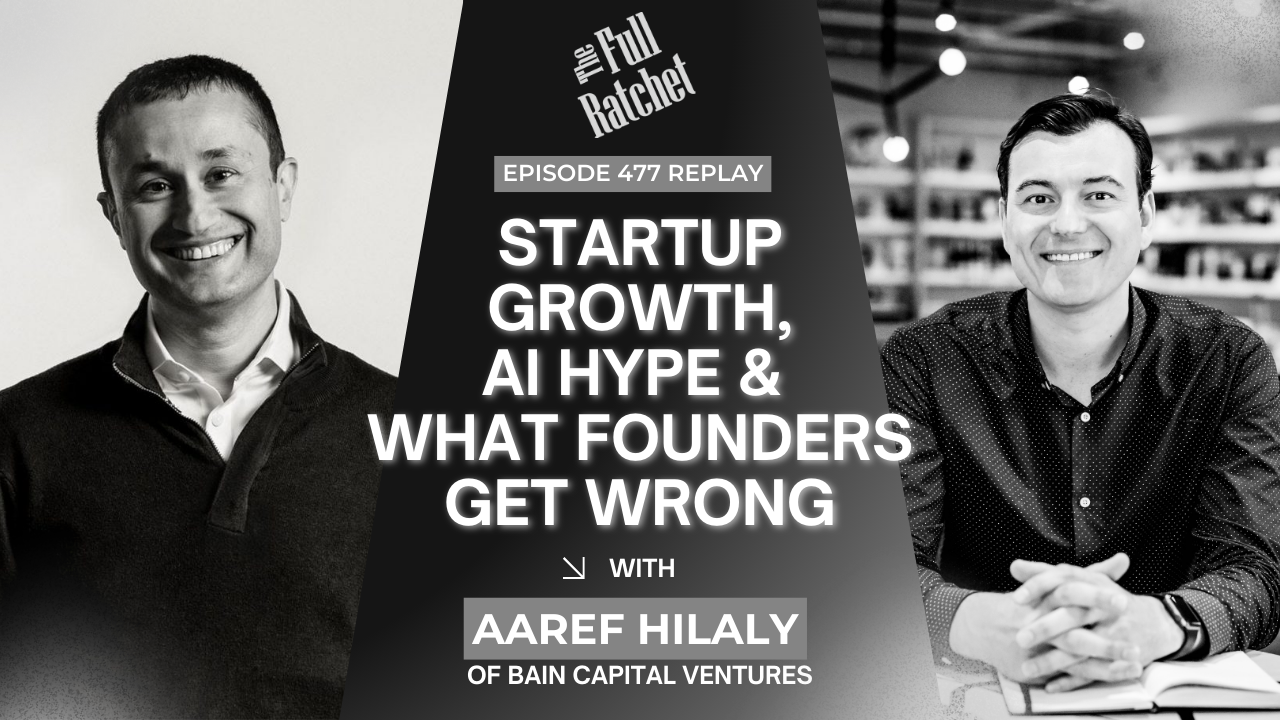
Jensen Huang defended SaaS by arguing an AGI would use existing software (like a screwdriver) rather than reinvent it. The key flaw in this analogy is cost: unlike a physical tool, an AI agent can replicate expensive software for a fraction of the price, making reinvention the logical choice.
