Get your free personalized podcast brief
We scan new podcasts and send you the top 5 insights daily.
When a political leader frequently issues apocalyptic threats without acting on them, the public becomes desensitized. The rhetoric is dismissed as bluster (a "Taco Tuesday"), dangerously lowering the bar for acceptable discourse and eroding the impact of genuine warnings.
Related Insights
Analysts, economists, and thought leaders have a professional incentive to make pessimistic, catastrophic predictions. Optimistic forecasts of gradual improvement are less interesting and don't command high speaking fees or media attention, creating a systemic bias towards negativity in public discourse.

A population can be habituated to war through gradual escalation. By starting with seemingly small, contained "lightning strikes," each subsequent step feels less shocking. This incremental approach can lead a nation into a major conflict without a single decisive moment of public debate or consent.

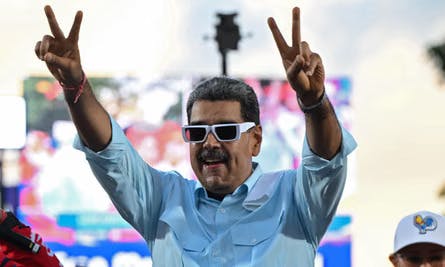
Authoritarian leaders who publicly mock or dismiss threats risk triggering a military response driven by personal pride. Venezuelan President Maduro's televised dancing was reportedly perceived by the Trump administration as calling their bluff, demonstrating how avoiding the appearance of being a 'chump' can become a primary motivator for military action.
Historically, figures like Hitler were initially dismissed as buffoons. This perceived lack of seriousness is a strategic tactic, not a flaw. It disarms civil opponents who can't operate in that space, captures constant media attention, and causes observers to fatally underestimate the true threat. The defense to "take him seriously, not literally" is a modern manifestation of this pattern.
When political commentators and experts label minor policy disagreements as catastrophic, they dilute their credibility. This constant outrage makes them unable to effectively condemn genuinely egregious actions, like potential war crimes, when they actually occur.

A leader's bombastic, civilization-ending rhetoric often serves as a distraction from the military's actual strategy. While Trump threatened to "wipe out" Iran, the US military was simultaneously conducting a targeted strike, showing a disconnect between public posturing and operational reality.
Constant exposure to global crises like political polarization causes a 'collective amygdala hijack,' putting society into a chronic defensive state that impairs higher-order thinking and empathy. In this state, we lose nuance, become more prone to tribalism, and are easier to control.

Societies adapt to escalating geopolitical tensions much like a frog being slowly boiled. Threats that would have seemed outrageous months ago become the new normal, masking the true severity and risk of the current situation until it's too late.
A leader cannot expect credit for preventing a crisis, such as a nuclear attack, if the general public never felt it was a real threat. Such 'counterfactual' victories are ineffective because they don't solve a problem the average person was worried about.

When moderate leaders respond to radical actions with tepid statements instead of decisive opposition, they grant tacit approval. Their lack of a strong reaction acts as a "weather vane for normies," signaling to average citizens that the behavior is acceptable.
