Get your free personalized podcast brief
We scan new podcasts and send you the top 5 insights daily.
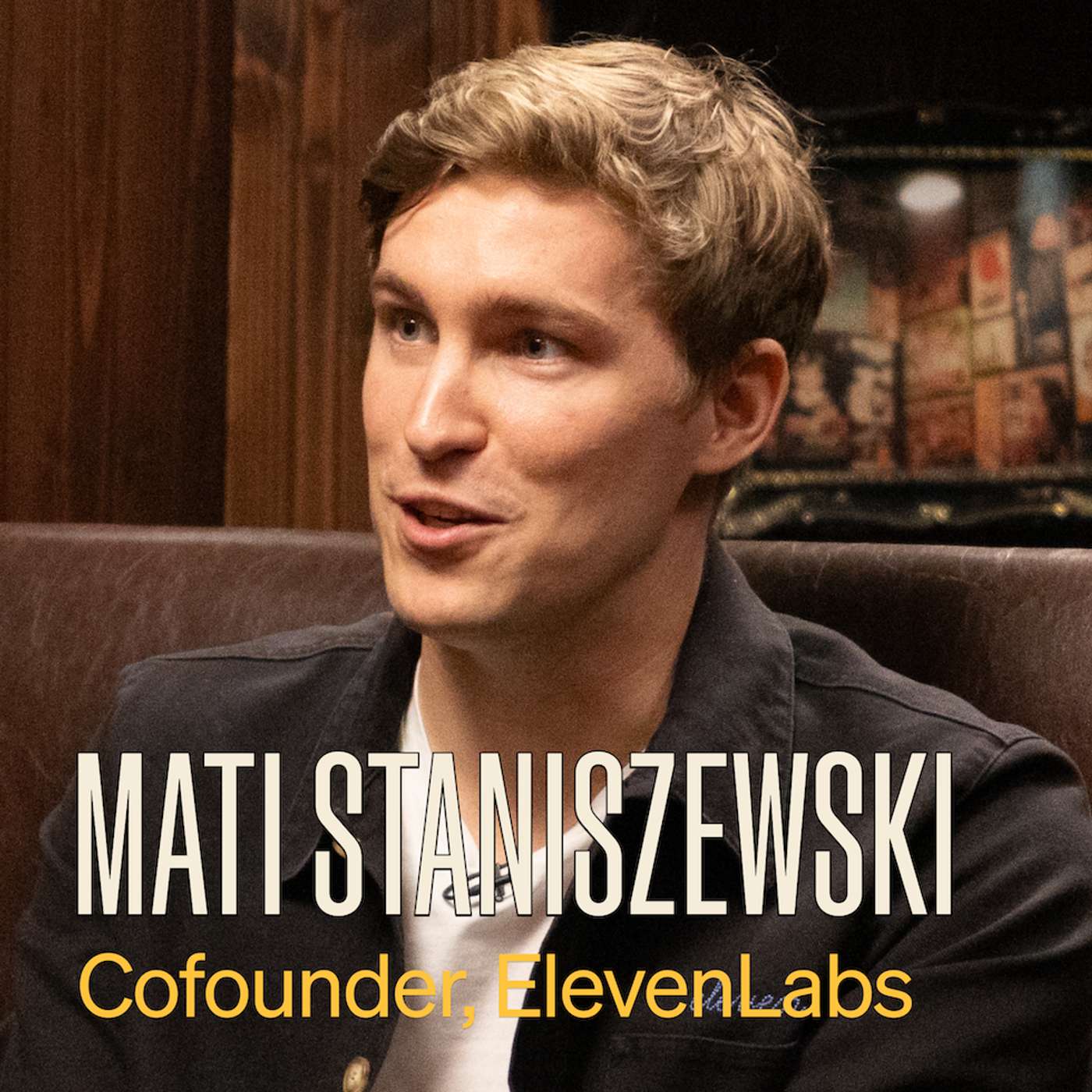
To solve for emotional intelligence in voice AI, ElevenLabs invests in long-term data annotation. They employ over 1,000 former voice coaches and musicians to label qualitative aspects of audio—the 'how' (emotion, style), not just the 'what' (words). This creates a proprietary dataset that is a significant long-term competitive advantage.

Related Insights
To compete with giants like OpenAI, ElevenLabs employs a dual strategy: conducting its own foundational audio research to stay ahead on quality, while simultaneously building product platforms (for creators and agents) that create sticky, defensible value independent of the core models.

For services like Secretary.com, the defensible moat isn't the AI model itself but the unique dataset generated by human oversight. This data captures the nuanced, intuitive reasoning of an expert (like an EA handling a complex schedule change), which is absent from public training data and difficult for competitors to replicate.

While the market focused on crypto and metaverse, ElevenLabs targeted audio. They saw it as an overlooked domain with fewer researchers and smaller model sizes, allowing them to build a frontier model without needing billions in initial capital. This strategic niche selection was key to their early success.
While large language models are a game of scale, ElevenLabs argues that specialized AI domains like audio are won through architectural breakthroughs. The key is not massive compute but a small pool of elite researchers (estimated at 50-100 globally). This focus on talent and novel model design allows a smaller company to outperform tech giants.

As AI makes building software features trivial, the sustainable competitive advantage shifts to data. A true data moat uses proprietary customer interaction data to train AI models, creating a feedback loop that continuously improves the product faster than competitors.

Startups like ElevenLabs and Midjourney compete with large AI labs by imbuing their models with a founder's specific 'taste.' This unique aesthetic, from voice texture to image style, creates a product identity that is difficult for a general, large-scale model to replicate.

Early voice models required hardcoding parameters like accent or emotion. Modern models, like those from ElevenLabs, learn these nuances contextually from data, allowing complex traits like a specific accent to emerge naturally without being explicitly programmed.
As algorithms become more widespread, the key differentiator for leading AI labs is their exclusive access to vast, private data sets. XAI has Twitter, Google has YouTube, and OpenAI has user conversations, creating unique training advantages that are nearly impossible for others to replicate.

The company needed a high-quality speech-to-text model to annotate its own training data because existing market solutions were inadequate. This internal necessity evolved into a successful, customer-facing product, demonstrating the value of building tools to solve your own critical problems.
ElevenLabs found that traditional data labelers could transcribe *what* was said but failed to capture *how* it was said (emotion, accent, delivery). The company had to build its own internal team to create this qualitative data layer. This shows that for nuanced AI, especially with unstructured data, proprietary labeling capabilities are a critical, often overlooked, necessity.