Get your free personalized podcast brief
We scan new podcasts and send you the top 5 insights daily.
Superhuman Go is not just another AI assistant; it's a platform designed to be the "mass transit" for third-party AI agents. By providing the underlying infrastructure, they enable partners like Radical Candor to embed their unique knowledge directly into users' workflows across any application, a powerful distribution strategy.
Related Insights
Instead of merely 'sprinkling' AI into existing systems for marginal gains, the transformative approach is to build an AI co-pilot that anticipates and automates a user's entire workflow. This turns the individual, not the software, into the platform, fundamentally changing their operational capacity.
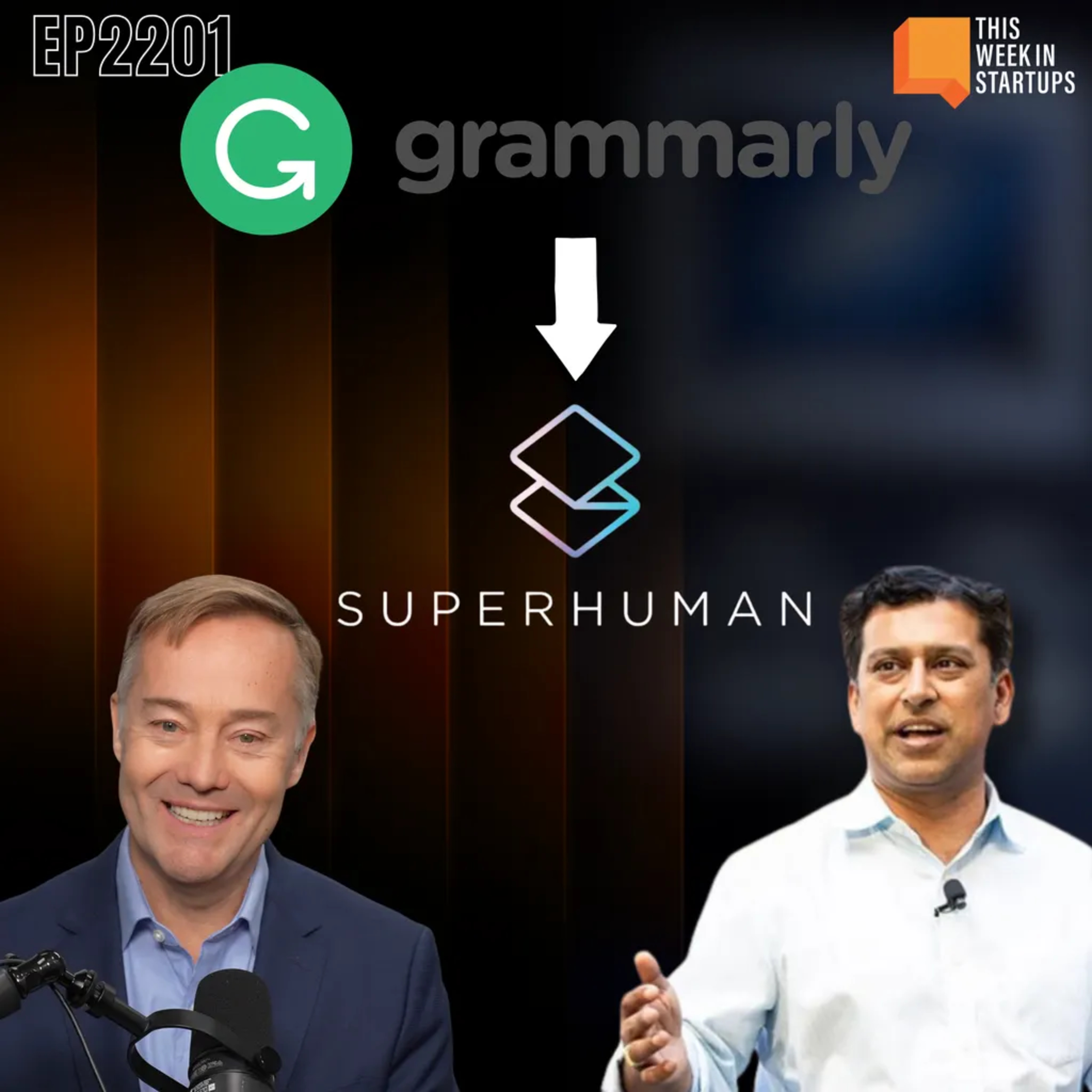
Grammarly has rebranded its corporate entity to Superhuman to reflect its broader mission. It reframes its core technology as an "assist" platform that proactively embeds AI into users' workflows, contrasting with "chat" interfaces (like ChatGPT) and "do" agents. Its new 'Go' product opens this platform to any AI agent, not just writing assistants.

Instead of building a walled-garden AI, the Zed IDE created the Agent Client Protocol (ACP), allowing any coding agent to integrate. This 'Switzerland' strategy, modeled after the Language Server Protocol, lets Zed benefit from all AI innovation rather than competing against it, even attracting competitors like JetBrains to adopt the standard.

OpenAI has quietly launched "skills" for its models, following the same open standard as Anthropic's Claude. This suggests a future where AI agent capabilities are reusable and interoperable across different platforms, making them significantly more powerful and easier to develop for.

ElevenLabs' defense against giants isn't just a better text-to-speech model. Their strategy focuses on building deep, workflow-specific platforms for agents and creatives. This includes features like CRM integrations and collaboration tools, creating a sticky application layer that a foundational model alone cannot replicate.
In a significant strategic move, OpenAI's Evals product within Agent Kit allows developers to test results from non-OpenAI models via integrations like Open Router. This positions Agent Kit not just as an OpenAI-centric tool, but as a central, model-agnostic platform for building and optimizing agents.

Creating a basic AI coding tool is easy. The defensible moat comes from building a vertically integrated platform with its own backend infrastructure like databases, user management, and integrations. This is extremely difficult for competitors to replicate, especially if they rely on third-party services like Superbase.
Traditional software required deep vertical focus because building unique UIs for each use case was complex. AI agents solve this. Since the interface is primarily a prompt box, a company can serve a broad horizontal market from the beginning without the massive overhead of building distinct, vertical-specific product experiences.

Using a composable, 'plug and play' architecture allows teams to build specialized AI agents faster and with less overhead than integrating a monolithic third-party tool. This approach enables the creation of lightweight, tailored solutions for niche use cases without the complexity of external API integrations, containing the entire workflow within one platform.

Similar to how mobile gave rise to the App Store, AI platforms like OpenAI and Perplexity will create their own ecosystems for discovering and using services. The next wave of winning startups will be those built to distribute through these new agent-based channels, while incumbents may be slow to adapt.