Get your free personalized podcast brief
We scan new podcasts and send you the top 5 insights daily.
While President Trump is framing John Bolton's indictment as political retribution, the case was already being built by the Department of Justice under the Biden administration. This pre-existing foundation makes the charges appear more legally substantive and less like a simple political attack, creating a complex situation for Bolton's defense.

Related Insights
The perception of the DOJ as a political tool is no longer a one-sided complaint. Republicans cite prosecutions of figures like Steve Bannon, while Democrats point to Trump's direct influence on indictments. This shared belief from both sides of the aisle is causing a complete erosion of the institution's credibility as an independent body.
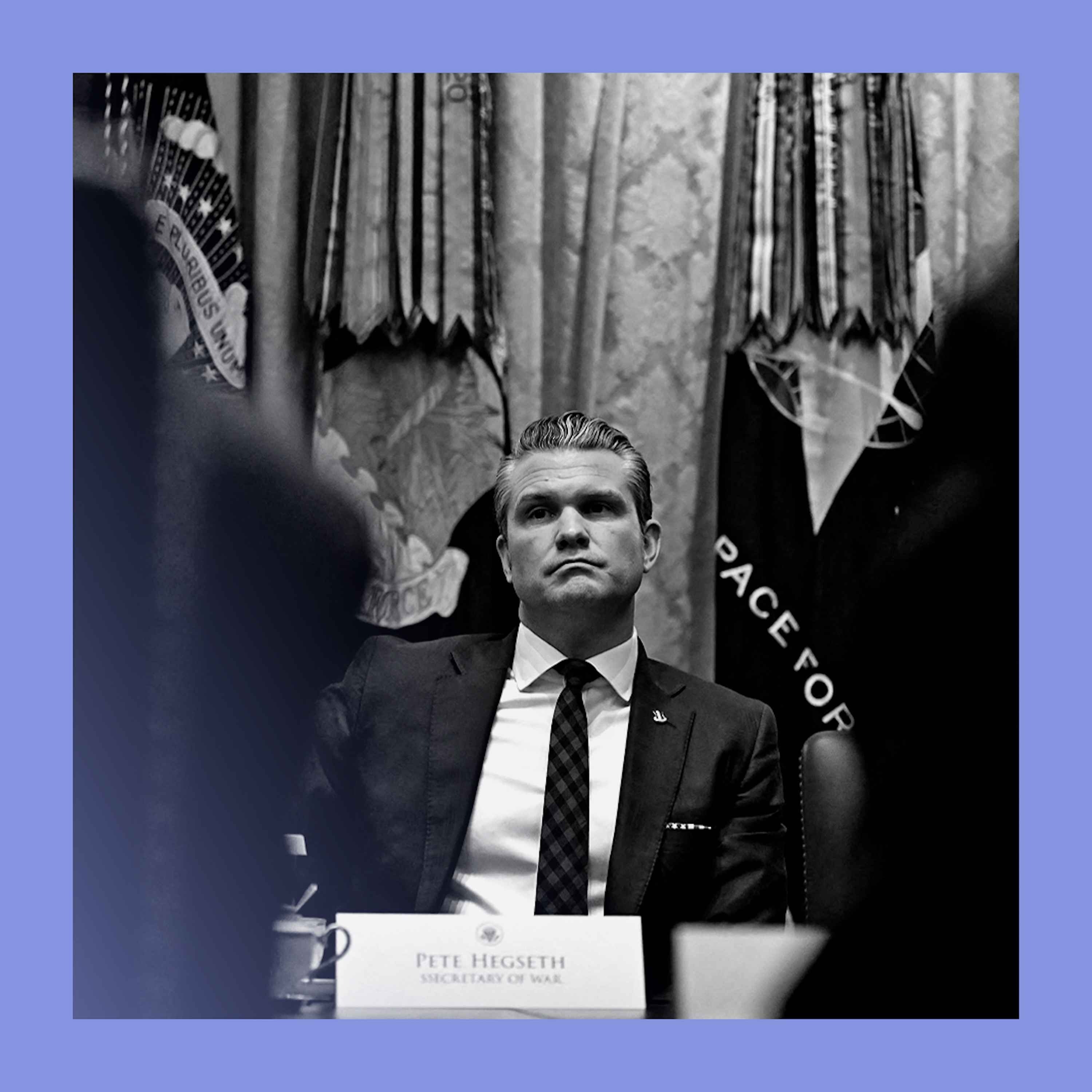
The White House and Pentagon are deliberately shifting blame for a controversial military strike onto a subordinate admiral. This tactic insulates political leaders like the Secretary of Defense, whose rocky tenure and past blunders created the context for such controversial actions, from accountability.
In Trump v. United States, the Supreme Court granted presidents immunity from criminal prosecution for official acts related to their "core constitutional functions," such as pardoning or directing investigations. This protection applies even if the actions are performed in bad faith, creating an unprecedented shield from accountability.

Opponents with deep pockets can initiate lawsuits not necessarily to win, but to drain a target's financial resources and create immense stress. The astronomical cost and duration of the legal battle serve as the true penalty, forcing many to fold regardless of their case's merit.

When the investigation reached the President's inner circle, the government machine mobilized against the anti-corruption bodies. Ukraine's security services arrested several detectives involved in the probe, accusing them of collaborating with Russia. This tactic attempts to reframe a legitimate investigation as a threat to national security.

An administration has no incentive to fully resolve a major public scandal because its unresolved nature makes it a perfect "red herring." It can be used repeatedly to distract the public and media from current policy failures or other damaging news, making perpetual ambiguity more politically useful than transparency.

A former National Security Council staffer observed that President Trump's decisions often seemed counterintuitive in the moment but were later revealed as brilliant strategic "chess moves." This pattern built a high degree of trust among staff, enabling them to execute his vision without always understanding the immediate rationale.

Using legal attacks against political opponents ("lawfare") is a societal gangrene. It forces the targeted party to retaliate, turning elections into existential battles for survival rather than policy contests. This high-stakes environment creates a powerful incentive to win at any cost, undermining democratic norms.

The indictment of former FBI Director James Comey highlights a strategy where the legal process itself is the punishment. The goal is not to win in court but to intimidate opponents by forcing them into expensive, time-consuming legal battles, creating a chilling effect on dissent regardless of the case's merits.

Harris reveals that Biden's inner circle often failed to defend her or promote her accomplishments. She attributes this to a short-sighted, "zero-sum" mentality where her success was seen as dimming the president's, a counterproductive dynamic at the highest level of government.
