Get your free personalized podcast brief
We scan new podcasts and send you the top 5 insights daily.
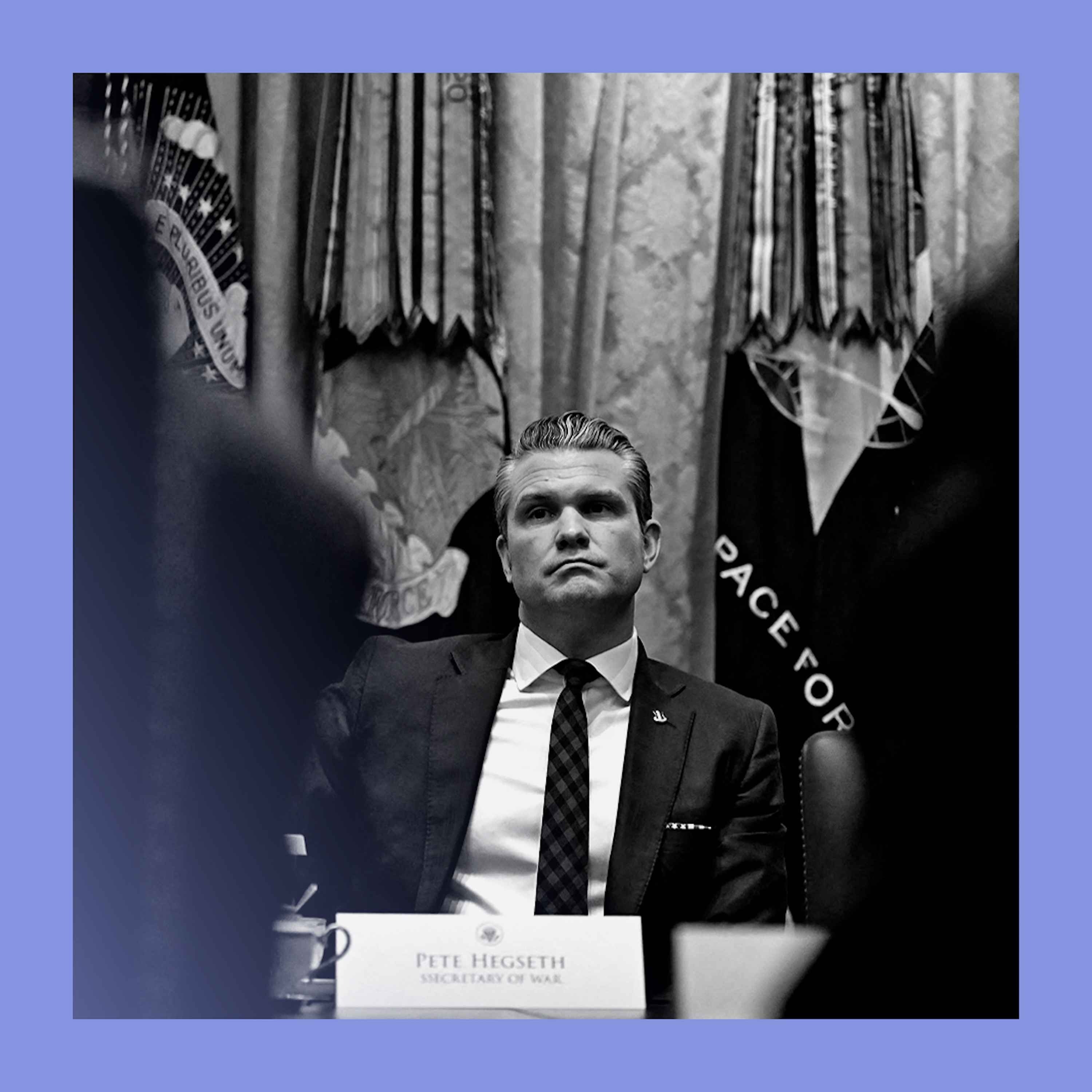
The White House and Pentagon are deliberately shifting blame for a controversial military strike onto a subordinate admiral. This tactic insulates political leaders like the Secretary of Defense, whose rocky tenure and past blunders created the context for such controversial actions, from accountability.
Related Insights
When leaders are not fully present in meetings, their fragmented attention results in poor guidance. When the team inevitably fails to deliver on these unclear instructions, the leader often blames the team's competence instead of their own lack of focus.

History’s most shocking atrocities are defined less by their authoritarian leaders and more by the 'giant blob of enablers' who facilitate them. The current political climate demonstrates this, where professionals and politicians abdicate their expertise and principles to avoid conflict, becoming complicit in the process and allowing destructive ideologies to gain power.

In analyzing a public scandal, Scott Galloway notes that the greatest damage in a crisis typically isn't the initial event but the subsequent "shrapnel": the attempts to cover up, excuse, or avoid accountability. An effective response requires acknowledging the problem, taking responsibility, and overcorrecting.

A strategic reason for a leader to resign is to de-escalate public tension. After a crisis, the leader can become a symbol of that difficult period. By stepping down, they absorb the negative sentiment, lower the political temperature, and allow their organization to move forward.

A former CIA operative suggests that government secrecy is frequently a tool to hide administrative incompetence, premature announcements, or procedural errors, rather than to cover up nefarious, large-scale conspiracies. This perspective reframes public distrust from calculated malice to bureaucratic failure.

When a politician suddenly makes a previously ignored issue intensely important, they are likely employing misdirection. The goal is to control the news cycle and public attention, either to distract from a more significant action happening elsewhere or to advance a hidden agenda unrelated to the stated crisis.

Secretary Hegseth's controversial military actions are rooted in a long-held belief, articulated before he took office, that lawyers have tied America's hands with "red tape." This "stab-in-the-back" myth, blaming legal constraints for past failures, now drives his radical approach to the laws of war.
An administration has no incentive to fully resolve a major public scandal because its unresolved nature makes it a perfect "red herring." It can be used repeatedly to distract the public and media from current policy failures or other damaging news, making perpetual ambiguity more politically useful than transparency.
When leaders avoid introspection, it's often because they are subconsciously protecting themselves from the shame of unresolved legacy issues from their past. This fear of facing internal truths causes them to blame external factors and avoid accountability.

The Pentagon may defend controversial "double tap" strikes, which kill survivors at sea, by arguing the second strike's purpose is to destroy the wreckage as a navigational hazard. This reframes the killing of survivors as incidental, attempting to sidestep war crime accusations.