Get your free personalized podcast brief
We scan new podcasts and send you the top 5 insights daily.
Many VCs, especially at the seed stage, rely heavily on intuition or "vibes." This methodology is a stark departure from the structured, analytical frameworks common among public market and hedge fund investors, highlighting a significant cultural and process gap within the investment world.

Related Insights
Venture capitalists thrive by adopting one of two distinct personas: the "in the flow" consensus-driver focused on speed and connections, or the "out of the flow" contrarian focused on deep, isolated work. Attempting to straddle both paths leads to failure.

Young VCs should first identify their unique analytical strength—be it in evaluating people, product, or markets. The crucial next step is to join a firm where that specific skill is highly valued. A mismatch, like a quantitative expert at a gut-driven seed fund, will neutralize their talent.
A key cultural difference in venture capital is that European VCs often request late-stage metrics like five-year financial projections from pre-seed companies. This contrasts sharply with the US/SF focus on market size, team, and vision at the earliest stages of a company's life.

Venture firms have processes like investment committees to prevent bad decisions. However, to generate exceptional returns (alpha), an investor must ultimately trust their own unique point of view, even when it differs from the consensus. This contrarian thinking is what firms hire new talent for.

A common mistake in venture capital is investing too early based on founder pedigree or gut feel, which is akin to 'shooting in the dark'. A more disciplined private equity approach waits for companies to establish repeatable, business-driven key performance metrics before committing capital, reducing portfolio variance.

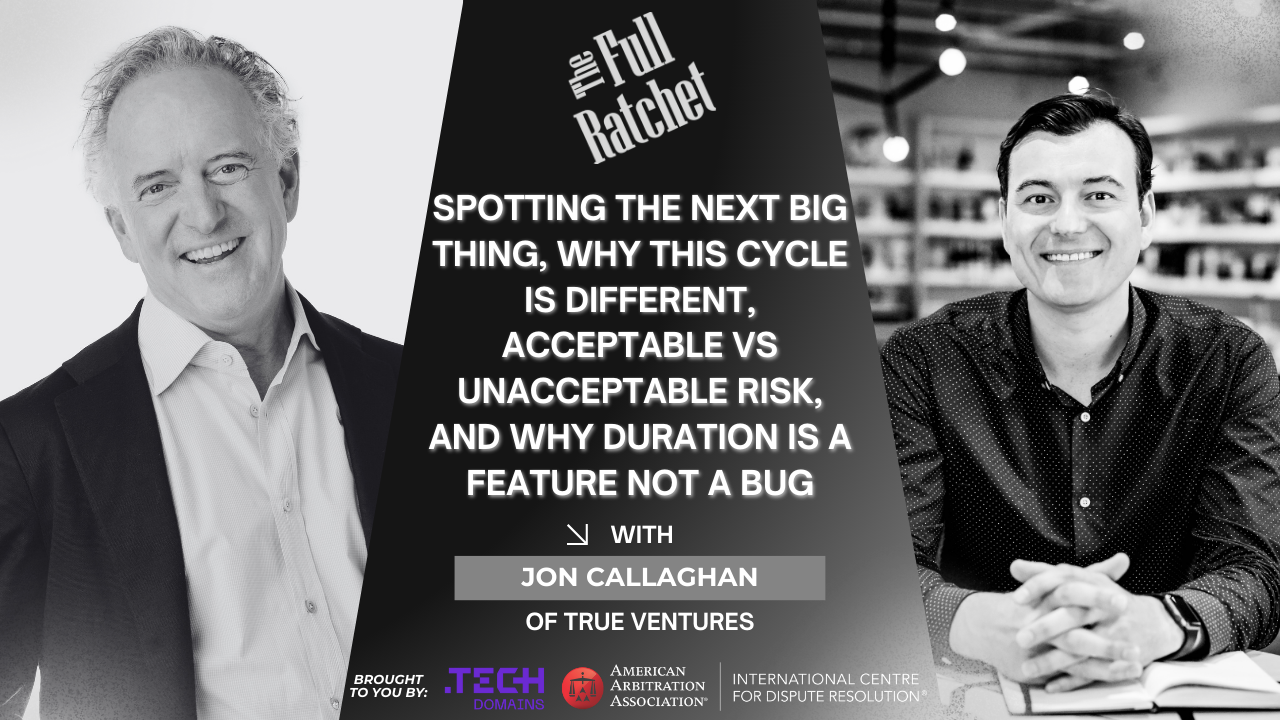
In VC, where being wrong is the norm (80%+ of the time), the most critical trait is not righteousness but deep curiosity. This learning-first mindset is what uncovers non-obvious opportunities and allows investors to see future market shifts before they become mainstream, according to True Ventures' Jon Callaghan.
Multi-stage venture funds often approach seed investing as a way to buy 'option value'. They build a large basket of seed-stage companies with the primary goal of securing the right to double down on the few that break out, rather than forming deep partnerships with each one.

Founders mistakenly pitch a logical case for their startup's viability. The winning pitch isn't about practicality; it's about presenting a massive, almost crazy vision that aligns with a VC's real motivation: the fear of missing out (FOMO) on the next massive company.

Experienced VCs may transition from rigid analytical frameworks to an intuitive search for outliers. Instead of asking if a business plan 'makes sense,' they look for unusual qualities that challenge their worldview and hint at massive potential.

A common mistake for VCs, especially those with analytical backgrounds, is over-indexing on the "what"—the business model and market. The most critical factor at the seed stage is the "who"—the founder's intrinsic motivation to "walk through walls." This is the hardest element to diligence but the most important.