Get your free personalized podcast brief
We scan new podcasts and send you the top 5 insights daily.
AI assistants are creating two classes of writing. The first is dense, information-transfer text (like a technical plan) best consumed and summarized by an agent. The second is storytelling with a personal "vibe" intended for human readership and emotional connection.

Related Insights
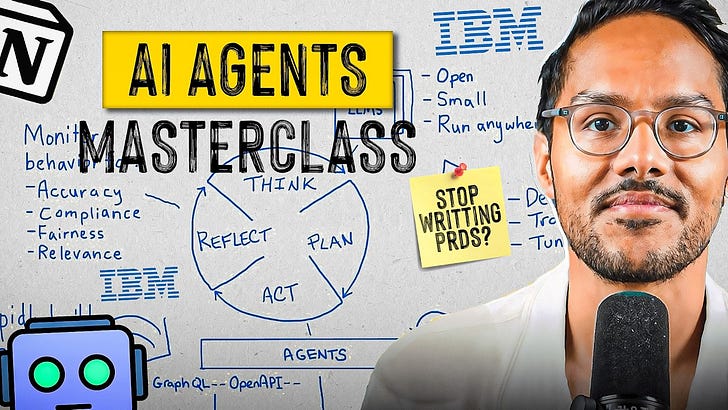
While AI tools once gave creators an edge, they now risk producing democratized, undifferentiated output. IBM's AI VP, who grew to 200k followers, now uses AI less. The new edge is spending more time on unique human thinking and using AI only for initial ideation, not final writing.
When AI agents handle the bulk of text generation, the human's role shifts from primary author to a high-level director. Instead of writing from scratch, the human intervenes sparingly to make crucial changes, a feeling described as "God coming down" to add a single sentence.
Amy Porterfield dictates her personal stories to ChatGPT, then prompts it to extract the key parts into a concise draft. This uses AI as a partner for clarity and structure while preserving her authentic voice, avoiding soulless, AI-generated content.

As consumers use AI for discovery, brand marketing must shift from human-centric storytelling to distributing structured information aimed at AI retrieval agents. These bots prioritize raw data over narrative, with the AI itself creating the story for the end-user post-ingestion.

A New York Times blind taste test revealed that readers preferred AI-generated passages over human-written ones in literary fiction, fantasy, and science writing. This suggests AI has surpassed a critical quality threshold, moving beyond factual summarization to excel in nuanced, creative domains traditionally dominated by humans.

As platforms like LinkedIn become saturated with generic AI content, authentic human voices stand out more than ever. A distinct, personal writing style—even with occasional typos—is becoming a powerful differentiator that cuts through the noise and builds trust.

The rise of AI support agents is changing the purpose of internal documentation. Knowledge bases are now being written less for human readers and more for AI agents to consume. This leads to more structured, procedural content designed to be parsed by a machine to answer questions accurately.
As models mature, their core differentiator will become their underlying personality and values, shaped by their creators' objective functions. One model might optimize for user productivity by being concise, while another optimizes for engagement by being verbose.

Most AI writing tools produce generic content. Spiral was rebuilt to act as a partner. It first interviews the user to understand their thoughts and taste, helping them think more deeply before generating drafts. This collaborative process avoids "slop" and leads to more authentic writing.
Professionals are using AI to write detailed reports, while their managers use AI to summarize them. This creates a feedback loop where AI generates content for other AIs to consume, with humans acting merely as conduits. This "AI slop" replaces deep thought with inefficient, automated communication.