Get your free personalized podcast brief
We scan new podcasts and send you the top 5 insights daily.
Instead of traditional gamification like streaks, which can create pressure, NeuroVitals uses a 'Legacy Album.' Users' progress completes finite pieces of visual art, like a paint-by-numbers image. This provides a tangible feeling of accomplishment and closure, which is more aligned with mental wellness goals than a never-ending chase for points.

Related Insights
Effective recovery from burnout or stress requires restoring a sense of self, not just managing symptoms. Most apps focus on tasks and interventions, which can reinforce a user's feeling of disconnection. Lasting change happens when a digital environment supports a user's self-continuity, rather than treating them as an operator completing exercises.
'Slopa' (Slow Dopa) is an antidote to the fleeting dopamine hits from social media. It is the profound satisfaction from slow, incremental efforts like building Legos, cooking, or reading. This practice teaches delayed gratification and the value of consistent work over instant rewards.

While brain training apps often target isolated cognitive functions with limited success, art simultaneously engages visual processing, motor skills, memory, and emotion, making it more effective for building cognitive health.

Lack of motivation often stems from the perceived gap between your current state and end goal, not from actual failure. Consistently tracking progress makes small wins visible. This creates momentum and proves you're succeeding, which is the key to staying motivated for the long term.

The emerging field of "neuroaesthetics" shows that the physical act of making art has proven benefits for mental health and longevity. Crucially, these benefits are entirely independent of the creator's skill or the quality of the final product, emphasizing process over outcome.

Superficial gamification (points, badges) can reduce intrinsic motivation. Instead, use game design principles to build 'toys'—features that are inherently fun to explore and have 'squishy affordances,' like the unnatural but fun mid-air steering of Mario's jump.

Principles from casinos and video games can be adapted for educational products. By lowering the "hoop" (difficulty) through UX and increasing the "reward" (celebrating progress), you can foster intrinsic motivation and daily use without needing extrinsic pressure like nagging.

For overachievers who focus on taking care of others, a "done list" is a powerful journaling prompt. At the end of the day, list all the ways you took care of yourself, big or small. This provides a "victory lap" dopamine hit, gamifies self-care, and helps identify patterns of self-neglect.

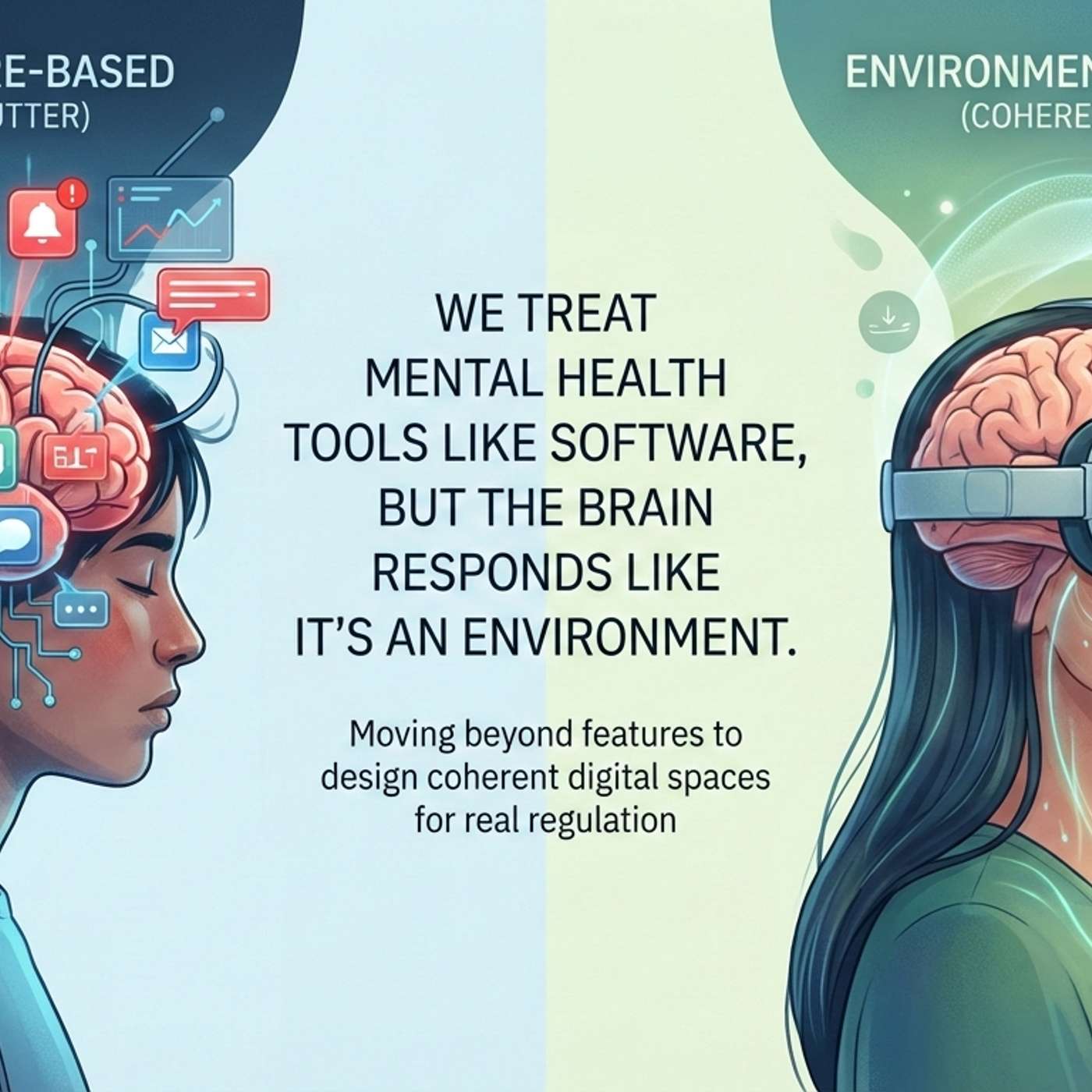
The brain perceives digital products as environments, not isolated features. A calming feature within a fragmented, attention-hungry app will fail because the surrounding context constantly pulls the nervous system into stress. The 'container' is more critical for lasting results than the specific intervention or content.
Daily goals like "10,000 steps a day" are fragile; one missed day can derail motivation entirely. Shifting the metric to a weekly or monthly average creates flexibility, prevents the all-or-nothing mindset, and leads to more sustainable long-term success.