Get your free personalized podcast brief
We scan new podcasts and send you the top 5 insights daily.
Platform-based biotech companies need a new generalist role that combines deep scientific knowledge with product creativity and business development skills. These individuals create multiple 'front doors' for partners but are hard to find in a field historically dominated by specialists.

Related Insights
The speaker credits his career success to being a well-rounded "product hybrid" with skills in data, software, product, and design. He argues this versatility, allowing him to move from debugging firmware to debating product strategy, is more valuable than deep specialization, quoting "specialization is for insects."

A CEO's primary role differs fundamentally based on company type. In an asset-centric biotech, the CEO must act as a hands-on program manager, micromanaging execution. In a platform company, the CEO must be deeply embedded in the science to predict and leverage the technology's long-term trajectory.

Ovelle's co-founders exemplify a common success pattern in biotech: one partner with profound scientific knowledge (Merrick) and another with extensive business experience (Travis). This combination covers critical aspects from research to capital raising and team building, as it's rare to find both skill sets in one person.

At Goodfire AI, a "Member of Technical Staff" is a highly generalist role. Early employees must be "switch hitters," tackling a mix of research, engineering, and product development, highlighting the need for versatile talent in deep-tech startups.
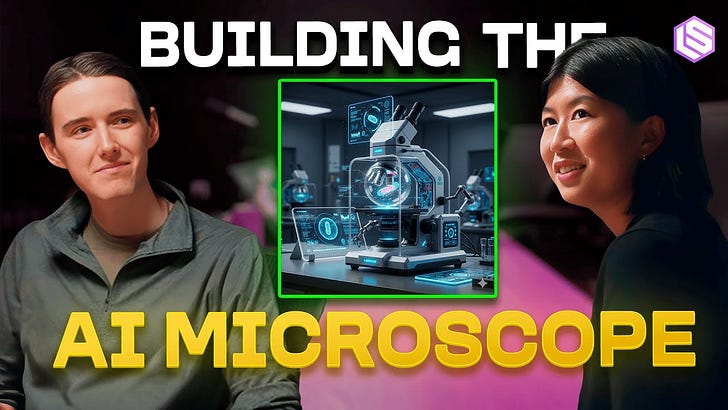
Recursion CEO Najat Khan argues the most valuable biotech professionals are "systems thinkers" who are fluent in both science and technology. She advises against narrow specialization, stating that the ability to connect the dots across complex disciplines is what drives innovation in drug discovery.
Dylan Field predicts that AI tools will blur the lines between design, engineering, and product management. Instead of siloed functions, teams will consist of 'product builders' who can contribute across domains but maintain a deep craft in one area. Design becomes even more critical in this new world.

Kevin Pojasek credits his effectiveness to a deliberate 12-year journey through diverse roles—investing, company creation, research, and clinical operations. This broad experience allows a leader to understand how all parts of the company, from high-level strategy to detailed science, fit together.

A key skill in building a deep tech team is identifying individuals who can bridge the gap between complex science and business reality. These "translators" can articulate highly technical concepts in plain English, clarifying clinical relevance and commercial viability for decision-makers.

Career advancement isn't always about deepening expertise in one narrow field. It can be driven by a curiosity to understand how different functions connect. This cross-functional perspective reveals process inefficiencies, and solving them leads to recognition, growth, and new opportunities.

A CEO without a deep scientific background can thrive in biotech by acting as a synthesizer. The key is not to blindly delegate to experts, but to ask probing questions, understand the interplay between disciplines (regulatory, clinical, etc.), and connect them for effective decision-making.