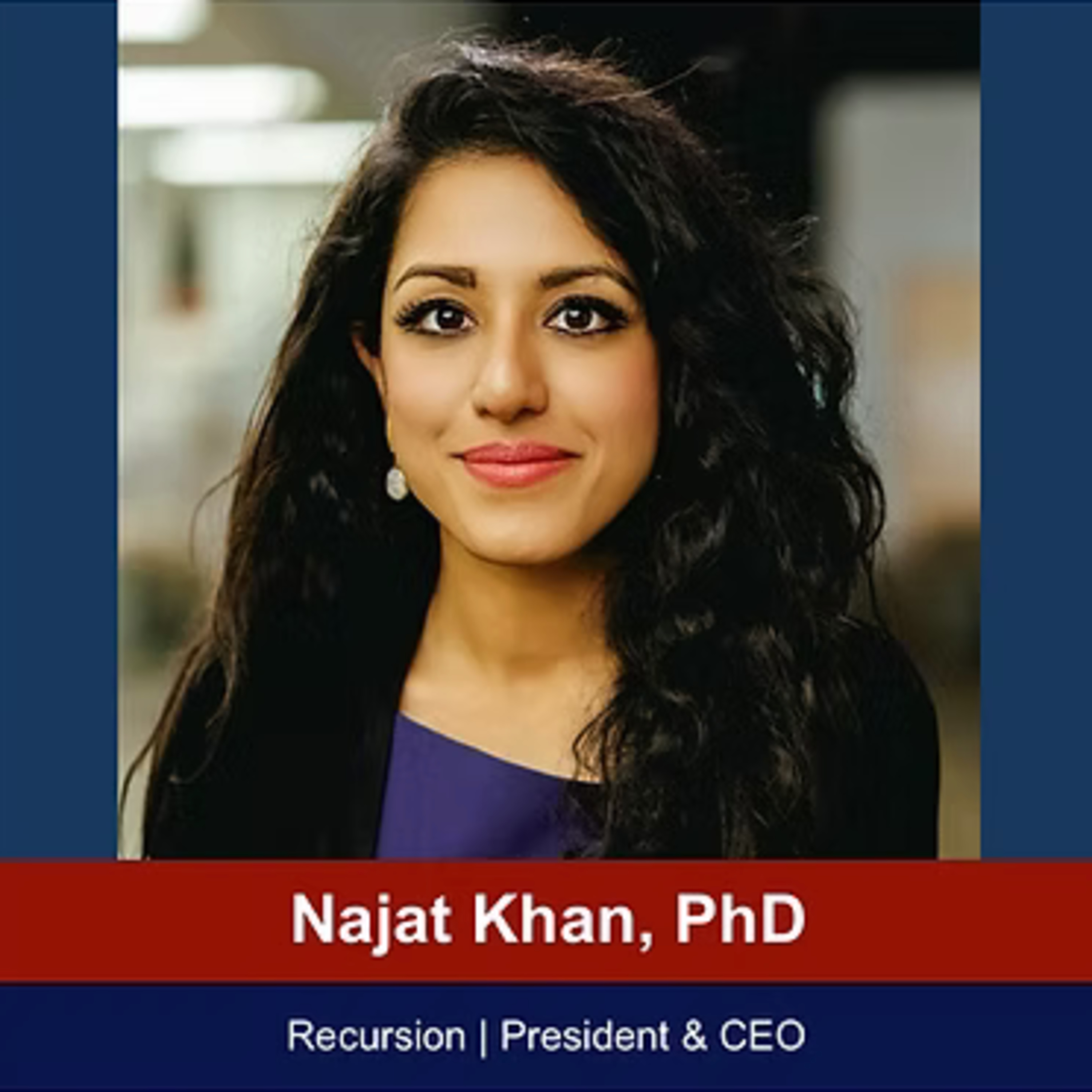
Recursion's CEO suggests communicating biotech's complexity by framing it as exploring a system we didn't design, unlike engineering. This humility-based analogy helps manage public expectations and explains the industry's long, non-linear timelines, fostering trust by highlighting the immense difficulty of decoding biology.
Recursion CEO Najat Khan argues the most valuable biotech professionals are "systems thinkers" who are fluent in both science and technology. She advises against narrow specialization, stating that the ability to connect the dots across complex disciplines is what drives innovation in drug discovery.
AI's potential in drug discovery is contingent on having a robust "data factory" to generate massive, high-quality biological datasets. Najat Khan emphasizes that the combination of this data infrastructure, AI, supercomputing, and human expertise is what creates a true competitive advantage, not the algorithm alone.
Upon taking the helm, Najat Khan is strategically shifting Recursion from a company focused on its AI/data platform to a "product engine" centered on developing medicines. This pivot underscores the belief that long-term value in biotech is created by delivering tangible therapies for patients, not just technology.
Najat Khan distinguishes between mentors who advise and sponsors who advocate. She argues companies must focus on sponsorship—identifying leaders who will actively champion women when they are not in the room—to create equitable career progression and overcome systemic barriers.
Recursion's CEO, Najat Khan, maintains a strict "no asshole policy" as a cornerstone of her leadership, stating she will remove team members who exhibit toxic behavior like interrupting or 'mansplaining'. She asserts that a CEO's tolerance for such actions sets the cultural standard for the entire organization.